Making a living writing about hiking sounds like a backpacker’s dream. But Maggie Slepian writes that it’s impossible to bring money into your favorite pastime without changing the way you experience it.
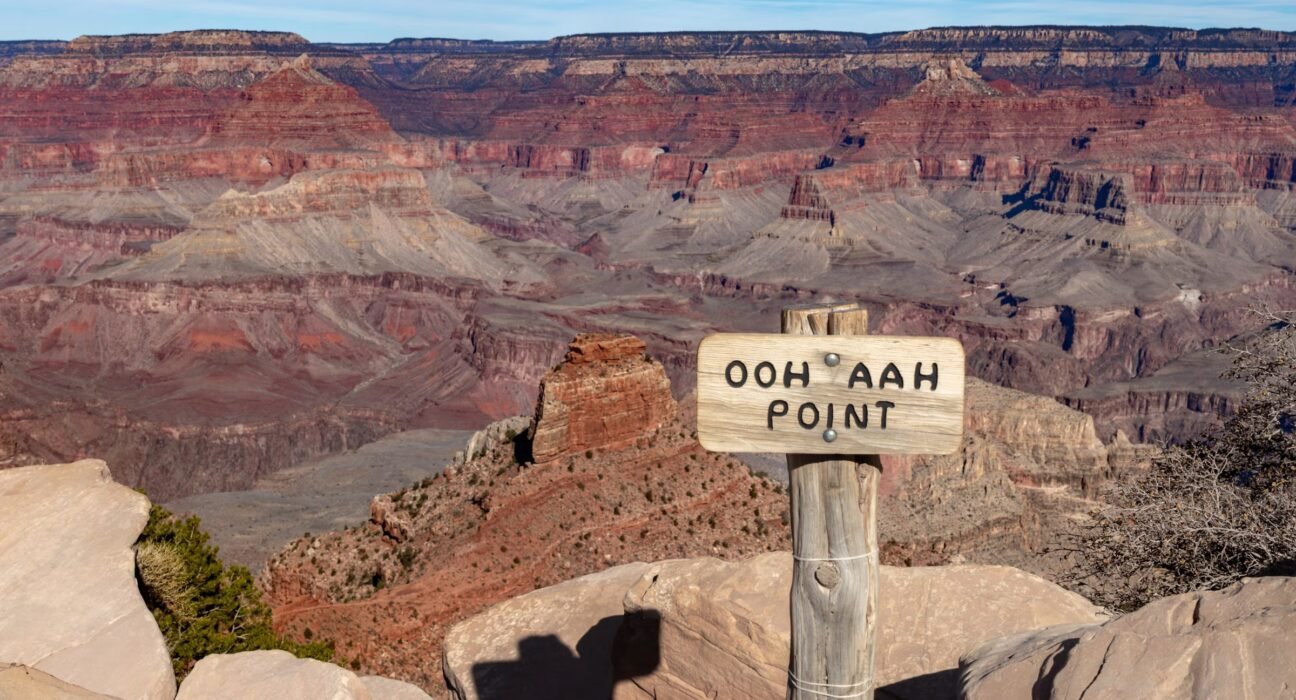
Ooh Ahh Point of the Grand Canyon on the Arizona Trail (Photo: Benjamin Klinger/iStock via Getty)
Updated June 26, 2026 12:09 pm
Dawn was barely illuminating the desert floor when I pulled my sleeping bag from the open wounds on the insides of my thighs and packed my things for my last morning on the Arizona Trail. I was planning to get back to civilization at the next road crossing, but instead of getting lost in reflection on my first Big Quit, I was worried about how I would write about getting off the trail quickly.
By the time I hit the highway I had been writing professionally about the outdoors for about 10 years. That morning on the Arizona Trail wasn’t the first time I found myself writing a story in my mind while in the backcountry, but it was the first time I saw a true mental split-screen: My eyes were on the trail, looking at the snakes and overgrown thorny bushes, but my mind was already behind the computer, wrestling with angles and trying to describe what I was experiencing, while also experiencing it.
Like the backpackers I interviewed when they abandoned their hiking trips while documenting them on social media, I felt obligated to explain my exit in a way that I wouldn’t have if I were heading home to return to city life. I make my living working outdoors, and leaving the Arizona Trail early means I won’t be writing the Trail Dispatch I promised the editors. I got nervous even thinking about the pieces written about my preparation. Now, I was giving up after 200 miles.
I tried to convince myself that writing for traditional media (as opposed to social media) allows me to maintain a healthy separation between experience and content, that I’m connecting more fully to external things than I would if I were preoccupied with how I would present it to a fickle social media audience. But I still found myself stopping to take notes in parking lots, at water sources, leaning over summit signs, and while sitting in my tent at camp. I wanted to make sure I had the best records and photos for assignments or future story ideas. Maybe the outlet wanted a trail profile (I needed all the distances recorded), maybe they wanted more of a first-person experience (I needed notes about how I was feeling). I carried the gear specifically so I could test it out for work, and I was constantly stopping for trail signs, landscapes, and photos of my hiking companions in case I needed to provide images to accompany the next story.
It’s impossible to pursue your hobbies without changing your relationship with them, and while work didn’t make me want to do anything else, my distraction on the Arizona Trail was a wake-up call about how writing had taken over my trail time. “What if I write about it” became such a common refrain that my hiking companions knew to stop as I tapped on my Notes app, jotting down the distance between climbs, route time, or trailhead location. Was.
Part of the appeal of walking in the woods is remaining anonymous during the time between leaving your car on the trail and returning. Before I made a career of describing on the Internet what I was doing whenever I went out, I was more present in the moment. Instead of developing future retellings, route advice, or metrics, my thoughts were very simple: this is hard. It’s easy. I am thirsty. Where is the peak? Is that a false summit? Oh my God, this is a false peak.
Since my experience on AZT, I have become more conscious of being in this place, and I write less about what I do. Due to the nature of media, work has become much more commercial and less personal, which has been a good excuse not to use every trip as an opportunity to photograph gear or pitch a story. Avoid traveling outside, even if keeping some trips away from work may impact my income.
I am extremely grateful for my work and my career. Besides the fact that I get paid to write about being outdoors, 15 years of doing so means I have a record of my experiences kept in a digital log, which I wouldn’t have if I relied on my tired two-line scroll in my trail journals. Anytime, I can reach my blog From the Appalachian Trail, remember how I felt when I realized I couldn’t run away from my problems on the Colorado Trail, or remind yourself why I didn’t want to finish the Oregon Coast Trail mid winter. I have a digital journal of past relationships, life stages that are now behind me, and people I’ve parted ways with. Sometimes I get nervous wondering why I wrote this story or how my editor ended up with the headline he chose. Most of the time, I’m grateful for these written logs of my life in the backcountry over the past 15 years, and turning the experiences into paid work helps defray the costs of my frequent (and expensive) travels.
I would be lying if I said I was still completely present throughout all of these experiences. I make a living by writing about what I do outside and the products I use when I’m outside, and the compromise between work and lifestyle is a blurred line. But I’d also be lying if I said there was something else I wanted to do.