Hyundai Ioniq 1 Electric SUV Expected To Debut In January 2027
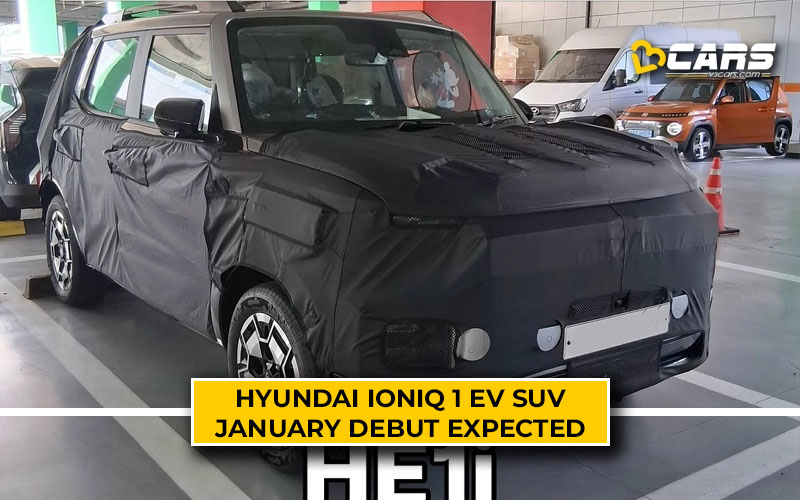
Hyundai have confirmed a new compact electric SUV as part of their upcoming product offensive. Codenamed HE1i and expected to be called the Ioniq 1, the new EV could debut in January 2027, according to the latest report.
Update (October 23, 2026):We have updated this article with the latest reported debut timing, confirmed technology and battery sourcing plans.
The SUV is expected to slot below the Creta Electric and compete in the B2-segment electric SUV category. Its likely rivals include the Tata Nexon EV, Mahindra XUV 3XO EV and Kia Syros EV.
New Hyundai Electric SUV: What To Expect
Earlier test cars gave us a useful indication of the SUV’s proportions. Its upright body, short front and rear overhangs and relatively long wheelbase suggest Hyundai are prioritising cabin space within a compact footprint.
Our estimates remain a wheelbase exceeding 2500mm and ground clearance of approximately 190mm. We expect an overall size comparable to the Venue and Syros, with the electric architecture potentially allowing more room for passengers.
This positioning matters because Hyundai currently lack an electric SUV below the Creta Electric. The new model would give the brand an alternative for buyers considering smaller, more affordable electric SUVs.
New Hyundai Electric SUV Exterior Design
The prototypes suggest a taller, more squared-off shape than the Creta Electric. There are similarities with Hyundai’s global Inster EV, although the test car appears to have a larger footprint and a more pronounced SUV stance.
The design elements expected on the India-spec model include:
- Separate upper and lower lighting units
- LED daytime running lights above the closed front fascia
- Main headlamps positioned lower on the bumper
- Lighting with pixel-style elements
- Short front and rear overhangs
- Prominent black cladding
- Roof rails
- A largely level roof
- A near-vertical tailgate
Together, these proportions could help Hyundai balance ease of use in traffic with passenger space. The tall roof and upright rear section should also leave more usable room than a heavily tapered body.
New Hyundai Electric SUV Expected Features
Hyundai have already confirmed a next-generation infotainment system and Level 2 advanced driver assistance systems (ADAS) for the upcoming EV.
The company have also confirmed that next-generation connected car technology will be available across all variants. Hyundai have yet to detail the individual connected functions or announce which variants will offer ADAS.
We continue to expect a substantial equipment list, given the features already available on competing electric SUVs. Potential equipment includes:
- A 10.25-inch touchscreen and a 10.25-inch digital instrument cluster
- Wireless Android Auto and Apple CarPlay
- Auto AC
- Front seats with ventilation
- A panoramic sunroof
- A 360-degree camera system
- Vehicle-to-load (V2L) functionality
Our expected safety equipment includes 6 airbags, electronic stability control, tyre pressure monitoring and a blind-view monitor. Driver assistance functions could include adaptive cruise control, automatic emergency braking and lane-keeping assistance.
New Hyundai Electric SUV: Battery And Range
The new SUV is reportedly planned with Standard Range and Long Range versions.
Hyundai will initially use Svolt battery cells to avoid delaying the SUV’s introduction. The company plan to switch to locally produced cells through their partnership with Exide Industries at a later stage.*
For reference, the global Inster offers 42kWh and 49kWh batteries. A similar choice of battery sizes could allow Hyundai to address different budgets and range requirements.
We also expect the EV to support DC fast charging, allowing a 10 to 80 percent recharge in around 30 minutes.
Hyundai India Product Offensive
The compact EV forms part of a wider expansion of Hyundai’s SUV range. The Bayon is scheduled to launch on October 26 and will sit alongside the current Creta, giving Hyundai another option between their existing SUV offerings.
We expect the next-generation Creta to follow around March 2027 and move further upmarket. Alongside that change, the compact EV would give Hyundai a more affordable electric offering while the Bayon and next-generation Creta address customers shopping higher in the range.
The new EV’s role therefore extends beyond adding another electric model. Its smaller footprint and expected positioning could help Hyundai reach customers who currently find the Creta Electric too large or expensive. With competitive pricing, it could become the brand’s highest-volume electric model.
Before you finalise your next car, these V3Cars tools can help you make a more informed decision:
Fuel Cost Calculator for Cars– Know your monthly fuel expense based on usage and mileage
Car On-Road Price Calculator– Convert ex-showroom to on-road price for any city
Sell Used Car Online– Enter your car and contact details to get an instant price estimate and book a free inspection with our partner network