“Gradually speed up your activities throughout this time, so that by the end of your prep block your workload will seamlessly blend into your main session,” says Sorel. “Ideally, (warm-up and cool-down) should always be a seamless part of the workout rather than separate tick boxes to check off throughout the day.”
The cool-down is usually short, lasting between five and 10 minutes.
“The main focus is to get the heart rate back to resting,” Paris says. “So if you have high blood pressure you may need more time to get it back to normal levels.”
best warm-up exercises
for cardio
Warming up for cardiovascular work is as simple as getting moving. Although you’ll probably want to do some stretching of specific muscles, mimicking the movements you do during your workout is the most effective way to prepare your body.
“You see it most often with football players or people who do track work,” says Brennand. “Before going on the field, you see them running up and down, trying to move the body in certain directions to warm up. If I’m running a lot or doing circuits, I’ll do a slow warm-up that moves the body in a way appropriate for running: high knees, heels to buttocks, jog a few steps and then do leg kicks.”
Smith agrees with Brennand when it comes to knee raises, and also suggests quick warm-up activities like star jumps, running in spot or incline treadmill walks, gradually increasing speed and incline.
for strength training
There’s a similar approach to strength training, focusing on incorporating activities that you’ll later perform at full capacity.
“First do this movement pattern without weights, then bring in some elements of balance work to activate your nervous system,” Sorrell says. “It could be a unilateral change or a change with some kind of artificial instability using resistance bands or a Bosu ball.”
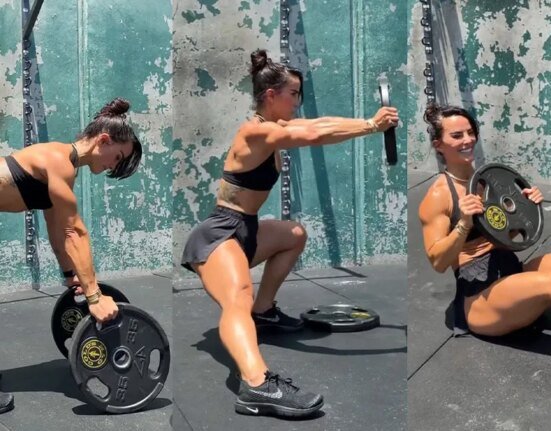
When it comes to full body and weight sessions, a slow and steady warm-up is key. Tone everything down to speed and weight: slow bodyweight squats, slow press-ups and shoulder rotations are some of Smith’s suggestions.
“If the first exercise is an overhead squat, I’ll go into an overhead squat position and stay down,” says Brennand. “Opening your pelvis and hips, opening up the shoulders and maybe doing a few reps with a lighter weight. Then I’ll start the session, slowly building up to where I want to get.”
Remember to base your warm-up on the workout. “If it’s a full-body workout, I start by stretching the spine,” says Brennand. “Many people, when first getting up, feel like they have pain or stiffness in their back. I do a few spinal twists to open up, then I pay attention to their specific needs. If I know my hamstrings and hips are tight, those will be the first things I try to open up through stretching.”