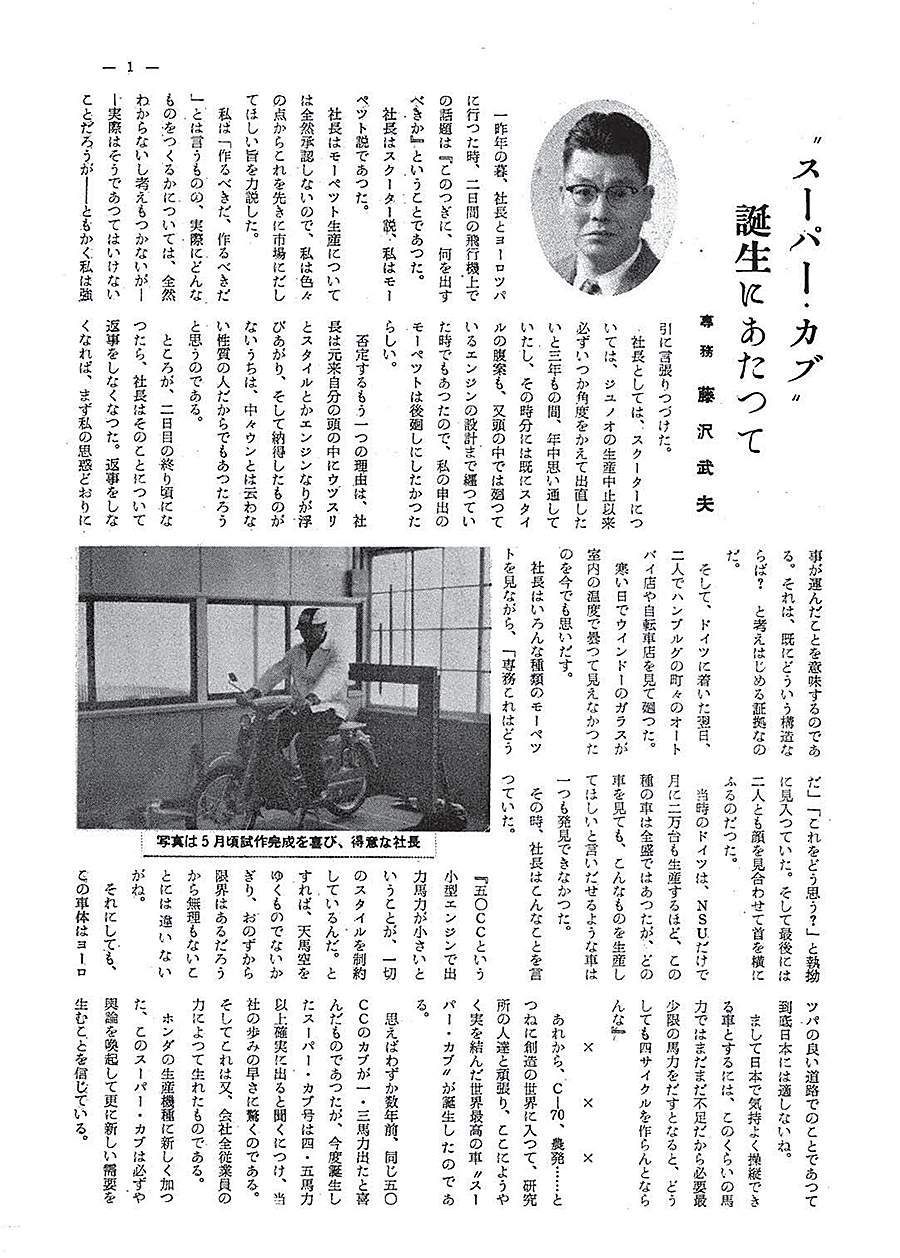
In December 1956, Soichiro Honda and his sales chief Takeo Fujisawa flew to Europe in search of their next big idea. They came back convinced that neither moped nor scooter would do. They needed something entirely new, tailored for a country where only one in ten roads was paved and where a man going to work might wear a business suit or a kimono. Two years later, that idea became the Honda Super Cub. Today, with production numbers that surpass almost every car ever made, it is the best-selling motor vehicle in human history, and the story of how it got there begins with a design brief that no one thought was realistic.
The journey that started it all
 Credit: Honda
The two men did not set out with a specific product in mind. He spent several weeks studying how people in different European countries actually use small bikes on a day-to-day basis, and the differences surprised him. There was no single template to copy. Back in Japan, Honda and its development team turned that research into a short list of requirements.
The new engine had to be powerful, yet quiet and fuel efficient. The bike should be so simple that not only experienced motorcyclists but also women can ride it with confidence. And somehow, gear shifting had to be done without a clutch lever. No one on the team had built anything like this before, which was the point.
building the people’s motorcycle
 Credit: Getty Images
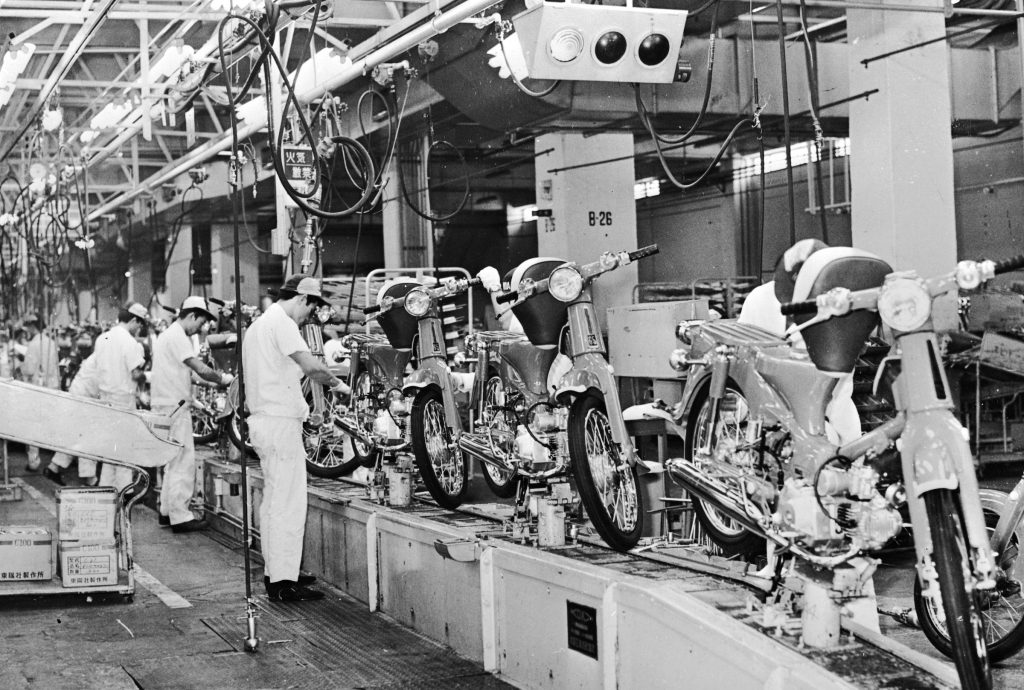
Soichiro Honda set a number that seemed almost unreasonable at the time. He wanted at least 4 hp (3.0 kW), delivered smoothly enough to handle Japan’s rough roads, at a time when barely 10 percent of the country’s roads were even paved. The moped engine that Honda was manufacturing till then was barely 1 horse power. Reaching 4 would mean quadrupling production almost overnight.
 Credit: Honda
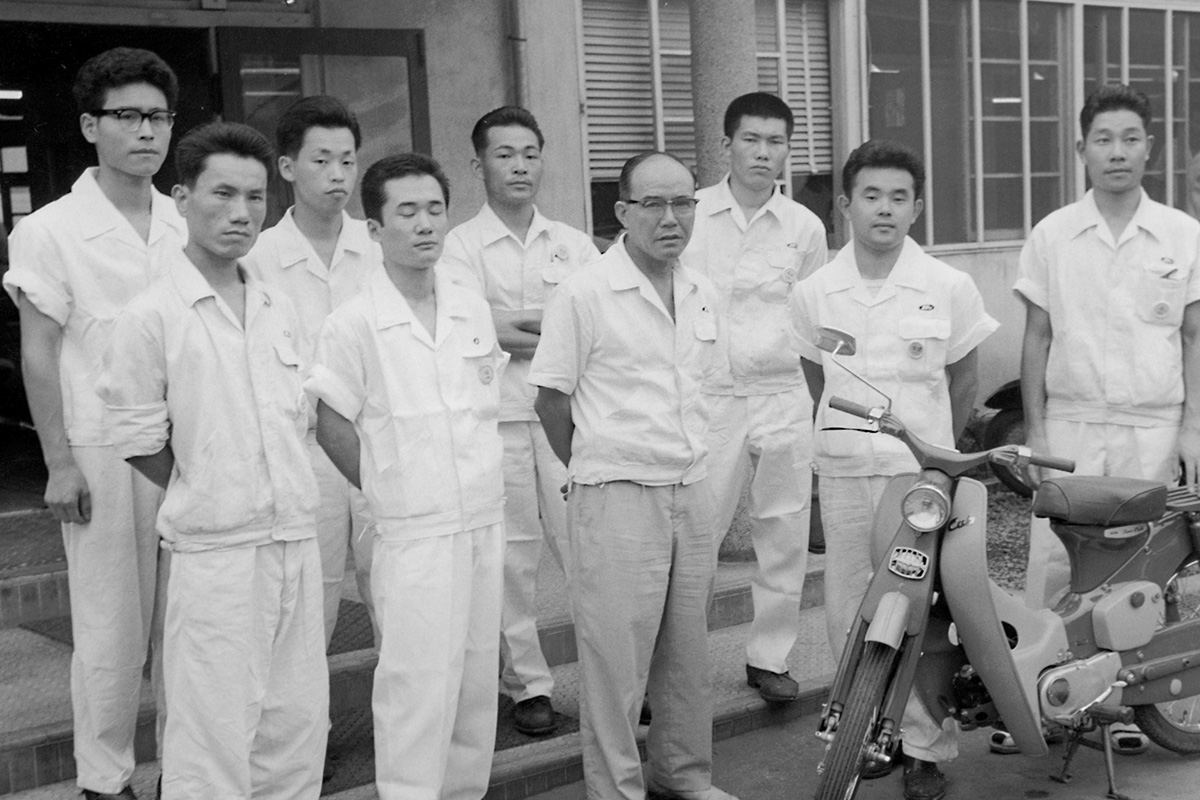
Engineers found part of their answer by mounting the engine horizontally rather than vertically, a decision that also solved the second problem: it allowed the main tube of the frame to sit low enough for the rider to step upright, rather than swinging a leg over the fuel tank the way every other motorcycle required it. A ventilated cylinder head and specially made spark plugs kept the small engine from overheating under stress. By the time development ended, the 49cc engine was producing 4.5 horsepower (3.4 kW) at 9,500rpm, not what anyone expected from such a small output.
built to be ridden by anyone
 Credit: Honda
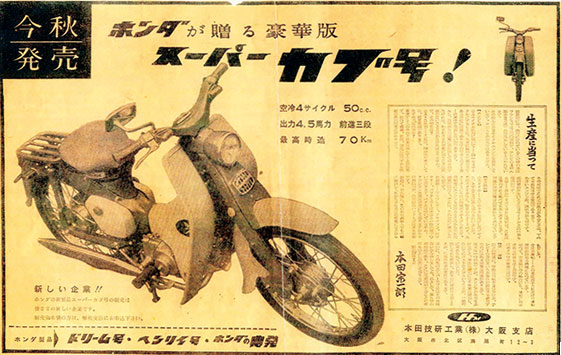
Gear shifting without a clutch lever became the most difficult engineering problem of the project. Honda wanted to make the entire bike so simple that a food delivery worker could operate it with one hand, balancing an order with the other, and that meant eliminating the clutch lever entirely.
Transmission designer Akira Akima spent months on it, creating and discarding about eight different prototype designs before landing on a centrifugal clutch that automatically engaged and disengaged at the time of kick starter and gear shift, without the rider having to do anything with his left hand.
It worked, and it meant more than anyone on the team expected. The bike’s ease of use, even more than its horsepower, has opened up motorcycles to people who had never thought of riding one before.
move faster than anyone expected
 Credit: Wikipedia
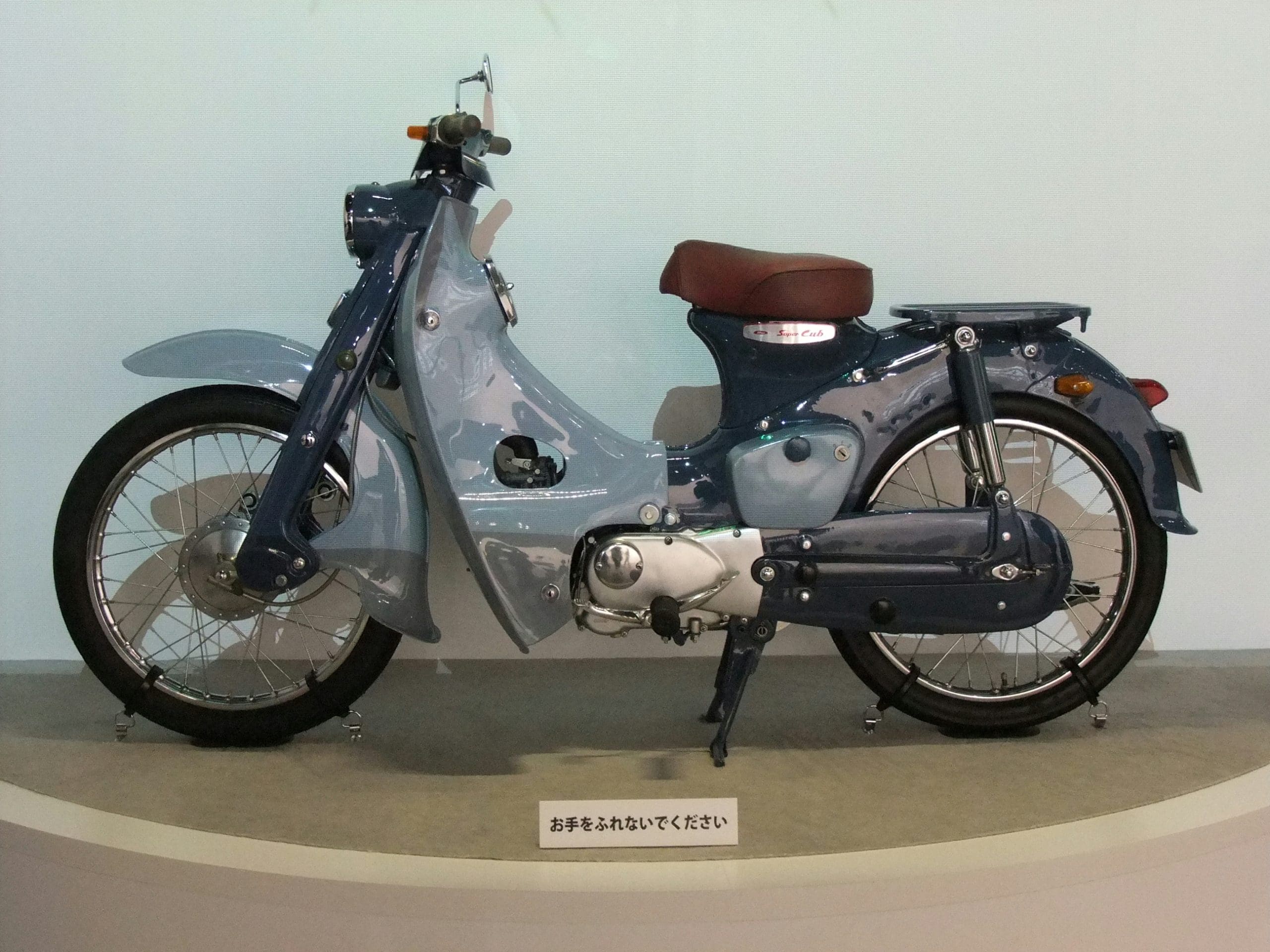
By December 1957, both the design and name of the project were ready. Industrial designer Jozaburo Kimura proposed the “Super Cub” almost as an afterthought, as the word “Super” sounded fresh and exciting to Japanese ears at the time, and Honda approved the emblem sketch on the spot. That same month, the team presented a finished, full-size mockup in the company dining hall. When Fujisawa saw it, he did not hesitate.
He told the room that they could sell at least 30,000 units. For a moment, everyone assumed he meant per year, which was already an ambitious number. Fujisawa quickly corrected him: he meant 30,000 per month. At the time, the entire Japanese motorcycle industry, every manufacturer and every model combined, was only selling about 40,000 units per month.
 Credit: Honda
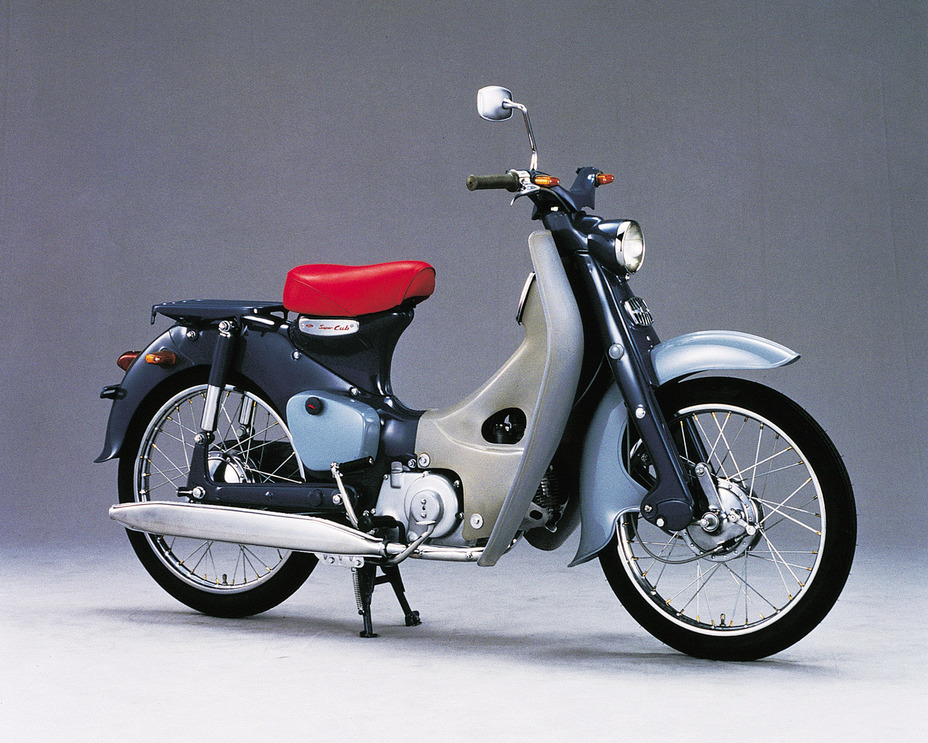
Honda announced the finished C100 in August 1958, although sales did not actually begin for a full year while the company built the Suzuka factory to keep Fujisawa’s faith, modeling the plant directly on Volkswagen’s operation in Wolfsburg, Germany. When it opened in 1960, it was the largest motorcycle factory in the world, and the scale enabled it to cut production costs by about 18 percent per unit. Honda’s own bet turned out to be conservative. By the Super Cub’s third year of sales, annual production had already exceeded 560,000 units.
Selling the world on a “good” motorcycle
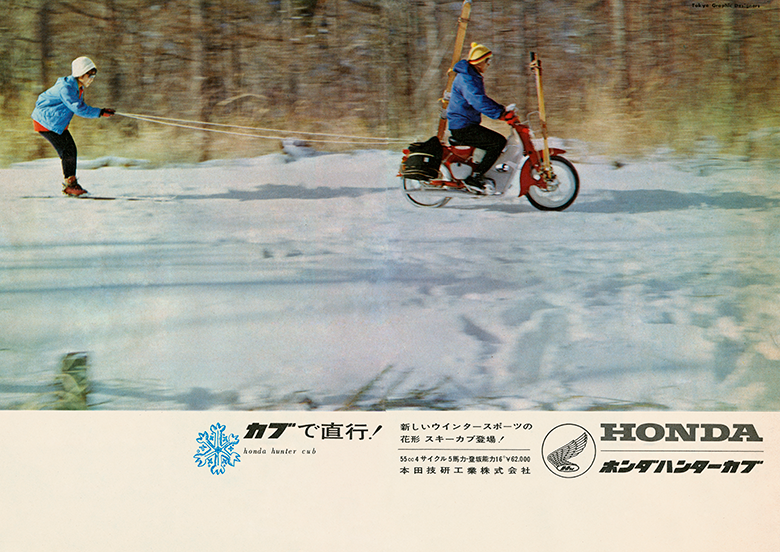
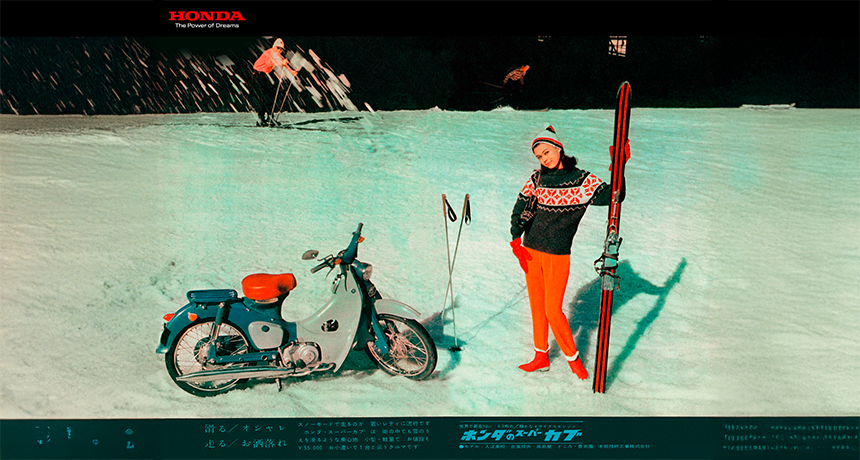
It took more than good engineering to get people to buy bikes. In Japan, Honda took the unusual step of recruiting dealers’ wives to help it sell, reasoning that a more welcoming dealership would attract customers, especially women, who might otherwise never have thought of stepping inside a motorcycle shop.
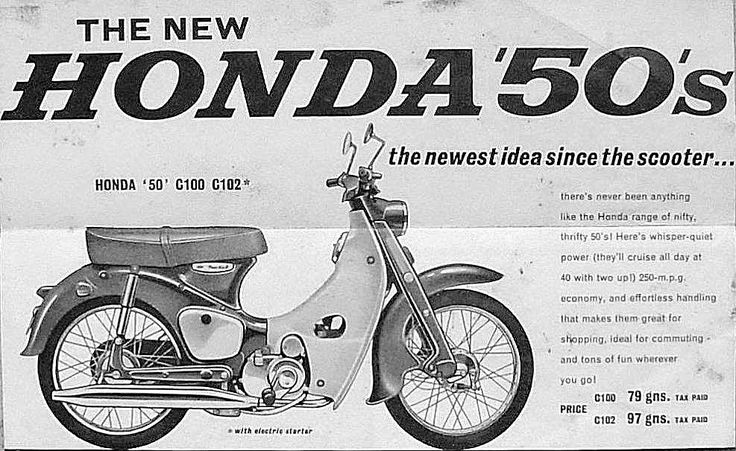
The American market presented a completely different challenge. American motorcycles had a poor reputation in the early 1960s, and the Super Cub, marketed there as the Honda 50, needed to shake up that image completely before it could be sold to mass travelers.
“You meet the best people at Honda”
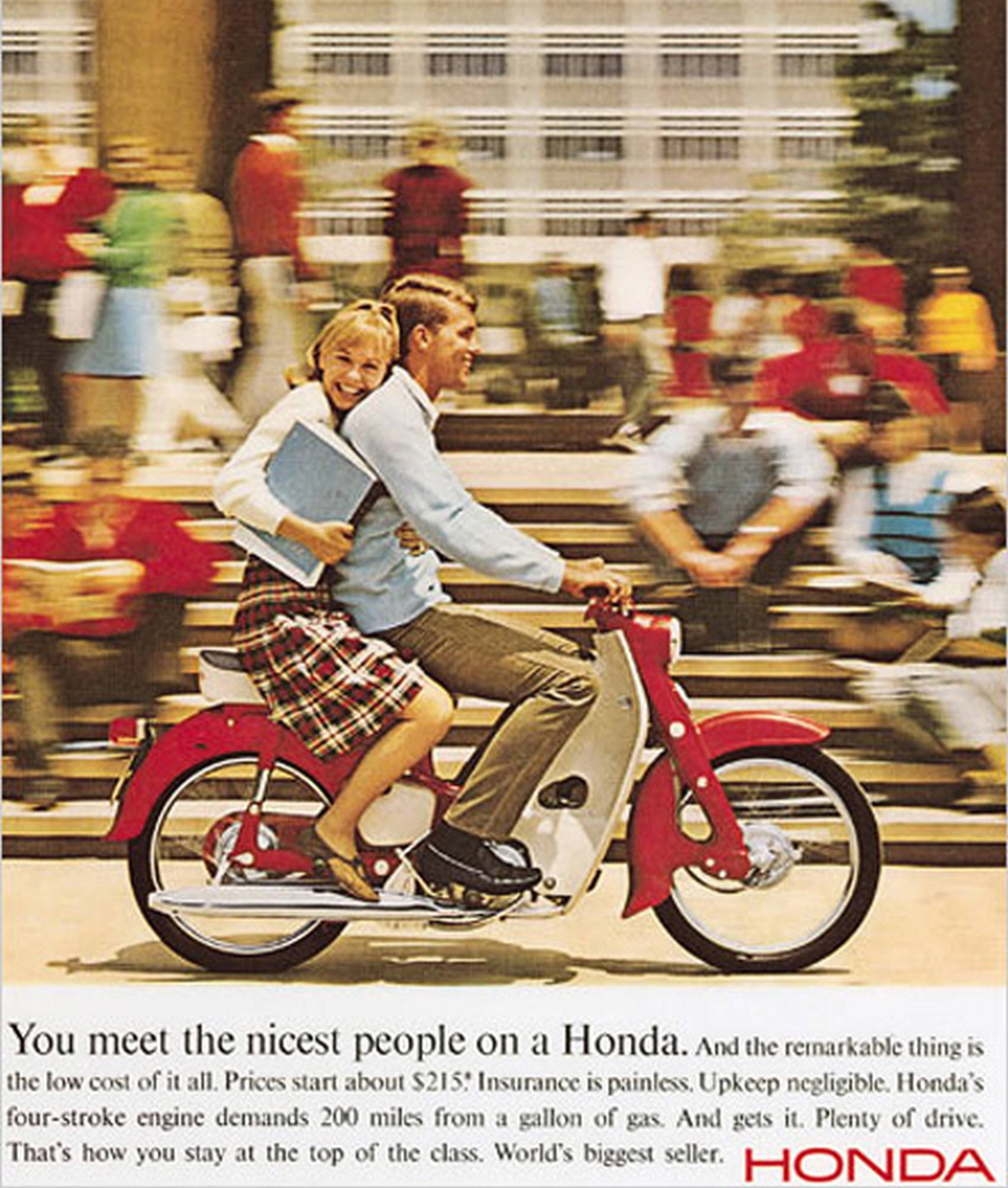
This change was caused almost entirely by an advertising campaign. Starting in 1963, Honda’s American advertisements featured normal, likable people riding a Honda 50, paired with a simple line that reframed the entire category: You meet the best people at Honda. It worked exactly as intended. Riding a motorcycle stopped being seen as something only outsiders did and started appearing as something one’s neighbor could do on a Tuesday morning.
This campaign is often credited with opening up the American market not only to the Super Cub, but to Japanese motorcycles in general, at a time when Honda was still a largely unknown name in the United States.
A record that hardly anyone can break
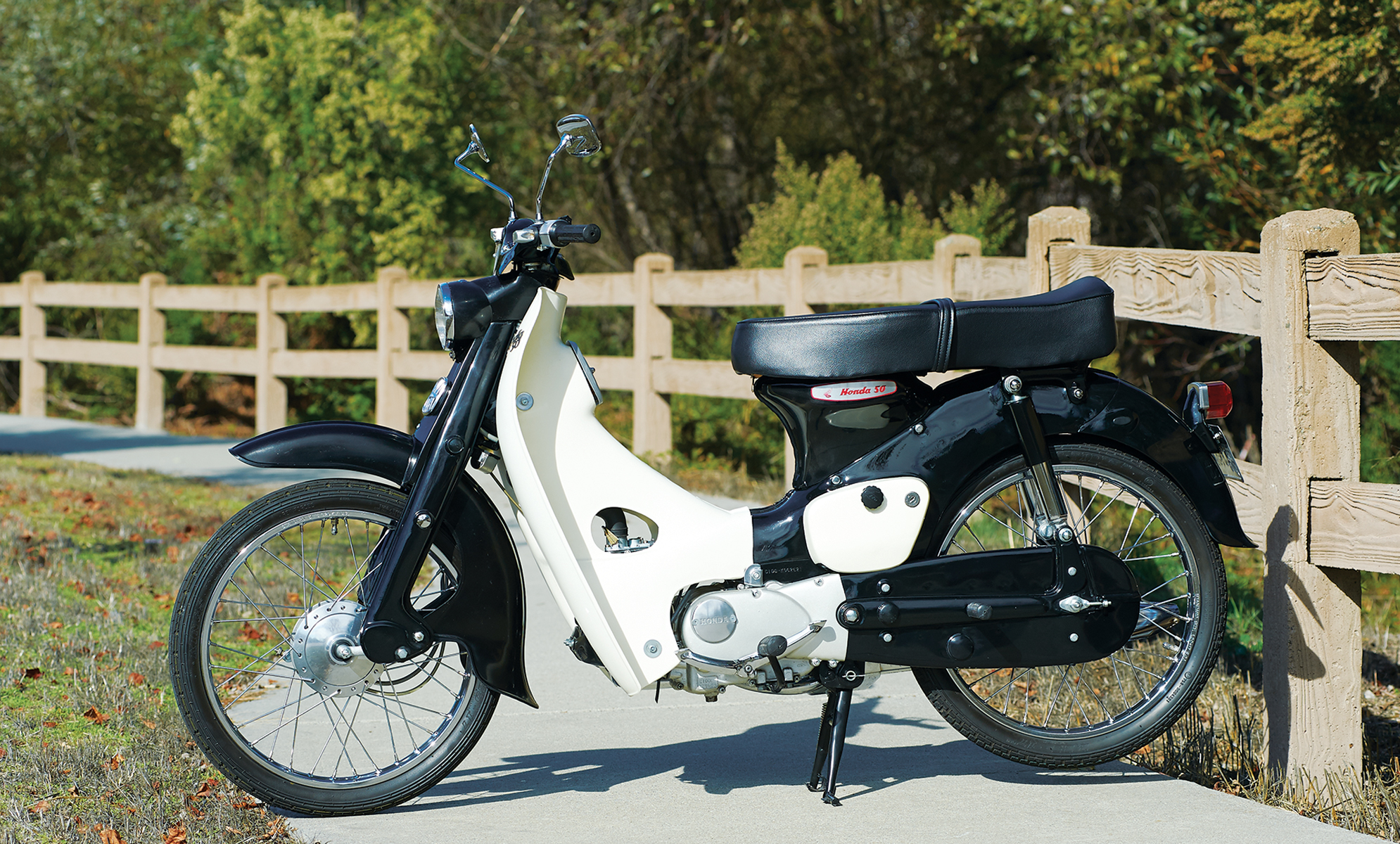
The numbers, once they started climbing, never really stopped. Honda made 50 million Super Cubs by the end of 2005. By 2017, less than six decades after that dining hall conversation, the total had surpassed 100 million, a figure no other motor vehicle, car or motorcycle had ever reached. Recent calculations show the total race is over 110 million and climbing.
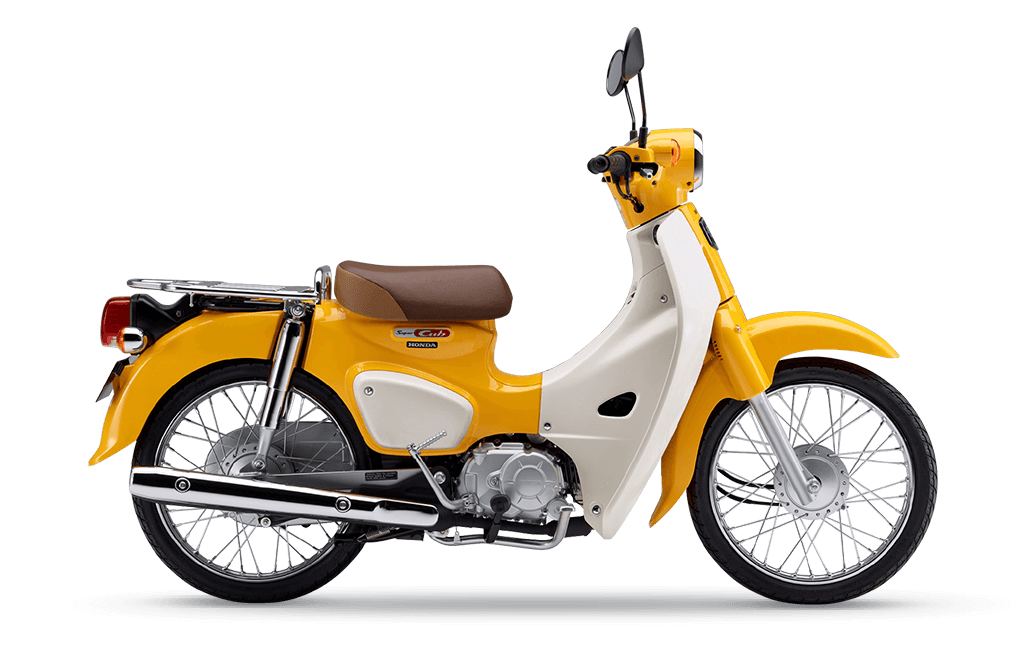 Credit: Honda
Set next to it, the competition doesn’t look close. The best-selling car in history is the Toyota Corolla, with approximately 50 million sales. Nearly 41 million Ford F-150s have been sold. The Volkswagen Beetle, once considered untouchable with 21.5 million, and the Model T at nearly 15 million, both look almost modest by comparison. Guinness World Records has recognized the Super Cub as the best-selling motor vehicle ever manufactured, full stop.
still running out of line
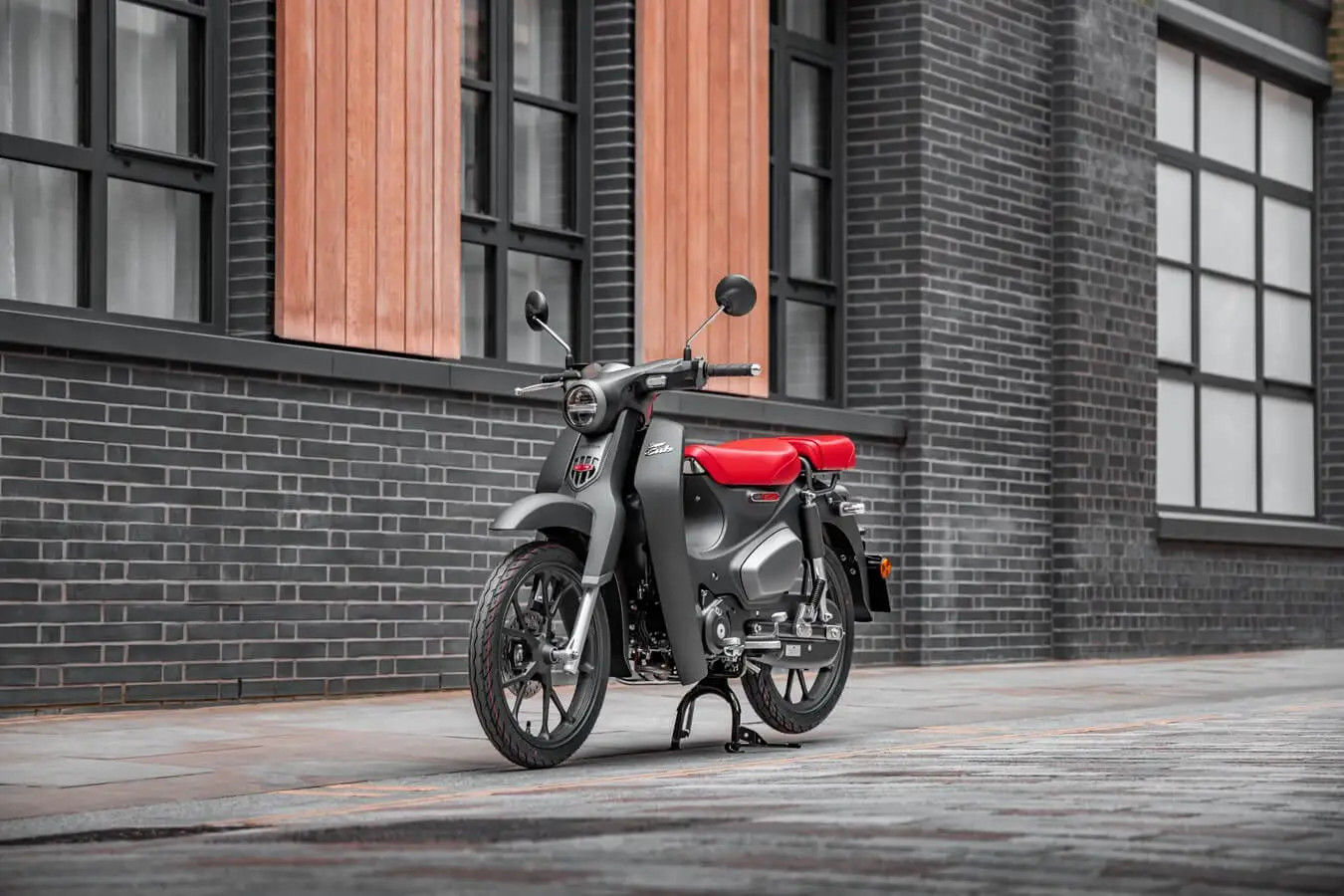
The original 50 cc format is now being discontinued, though not for lack of demand: new emissions regulations in Japan effectively ban smaller engines in late 2025, so Honda discontinued that specific variant with a limited Final Edition model. Large-displacement Super Cubs, in 110 cc and 125 cc form, remain in production and remain popular in Southeast Asia and beyond.
A motorcycle designed so that a delivery worker can ride it with one hand is redefining what mass mobility looks like in much of the world. Nearly seventy years later, it still happens.