The biggest surprise wasn’t how fast tecton x3 Felt it – it’s how little pain I had after a big race. Thanks to a mild winter and early spring, the high-altitude trails around Crested Butte opened up several weeks earlier than usual, giving me a chance to test HOKA’s latest trail super shoe in rugged, high-altitude terrain. After several back-to-back days on steep, technical singletrack, I was noticing the same thing: My quads weren’t nearly as sore as they usually are after a massive descent.
The third generation of HOKA’s carbon-plated trail racer features a dual-layer PEBA midsole (a premium, highly resilient foam that bounces back with every step). This is the same lightweight, energetic material used in many top-tier road racing shoes.
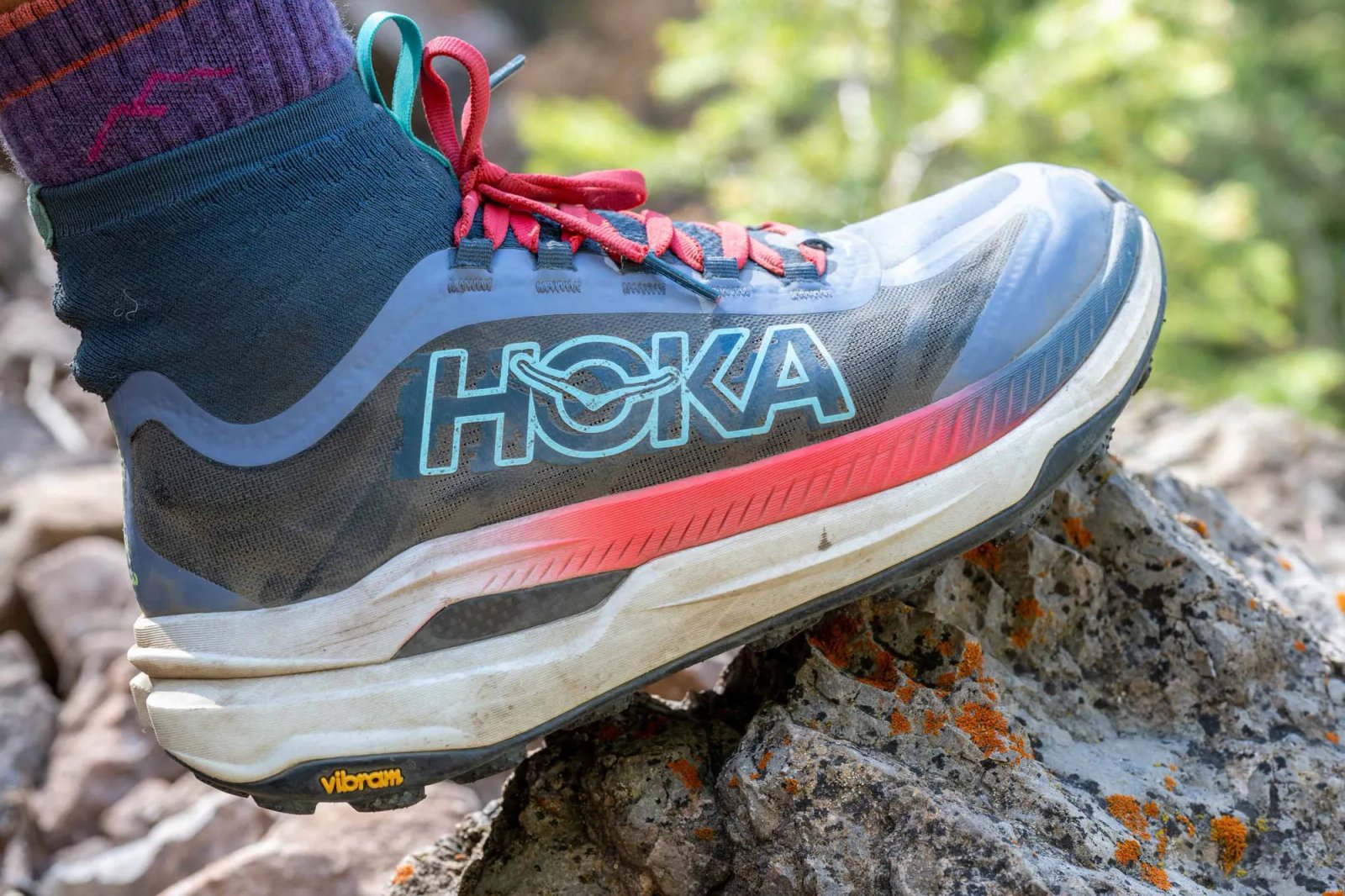
I relied on the Tecton In every run, the shoe felt responsive, stable, and protective. My sample size 8 weighed only 8.3 ounces on my scale, which is impressive considering how much padding sits under the feet.
In short: hoka tecton x3 ($275) Combining PEBA cushioning, a carbon plate, and reliable traction, this is one of the best trail racing shoes I’ve tested. Whether you’re running a short, fast trail race or a 100-mileer, it provides a fast, protective ride that deeply enhances your endurance while running. The narrow fit and high-end price tag won’t make sense to everyone, but if race-day performance is your priority, it’s hard to ignore.
compare hoka Tecton X3 along with others we’ve tested in our guide Best trail running shoes.
upper material
matrix cloth
best for
Crushing your Strava time and race day performance
Pros
- Fast and agile in the technical field
- cushioned without feeling disconnected
- Winged carbon plates add stability
- Secure, durable matrix upper
- Sticky, long-wearing outsole
Shortcoming
- narrower than mid foot
- Knit collar may rub some ankles
- expensive
hoka tecton x3 review
Ride: PEBA foam and carbon winglets
The biggest update to the Tecton X3 is the dual-layer PEBA midsole. If you’ve run in a modern road super shoe, the ride will feel familiar. There’s a little bounce with every step, and the foam does a great job of softening the constant pounding and rock-hopping that comes with long days on the trail.
I’ve tested several carbon-plated trail shoes, and many of them make me feel unbalanced when the terrain gets technical — or they just plain hurt my feet. Some “super” shoes feel great on smooth singletrack, but they wobble when I pick my way through rocks or roots.
The Tecton avoids most of these thanks to its winged carbon plate. Instead of sitting flat under your foot, the plate wraps slightly up the sides of the midsole, helping to hold your foot in place without making the shoe feel rigid. I never really noticed the winglets while running, but the added stability was obvious. Climbing steep, loose slopes in the West Elks, I never felt like I was on the verge of twisting an ankle.

Long distance convenience and stability
After months of testing, which included several all-day backcountry adventures, the Tecton’s greatest strength proved to be its exceptional impact absorption.
The PEBA foam did a phenomenal job of helping with longer descents, effectively reducing the quad fatigue I typically expect during high-country training blocks. Even late in a long run, when my tired feet exposed the shoe’s weaknesses, the Tectons continued to feel supportive.
This is especially impressive considering the amount of underfoot stack. I find that overly cushioned trail shoes can sometimes make me feel disconnected from the trail, but HOKA found a good balance here. The wide platform and wing plate provide plenty of stability without compromising the plush ride. Compared to previous iterations, the Tecton X3 feels softer, smoother and more energetic.

Upper protection and outsole traction
The Matrix upper (a special mesh woven from Kevlar threads for added stiffness) strikes a perfect balance between durability and comfort. It wraps the foot securely without any tightness, keeping everything locked in technical position. The sock-like gaiter and thin tongue work well together, although I found it’s best not to pull the laces down as there isn’t much padding to protect the top of your foot.
Despite hearing mixed reviews about the updated knit gaiter, I love it. Initially, I felt some pressure around the ankle and was worried it might burst, but after walking about 20 steps on my first run, I completely forgot it was there and the rubbing never caused me any problems.
After several runs through talus plains, dense bush and rough hilly terrain, the upper section still looks remarkably good. Below, HOKA pairs the shoe with a Vibram MegaGrip outsole (an industry-favorite sticky rubber) and aggressive lugs. Whether I was climbing loose soil or descending muddy trails, grip was never something I had to stress about. For a shoe designed for fast running, I appreciate that HOKA didn’t sacrifice traction to save weight.

Tolerance
PEBA race shoes aren’t generally known for lasting forever, but the Tecton X3 held up better than I expected. Very little visible wear appeared on the top and outer surface of the matrix; The big question of longevity is the midsole foam.
My husband has participated in several 100-mile races in his pair of Tecton X3. When he used them as everyday training shoes, he burned them out quickly; The foam came out long before the top part did. This season, I convinced him to save them exclusively for major workouts and races. The difference is noticeable – their latest pair has already lasted much longer.
Based on both our experiences (and the premium price), I think the Tecton X3 should be viewed as a race-day weapon rather than a daily workhorse.

room for improvement
This shoe does a lot right, but it won’t be the perfect fit for everyone.
The updated knit collar acts as a built-in gaiter and excels at keeping debris out. I didn’t like having to stop and kick rocks out of my shoes during screeching ridge traverses. The downside is that it remains hot and takes longer to dry after crossing the Gulf. Some runners may find the collar too restrictive around the ankle.
The fit is also noteworthy. While HOKA’s standard shoes run fairly wide, the Tecton X 3 have a precise, race-oriented cut. Runners with wide feet, or whose feet swell significantly during an ultrasound, may want to size up or look elsewhere. Just be careful not to go too big, as the shoe works as a performance system that depends on a correctly aligned carbon plate under the foot.
And then there is the price. At $275, it sits firmly in the ultra-premium category. The performance is just fine, but it’s a big investment for a shoe that most runners will need to reserve exclusively for race days.

Hoka Tecton X3: who is it for?
hoka tecton x3 Targets runners chasing speed over long distances. Whether you’re running a vertical-heavy 50K or lining up for a 100-mile run, this is a shoe that helps you run efficiently and leave your feet feeling fresh at the finish line.
If you have wide feet or you’re looking for a comfortable trainer to absorb everyday training miles, there are better options – look towards hoka speedgoat 7 For a durable, protective daily driver, or salomon pulsar For a streamlined, non-plated speed shoe. But if your goal is to maximize performance and protect your quads on race day, the Tecton X3 is one of our favorite super shoes.