Norton’s resurgence is well and truly underway under TVS ownership. The brand’s poster child, the Manx R, hit the shelves in Europe last month, but it won’t be the bike that propels the brand forward. Right now, Norton needs higher sales volume, and it looks like that will come from the Atlas and Atlas GT. Here’s everything you need to know.
The Atlas is a middleweight adventure-touring motorcycle with some off-road capabilities, while its GT version is more road-focused. These bikes have similar parts except suspension, wheels and rubber. The Atlas comes with a 19-inch front wheel and 17-inch rear wheel with a choice of cast or spoke rims, while the GT has 17-inch wheels at both ends, with the only option being cast aluminium.
The tires come courtesy of TVS’s in-house tire brand. The Atlas runs on a set of dual-purpose Explo R Plus rubber in sizes 110/80 ZR19 front and 150/70 17 rear, while the GT uses more road-focused tires from the same brand. The last difference between both bikes is that the Atlas comes with KYB 43mm USD front forks with fully adjustable preload, compression and rebound damping and 180mm of travel, while the GT comes with 140mm of travel and a sportier setup to keep things more composed on the road. Both bikes feature a rear KYB monoshock with rebound damping adjuster and remote hydraulic preload adjuster dial.
Norton’s latest models feature a 585 cc parallel twin unit with a 270-degree crank, DOHC eight-valve head and ride-by-wire fuel injection. The engine pumps out 69 hp at 9,300 rpm and 42 lb-ft at 7,500 rpm, which puts it in the mix with bikes like Yamaha’s Tracer 7 and Kawasaki’s Versys 650. But, since the Atlas has less capacity, you can expect it to have a more revved-up engine than its competition.
The engine design is fairly traditional for this class, and so is the steel trellis frame and two-way aluminum swingarm. Braking comes courtesy of Brembo’s Indian-based sub-brand Bybre. There are dual 310 mm front discs and 270 mm rear discs with radial-mounted four-piston calipers. The braking setup is very different to the Brembo HyPure calipers found on the Manx R, but can be suitable for most riding types on the Atlas.
Photo by: Norton Motorcycles
The chassis and engine layout may be fairly standard for this class, but the electronics and rider aids are a cut above it. The Atlas and Atlas GT come with Bosch 6-axis IMU along with lean-sensitive ABS, cornering traction control, cornering cruise control, wheelie control and slide control as standard. Some of those features might be excessive on a motorcycle with less than 70 hp, but it is a Norton and, as such, it should have all the features you can think of.
Both Atlas models will benefit from the same 8-inch touchscreen TFT display featured in the Manx R. Although the parts used in the Atlas aren’t as high-end as those we saw in the Manx R, Norton appears to have followed the same design ethos. For example, the switchgear looks more premium than elsewhere in this segment, and the design is clean with smooth lines and flush panelwork.
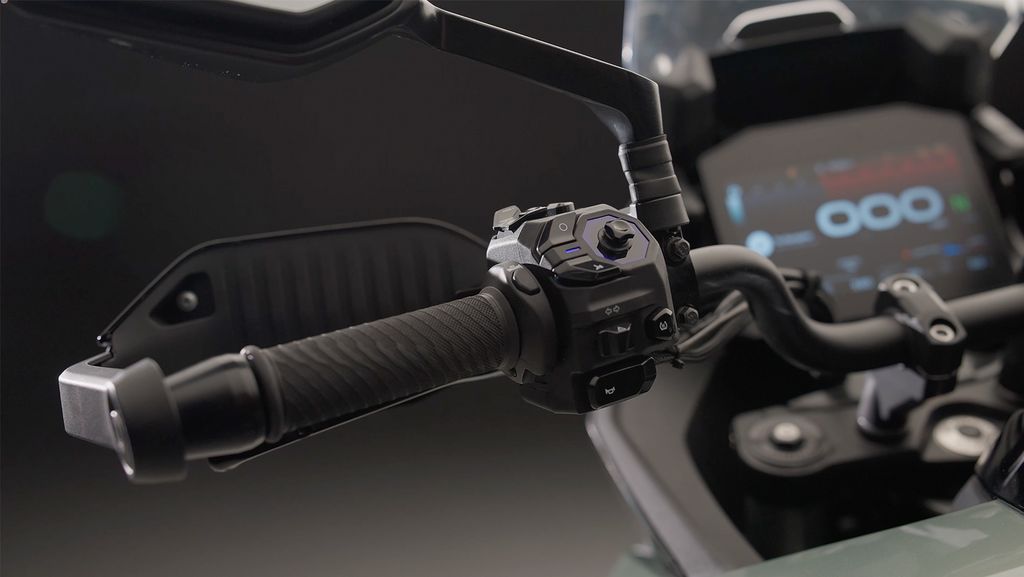
Photo by: Norton Motorcycles
Something else you won’t find anywhere else in this segment is keyless ignition as standard, along with keyless electronic steering lock, keyless seat lock and keyless fuel cap release. By all accounts, the Atlas is far more tech-heavy than other models in this range, but it’s not necessarily heavy; If there is anything, it is light. Norton lists the Atlas’s wet weight as 188 kg (414 lb) and 192 kg (423 lb). But, much as I hate, this ‘wet weight’ does not include fuel, so let’s add it.
Both machines have 4,07 US gallon fuel tanks, so if they were full, the Atlas would weigh 199 kg (439 lb), and the Atlas GT’s weight would stop at 203 kg (448 lb). Even with fuel, these figures make both models two of the lightest in the range. But being the lightest bike, with a premium badge and a ton of tech must mean it’s in a different price league, right? Wrong.
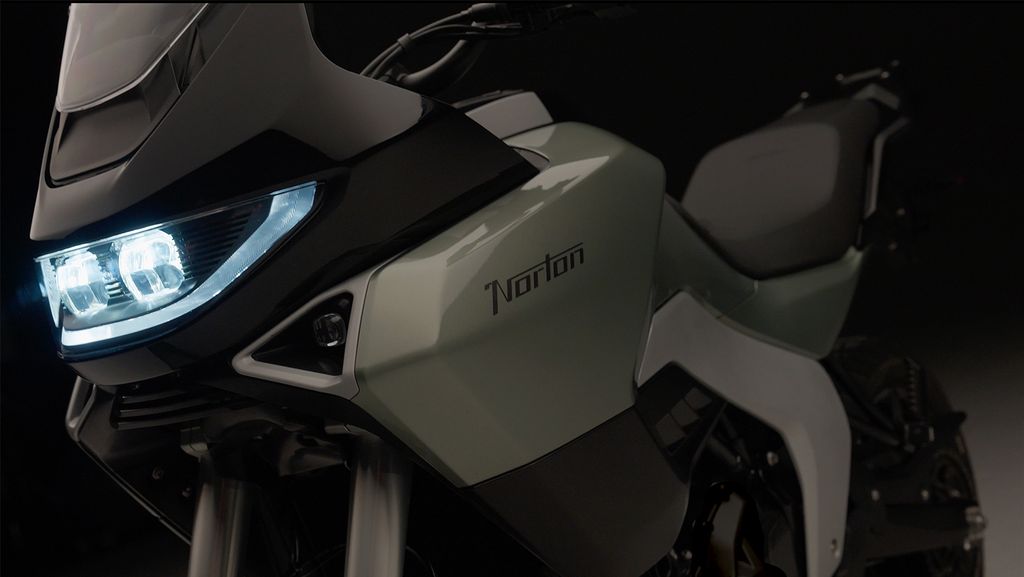
Photo by: Norton Motorcycles
We don’t have an official MSRP for the US yet, but the Atlas will cost £8,250 in the UK and €9,250 in the EU. If all things are equal, the Atlas will be priced around $10,700-11,050 in the US. This means the Atlas will be one of the best value bikes in the category, being cheaper than the Triumph Tiger Sport 660 and on par with the Kawasaki Versys 650.
If Norton can keep Atlas at the same price as it is in the EU, it should prove to be a very attractive offering in the US. If we’ve learned anything from motorcycle sales figures over the past few years, it’s that companies selling low-powered bikes come out on top in large numbers, and that’s what Norton needs right now.