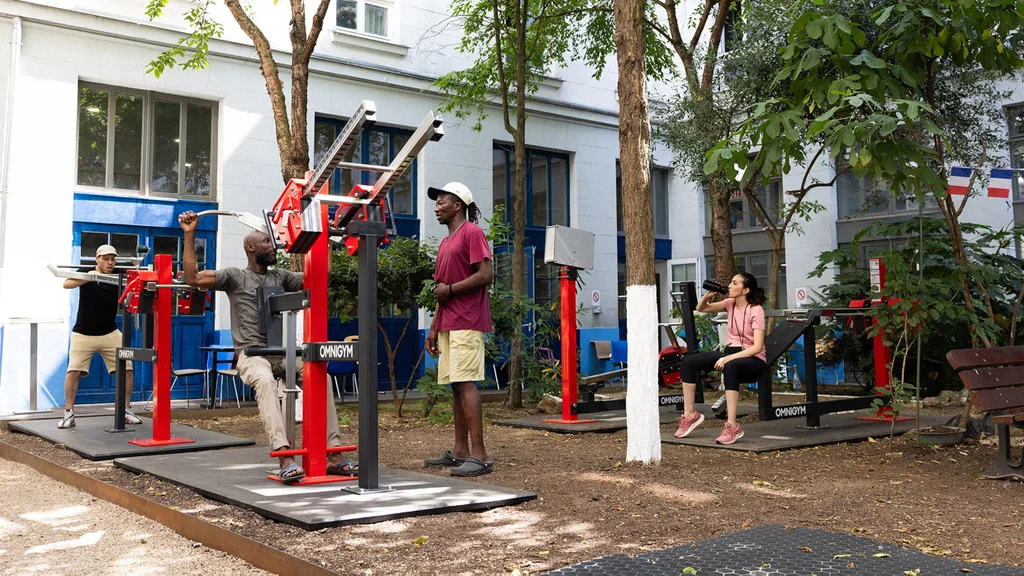
At the nonprofit Emmaüs Solidarité homeless shelter in Paris, it’s not uncommon for new residents to have sleepless nights. But since the summer, residents have had a new way to cope with the stress of a restless evening: head to the courtyard and do a few circuits on their new outdoor gym.
Through a partnership between the city, the nonprofit, and Omnigym, a Finnish fitness company, this new installation of outdoor exercise equipment seeks to not just help provide access to fitness gear, but build community and self-esteem. Consisting of four pieces of workout gear set up in the garden next to the shelter, this small public gym provides a fitness option for all, but is specifically located to assist those who don’t have the money or wouldn’t feel welcome in a private gym. It also addresses broader issues of physical inactivity and social isolation.


“It’s a natural gathering place, and people from different socioeconomic backgrounds start to meet because they exercise,” says Omnigym’s CEO, Kirsti Laasio. “It’s a very egalitarian sort of situation.”
The company, which has more than 800 locations
The company, which has more than 800 locations across 18 countries, believes there’s both a business case and social value in building new gyms and workout spaces for disadvantaged communities. Laasio says that outdoor gyms can become part of city planning, since they can serve as modes of social contact that also help activate the streetscape and encourage preventive healthcare.
The company’s People’s Gym initiative has been installing equipment for free at spaces such as prisons to demonstrate the impact this equipment can have on communities. Public sector clients, like park districts, make up most of Omnigym’s clientele. The Emmaüs Solidarité site includes four pieces of equipment: lat pulldown, squat, incline bench press, and low row.

The company had been working with the city of Paris, where it has two other outdoor gyms. When Laasio was told there was a shelter seeking to try something like this, Omnigym decided to participate in a trial, donate the equipment, and study the impact. The gear was installed in mid-July, and sensors on the equipment have found the gym gets consistent use.
One finding showed that people at the Emmaüs Solidarité location tend to work out more later in the day and overnight, as opposed to early mornings, suggesting an atypical routine compared with other gym users. The company uses this anonymous user data to make the case for more locations, and better tailor the array of machines at any particular site.