It started as a routine annual follow-up with my cardiologist. I was originally referred by my family doctor ten years ago because my heart would start skipping periodic beats even when I was not exercising. The problem was eventually diagnosed as a heart rhythm problem called tachycardia.
I always thought of my heart as a pump to deliver blood through my body. I learned that the pump depends on electrical pulses generated by a small area of tissue called the sinoatrial node that controls the heart’s rhythm. Like the wiring in our home, problems can occur with age. Over time, I was able to learn how to normalize the rhythm on my own.
However, during this visit, my doctor heard something that caused some concern and further tests revealed that I had a more serious problem, which if not treated could be dangerous, including sudden death. I was surprised because I had no symptoms.
“This is not an emergency that we need to admit you to the hospital immediately, but I highly recommend that you get a pacemaker implanted as soon as possible,”
My cardiologist told me.
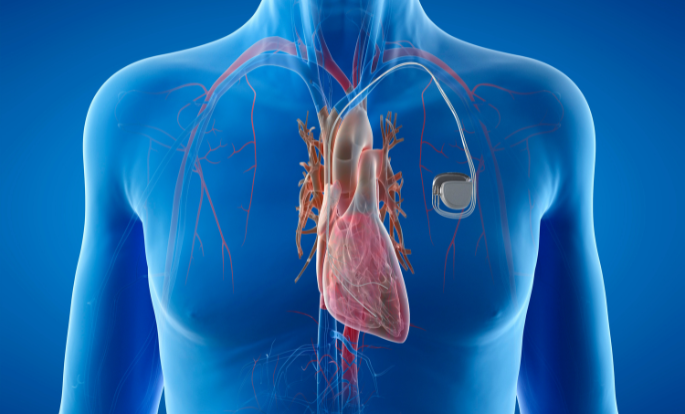
They referred me to a specialist who performed these types of procedures. The doctor said it was relatively simple. I will go to the local hospital. The procedure will take about an hour and will be performed under local anesthesia. The small device will be implanted through a small incision in my upper chest below my collar bone, and two small leads will be threaded through a vein to the two chambers of my heart. I will need someone to drive me but I can go home the same day.
Although the news was shocking at first, the decision to do so was clearly a decision taken without thinking. Carlin has had her own health problems over the past three years and I have become her primary caregiver. Dying suddenly from something that could be cured was not an option.
It has now been five days since the surgery and things are going well. I’m still in pain but everything feels good. I have to be careful with my work – no heavy lifting for three to four weeks until things heal. I will go back to the hospital in three weeks to make sure everything is working properly. Life goes on.
Living and loving as we move into the next phase of life
I will be 83 years old this year and Carlin will be 88 years old. We have been married for 46 years. For those who visit my website MenAlive, watch my welcome video, “Confessions of a Twice-Divorced Marriage Counselor.” The third time really was the charm for us. We feel very fortunate to be alive and to be able to be together and with each other as we continue to enjoy the mysteries of life as we recognize that our earthly journey is moving towards the end.
In earlier years I had never imagined that life would become so challenging as I grew older. I also never thought that love would be so sweet and joyful at this time of life. As our physical abilities have become more limited, we find great comfort in waking up each morning, giving each other a “high-five, we’re alive” and seeing what adventures we have in store for us today.
We spend more time enjoying the simple things:
- I am sitting in the garden
- walking around the neighborhood
- Watching TV and watching David Attenborough share his discoveries about life on planet Earth.
- Connecting with friends and family.
Carlin is mostly retired from his work as a consultant. I still see a few clients, write regular articles that I post weekly on MenAlive and The Good Men Project. I often interview other experts working in the field of gender-specific treatments and men’s mental, emotional, and relational health and share their work in my articles. I maintain some partnerships and collaborations with colleagues.
Our 6 grown children, 17 grandchildren, and 6 great-grandchildren are also a source of joy, as are the many friends we have met over the years.
opening your heart to the world
We all have personal challenges in life that we must resolve as we move from birth to death. But we all must deal with the realities of the world we live in. As I get older, it is becoming clearer to me that all life is interconnected. We survive and thrive, live and die in the complex web of life.
Just as my new pacemaker will help me return to a safe and healthy heart rhythm, I believe humans need to reconnect with the rhythms of the natural world.
It is also clear to me that for some time now man has been separated from the community of life and that if we are to survive as a species, we must find our way home again. Thomas Berry was a priest, “geologist” and historian of religions. He spoke powerfully about our connection to the Earth and the consequences of our failure to remember that we are a member of the community of life.
He reminds us:
“We never knew enough. Nor were we close enough with all our cousins in the great family of the earth. Nor could we listen to the different creatures of the earth, each telling their own story. However, now is the time for us to listen or die.”
David Attenborough is the world’s most famous natural history filmmaker. He recently turned 100 and is still working. In a recent book, A Life on Our Planet: My Witness Statement and Vision for the Future, He says,
“For life to truly thrive on this planet, there must be immense biodiversity. Only when billions of individual organisms make the most of every resource and opportunity they encounter, and millions of species interact to sustain each other, can the planet run efficiently.”
Attenborough concludes with this call to action:
“The natural world is collapsing. The evidence of it is all around. It has happened during my lifetime. I have seen it with my own eyes. It will lead to our destruction. Yet there is still time to put things right.”
Harville Hendrix and his wife Helen LaKelly Hunt have been helping men, women and couples learn to listen to each other and communicate more effectively for over forty years. In an article I wrote about her work, “Healing the World’s Wounded Angry People Using Revolutionary Tools of Safe Conversation,” I shared her vision of teaching the skills she uses with couples all over the world. On their website, Secure Conversation/Quantum ConnectionYou can learn about how they intend to teach 2.4 billion people over the next twenty-five years simple practices that could literally save humanity.
My six practices for staying balanced and healthy in a world out of balance
Here are six practices I use every day to help me get through this challenging time:
1. Do the next right thing and think the next right thought
In times of challenge I have found that it is easy to become overwhelmed. I got him asking, “What’s the next right thing?” Focuses me on the one thing I need to do next. I am asking, “What’s the next right idea?” Keeps my mind free from thoughts when adversity strikes.
2. Take it slow and easy
When I’m scared, I speed up and usually make mistakes so I can slow down and rest. Taking three deep breaths before acting empowers me.
3. Let go and let God.
When I feel like I must do everything by myself, this thought helps me recognize that I am not alone. There are resources all around me that are ready to help.
4. Be kind and patient with yourself and others.
When I feel overwhelmed and inadequate I beat myself up or see others putting me down or actively trying to undermine me. We are all trying our best.
5. Let them be and let me be.
In let them theory Mel Robbins reminds us that we can’t change “them”, we can only change ourselves and that small, consistent action changes everything.
6. How is the situation now?
Most of my pain, worry, and anxiety are about the past or the future. When I ask myself how things are right now, I can usually say they’re fine.
These are challenging times, but also a time of hope, renewal and change. There is still time to do the next right thing. What will you do?
I look forward to your own experiences, thoughts and feelings. Visit me on MenAlive and subscribe to my free weekly newsletter.