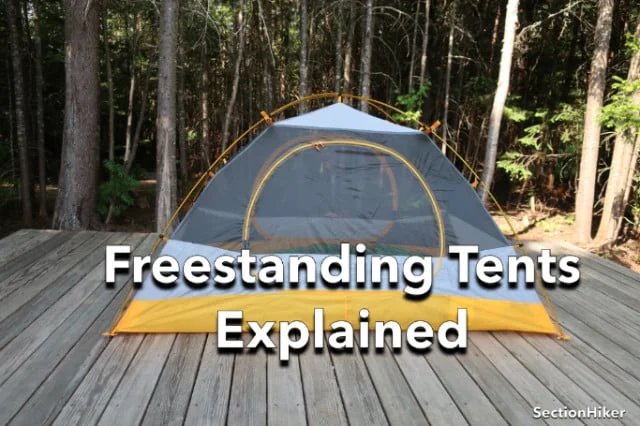
Freestanding tents are tents that can stand on their own (poles fit into the four corners), making them easy to set up in a variety of terrain, from desert sand and snow-covered peaks to wooden tent platforms. Most freestanding tents are double wall tents With a separate inner tent and a rainfly to help prevent Wetting your gear leads to condensation, although some single-wall freestanding tents also exist, designed primarily by climbers and mountaineers.

If you’re shopping for a freestanding tent, you’re bound to find some tents that are classified as semi-freestanding. Semi-freestanding tents are also freestanding, but they require multiple tent stakes to set up – primarily to stake out corners that aren’t taut to the poles.
This is a subtle difference, but important when pitching a tent on a wooden platform, rocky shore or sandy beach is very difficult, as a freestanding tent can be set up without pegs, while a semi-freestanding tent still requires them. See How to set up a tent on sand for more information on this topic.
Freestanding tents can be further divided into three categories, which we describe in more detail below:
- Double-wall tent where the inner tent is installed first
- Double-wall tent where the rainfly is installed first
- single-wall tent
Here are some examples of each type:
Double wall: first inner tent
Most freestanding tents made by US-based manufacturers like Big Agnes, MSR, NEMO, REI, and others require you to install the inner tent first, then drape a rainfly over it. It’s a very easy process, which is why tents that use it are so popular.

You simply stake the corners of the inner tent, spread the poles, insert them into the grommets at the corners, and then attach the walls and roof of the inner tent to the poles so the structure stands on its own. The rainfly is placed on top and usually connects the corners of the inner tent. Vestibule doors usually have to be staked, but if the stakes fit into the corners of the inner tent, it is considered freestanding.

This inner-tent-first design works well in dry weather, but it may get the inner tent wet if you have to set it up during rain. But come the worst, you can usually wipe off any rain that has entered the mesh roof of the inner tent with a camping towel and use the tent as normal.
Double-Wall Tent: Rainfly First
Many European-made tents, including those made by Hilleberg, Expede, and Terra Nova, are first set up with a rainfly. The tent poles slide into sleeves sewn into the rainfly fabric, and the inner tent hangs beneath it. In dry weather, you can leave the rainfly and inner tent attached when you take the tent down, so the entire structure is ready at once the next time you set up the tent.

While the rainfly-first design protects the inner tent from getting wet due to rain, this type of tent is generally heavier than a tent set up with the inner tent first. These tents are generally much more expensive because they are more difficult to make and are made from more durable materials.

single-wall freestanding tent
There are also single-wall freestanding tents. These are often designed for climbers and mountaineers who need a tent that is easy to set up in adverse winter conditions on narrow rocky ledges where pitching a tent would be impossible.

In this style of tent, tent poles are usually placed crisscrossing the inside or outside of the tent. Although these freestanding tents are very lightweight and convenient to use in cold winter weather, they have poor ventilation and are subject to heavy internal condensation unless all doors and windows are left open.
See also:
SectionHiker never accepts payment for gear reviews or editorial coverage. When you purchase through affiliate links on our site, we may earn a small commission at no additional cost to you. Help us continue testing and writing non-sponsored and independent gear reviews, hiking and backpacking FAQs, and free hiking guides.