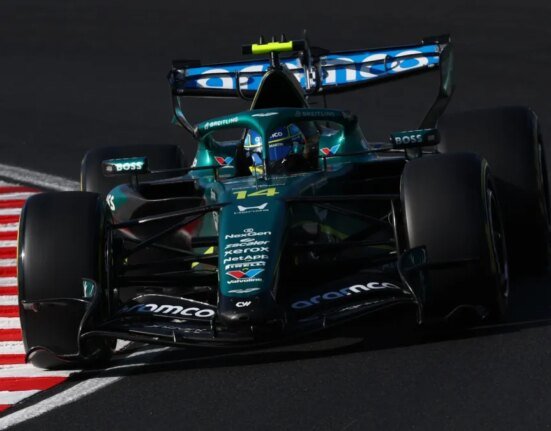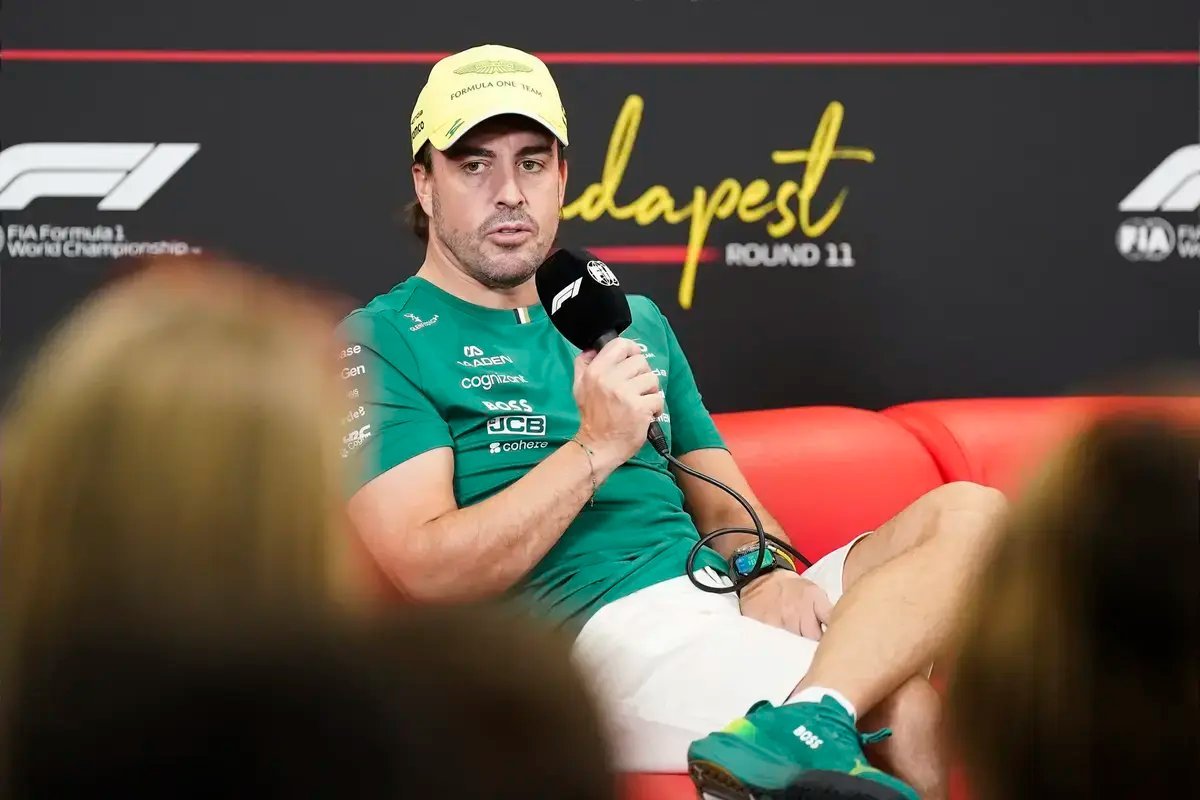
Fernando Alonso has given a scathing assessment of Aston Martin’s struggles heading into the 2026 Formula 1 season, declaring that “no package in the world” can adequately compensate for the team’s shortcomings in the rest of the grid – even as Aston Martin prepares to debut a radical B-spec chassis at the Hungarian Grand Prix. The Silverstone-based team has found itself languishing at the back of the field, finishing just one point ahead of newcomers Cadillac at Monaco.
Aston Martin’s difficulties were highlighted most recently at the Spa-Francorchamps weekend, where Alonso and teammate Lance Stroll qualified on the back row for the fifth consecutive race. The two-second gap to the next slowest car—Cadillac’s Sergio Pérez—was staggering, highlighting the scale of the team’s technical problems. Losses have increased since the start of the Melbourne season, mainly due to rivals introducing significant upgrades, while Aston Martin delayed its own development to address fundamental issues on the AMR26 chassis.
This weekend in Budapest, Aston Martin will finally unveil a dramatically revised chassis aimed at improving aerodynamics and reducing weight, with further enhancements to the power unit scheduled for Zandvoort in August. However, expectations within the team remain cautious. While Sergio Pérez suggested the upgrade could “definitely” close the gap, Alonso dashed hopes of a miraculous turnaround.
Speaking ahead of the Hungarian Grand Prix, the two-time world champion explained: “I’m not thinking too much about numbers or position or anything like that, because if we go back to the last five races, I think we have a very different gap with the midfield. We had a more or less consistent gap to pole position, which is obviously unattainable at the moment. But there were some tough circuits: Silverstone was tough, Spa was one of the toughest, I think. That was the guy in front of us, 2.1 seconds. So, there is no package in the world that will give you that much time and probably not change the situation if you drive an updated car a week earlier.
Alonso stressed the need for realism, saying: “It will change circuit by circuit. Hopefully Budapest is a favorable circuit for us, power is not the most important point here, which is obviously we will update the car, but not the engine yet. So we still have some shortcomings that we need to overcome. I am more into, we can understand what is the direction of the car, if we are on a good track, and if we unlock, ultimately, the performance.”
Aston Martin’s approach in Budapest focuses on learning rather than quick leaps into competitiveness. The team’s chief trackside officer Mike Craik highlighted the challenge: “When you bring in substantial upgrades, it’s something that the track team needs to learn as quickly as possible. We don’t have a winter test where you can just do a few runs, a few back-to-backs and all that. It puts a lot of emphasis on the quality of your data, the quality of understanding your simulations. But we don’t expect to get everything out of it the first time tomorrow. I think that’s what we need to learn.” How to manage it and get the best out of it. We have a good track team, we have a good support team from home to work on quickly, but I think the tests that we need to do, whether it’s ride height, whether it’s rake and things like that, will come in the next events.”
As Aston Martin begins this high-risk experiment with its B-spec chassis, the message from both Alonso and the technical leadership is clear: there are no silver bullets in Formula 1, and progress will be measured in growth, not miracles.
Don’t miss a second with the new app where you can watch live timing of MotoGP, Formula 1, NASCAR, IndyCar and much more: just press – Here (Free for all users)