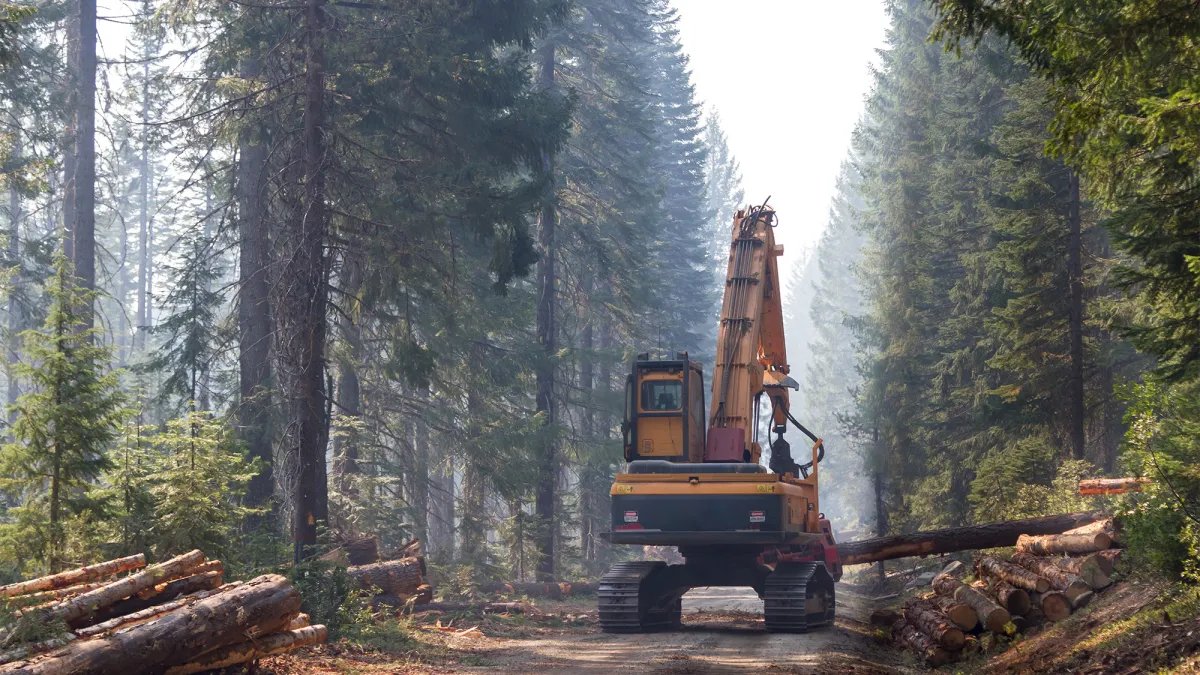
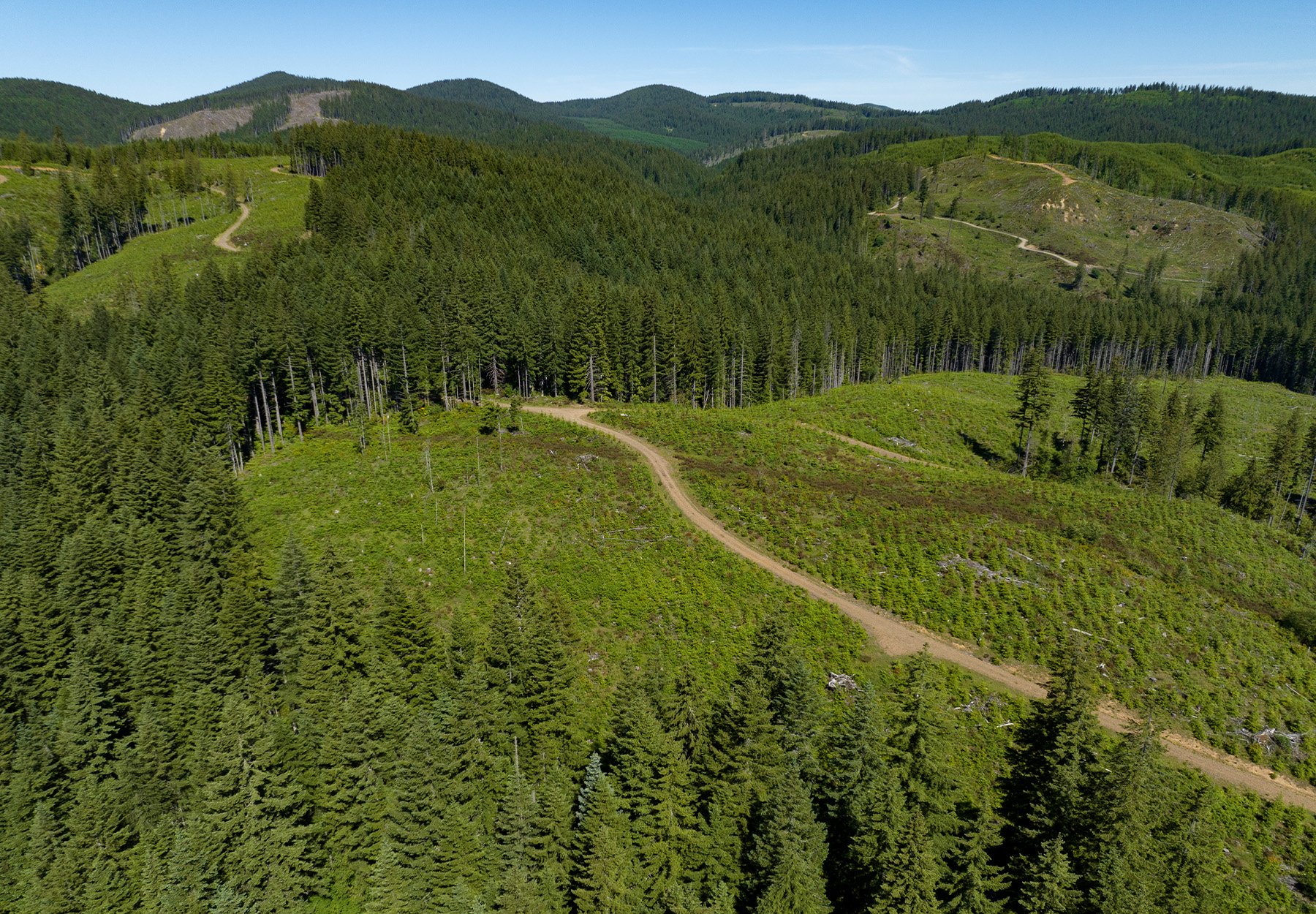
An Oregon environmental group is suing the Interior Department to stop timber sales in the Coast Range because Congress invalidated the BLM resource management plan that directed the sale of about 1,300 acres of timber in the sensitive area. salmon-rearing habitat.
Legal experts suggest this could be the initial defense in a series of similar lawsuits that maintain federal timber sales, oil and gas leases, renewals of grazing permits and even holiday season permits to cut down Christmas trees on public lands, all of which are illegal because Congress repealed the agency plans that authorized them.
Oregon lawsuitFiled today in U.S. District Court in Eugene, the lawsuit essentially seeks to use Congressional action to halt the same resource extraction that many Republicans had hoped to accelerate when they used the controversial. Congressional Review Act Canceling resource management plans on millions of acres of BLM lands across the West.
In the case of the Oregon suit, environmental groups Cascadia Wildlands claims to Aloha Trout Forest Management Project Illegal because the BLM “can only approve the harvesting of timber from its lands in accordance with a valid Resource Management Plan (RMP).” But the lawsuit claims that BLM’s plan was invalidated by Congress.
The issue is the decision taken by Congress last October Cancel three BLM resource management plansIn Montana, Wyoming and Alaska, their authority is being questioned using the Congressional Review Act. After the Government Accountability Office concluded that RMPs could be considered “regulations” and not just “plans”, all RMPs throughout the country were deemed invalid. President Trump Signing CRA resolutions into law In December. The use of the CRA became possible when the Government Accountability Office concluded that RMPs could be considered “regulations” and not simply “plans”. These actions have brought nearly all RMPs across the country into question as the CRA requires regulations (and now, possibly plans) to be submitted to Congress before they can take effect. Neither the BLM nor the Forest Service have submitted plans to Congress since passage of the CRA in 1996, meaning that no plans passed since that date clear this legal hurdle.
The Oregon lawsuit claims that, because BLM’s management plans have been voided, any actions taken by the agency related to the plan, including timber sales, are also void. The last valid RMP for public lands in western Oregon is Northwest and Coastal Oregon RMPApproved by BLM in 2016. It guides sustainable timber harvest on 1.3 million acres of federally managed land in western Oregon. But, according to the plaintiffs, the agency did not authorize the sales of timber challenged in their lawsuit.
The Oregon lawsuit specifically names U.S. Department of the Interior Secretary Doug Burgum and newly appointed Director of the Bureau of Land Management Steve Pearce as defendants.
This could be the first of many, and perhaps hundreds, of similar cases, says John Ruppel, research professor of law and director of the influential Law and Policy Program at the University of Utah. Wallace Stegner Center for Land Resources and Environment.
“I wouldn’t be surprised if there were more lawsuits like the one in Oregon,” he says. “The logic is really simple and straightforward.”
Rupal says the basis for legal action is implicit in the text of the Congressional Review Act, enacted in 1996.
“The first line of the statute states that before a rule can go into effect, it must be submitted to Congress,” he says. “Since 1996, there has been this question: What constitutes a rule? And over that 30-year period, the Forest Service, BLM, National Park Service, and the U.S. Fish and Wildlife Service have all been of the same view that land management plans are not ‘rules’ and therefore not subject to the CRA.”
As a result, no agency’s land management plan has been submitted to Congress. That system has allowed plans to be widely disseminated for public input and made leasing, permitting, and administration of the plans predictable and systematic.
“Fast forward to the last Congress, which introduces and then passes these resolutions of disapproval and says these plans are rules,” Ruple says. “Then the President signs those proposals into law. You have both Congress and the President saying that the plans are rules. It seems obvious to follow that if the plans are rules, they must be submitted to Congress before they can go into effect. But because they were not submitted to Congress, it is a clear argument that those plans were not legally enacted and therefore they cannot go into effect.”
In a floor speech last year, Montana Senator Steve Daines (R), the sponsor of the Congressional Review Act legislation that repealed the BLM’s resource management plans, claimed that the legislation “right a wrongResources for “Unleashing Montana’s Energy”.
Oil and gas leasing could be next
The Oregon lawsuit comes from language in federal regulations that states “resource management authorities and actions shall be consistent with the approved plan.”
“If those authorizations have to conform to an approved plan and your plan is not approved, how can those authorizations be valid?” Rupee note. “Here we have a challenge to a timber sale in Oregon, but it seems you could easily make an argument about many of the more than 5,000 BLM APDs (applications for permits to drill) that have been issued but not developed. They were likely issued based on consistency with an RMP that was finalized less than 30 years ago” when the CRA was in effect.
Ruple says the “pinwheel” of results from the CRA action will potentially affect the broad scope of activities governed by land-management agencies.

“If you want to take your kid outside and cut down a Christmas tree on national forest land, you have to get a permit first,” he says. “That permit must be issued consistent with the forest plan. You want to go rafting in the Middle Fork of the Salmon River? You will need a permit issued consistent with the BLM management plan. If those plans are rescinded, I will assume the permits are invalid.”
He said the results could spread to Vail, Colorado ski resort.
“That ski area operates under lease with the National Forest Service,” he says, noting that the impact could also be on permits for transmission lines, water lines and public lands right-of-way to the renewable energy facility site.
Other land-use decisions, including BLM designations, may also be invalid. Areas of Critical Environmental Concern Intended to benefit watershed protection aimed at habitat protection of big game, or conservation of native fish species.
“This was very avoidable”
In November, many odd classmates submitted multiple applications without coordination Letter to the Acting Director of BLMAll are urging caution about the downstream effects of the CRA decision. Correspondents included former BLM leaders, energy and timber executives, tribes, a handful of conservation organizations, and more than 30 leading environmental-law professors. Several letters warned that more than 5,000 oil and gas leases on more than 4 million acres of public lands could be invalidated by the CRA. Their letters state that treating the RMP as a “rule” could invalidate every federal resource-management plan implemented since 1996.
Rupal was not only one of the law professors’ letter signatories; He was its main author.
“There were a lot of people who tried to warn Congress about what I think would be very predictable consequences,” Rupal says. “We all said, ‘Don’t do it. The unintended consequences are seriously destabilizing. Whether you think these plans are good or bad, put that aside – we don’t take a position on that. We just think it’s indiscriminate and destructive and really unhelpful.’
“I don’t want to point the finger at Congress or the President, but I don’t know if people understood or didn’t pay attention to the warnings or ignored them. But a lot of this could have been avoided,” he adds.
Read further: Americans already agree on how to balance energy development on public lands in their states. House voted to undo it
Oregon lawsuit asks federal district court to reject Aloha Trout Forest Management Project. The sale of timber “was not in accordance with the law and should be declared unlawful” under the Federal Administrative Procedure Act. The lawsuit further asks the court to “declare that all permits, leases, rights of way, and other site-specific authorizations issued pursuant to the (Northwestern and Coastal Oregon RMP) are null and void, and as a matter of law, were never issued.”
The Interior Department responded outdoor LifeInquired about the lawsuit, but declined to comment due to “pending litigation.”