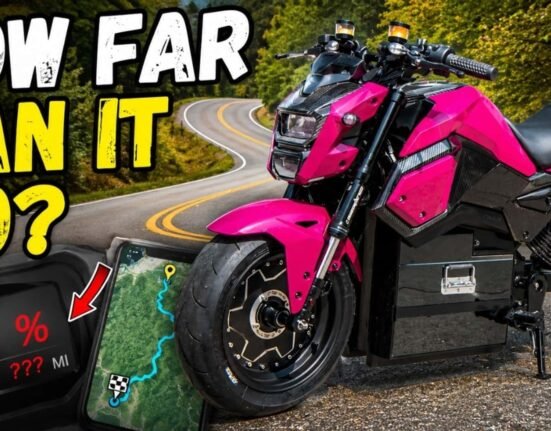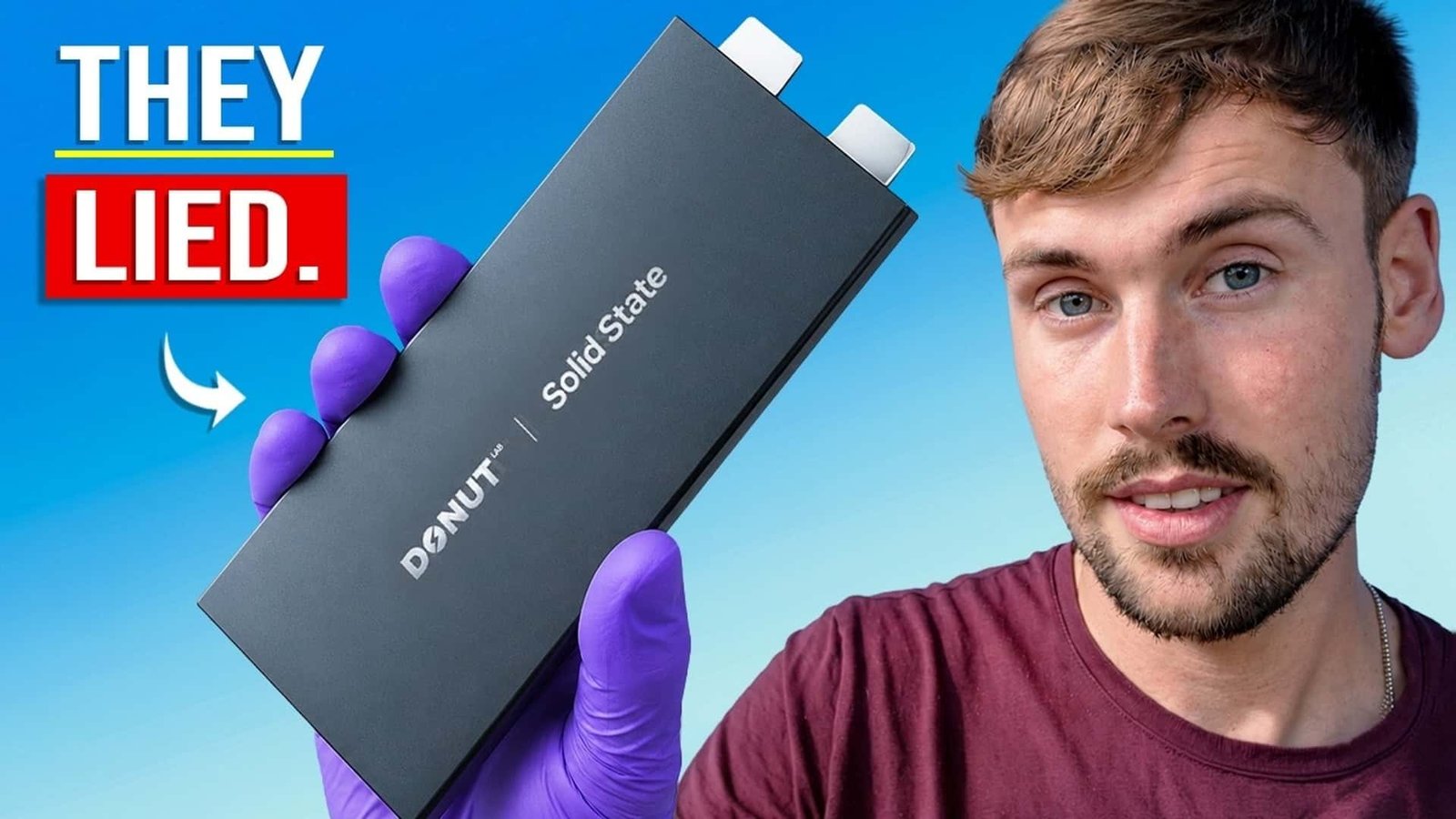
Donut Lab and Verge Motorcycles have been in the news in recent months for a number of reasons. But most importantly, the duo introduced “the world’s first solid-state battery that is ready for use in OEM vehicle manufacturing.” If you’ve been following the world of electric vehicle technology for the past few years, this will be huge news, as it promises to boost EV manufacturing by two decades.
Solid-state batteries are basically the holy grail of the industry, in that they promise to (theoretically) be lighter, cheaper, store more power, be able to charge faster, and last longer. And the big names in the industry, i.e. Honda, Toyota, Kawasaki, General Motors, Panasonic, Ford and about a hundred others have poured billions of dollars into their research and development of solid-state battery technology.
However, no one has succeeded in bringing anything close to viable. And no one has ever brought anything to market. And that’s why many people viewed Donut and the Verge’s announcement with considerable skepticism, because a small startup somehow figured out how to make an “OEM” grade solid-state battery, as well as how to put it into production before anyone else.
He will be very big.
However, almost immediately, questions began to arise from both within the industry and beyond as to whether or not it was real. Then came a whistleblower complaint accusing the company of misrepresenting the facts, using non-independent “third-party” testing, and more. Recently, YouTuber and scientist, Dr. Ryan Hughes called out Donut Lab and the Verge and debunked several of the companies’ claims, including that the solid-state battery they are carrying is essentially a lithium battery in disguise.
According to Donut Lab Original press release About the new solid-state battery, “Donut Lab’s all-solid-state battery offers 400 Wh/kg energy density, enabling long range, lightweight structure, and unprecedented flexibility in vehicle and product design. It can be fully charged in just five minutes without limiting charging to 80%, and supports full discharge safely, repeatedly and reliably.”
It says, “Unlike traditional lithium-ion batteries, the donut battery experiences minimal capacity loss over its lifetime, with a design life of up to 100,000 cycles, providing practical longevity that far exceeds existing technologies. Safety is built into the core: no flammable liquid electrolytes, no thermal runaway chains, and no metal dendrites. It eliminates the root causes of battery fires. “, making the donut battery extremely safe and truly revolutionary.”
Since then, however, Donut Lab worked with Finland’s VTT Technical Research Center to “independently” test one of the brand’s cells, in order to demonstrate the technology they have achieved. The sign of “cell” is intentional, as Donut did not supply a complete battery for tests. This brings us to Dr. Hughes, who works under the pseudonym Zeroth on YouTube, and Donut Lab And here’s their video on its solid-state battery claims.
“I’ve talked to over 20 independent battery experts about the test data that Donut Lab has released as part of its series trying to prove that the battery is real,” Zeroth’s video says, examining Donut Lab’s claims about its relationship with battery manufacturing company Nordic Nano – which ride separately There has been a covered in the past – and ongoing – public dispute with former employees and whistleblowers, stating, “Without fail, every single one of them confirms that this is a lithium-ion battery cell.”
This is a big accusation, as regular lithium-ion battery cells are not what Donut or Verge are marketing, nor is Verge Motorcycles reportedly selling to prospective customers. The video shows a ton of evidence that refutes Donut Lab’s test data, specifically targeting the battery voltage and cell expansion curve that our brothers and sisters have seen. InsideEVS Highlight really well. However, it highlights the same issues that many other outlets and labs have raised with Donut’s statements and the data provided since the battery’s debut.
Donut Lab has seen and released the video the following statement.
A video published by YouTuber Zeroth regarding donut batteries has recently been circulated in the international media. The video and related media coverage give the impression that the announcement revealed something new. However, the content merely compiles previous claims we have already addressed. It’s worth noting that this materials manufacturer is publicly engaged in a business partnership with our Chinese rival, battery technology company CATL.
We stand behind the technical data and commitments we provide, taking them very seriously. The trust of our partners, investors and customers is of paramount importance to us. We are making progress on schedule with donut battery technology.
The video also references claims made by former Nordic Nano Group employee Lauri Peltola. Peltola has not been a member of the working group developing Donut Lab’s battery technology. As a result, he neither has nor has access to the latest information regarding technical details or the overall scope of our development work. Nordic Nano Group has taken the necessary legal action and filed a formal police report in relation to Peltola’s activities.
That statement neither accurately answers Zeroth’s questions, nor other parts of the YouTuber’s investigation, nor the many questions that have arisen from other outlets and groups. However, it attacks Zeroth’s credibility, highlighting an alleged partnership with Chinese battery giant CATL – there is a line on Zeroth’s website saying we work with the best. “Some of the incredible companies we’ve partnered with: BMW, CATL, 3M, AMD” — though it’s unclear whether Zirtoh is referring to CATL through work as a content creator on YouTube, as a paid ambassador, or some other paid opportunity.
Zeroth’s video calls into question many of the things that Donut has attempted to combat with its alleged third-party testing, but still remain. Similarly, although Verge Motorcycles announced a month ago as of this writing that customers would be able to order a solid-state battery with the brand’s TS Pro EV motorcycle, it’s still not an available option when you configure yours online. Despite Verge saying that they will be available to customers in the coming months after launch.
In the end, we have more questions than answers, a legal battle that’s still ongoing, and a solid-state-powered motorcycle that’s apparently in limbo.