2026 New York City Marathon Elite Field: Conner Mantz
The American record holder runs his first marathon in more than a year on Nov. 1, after two sacral stress fractures kept him off the start line in Boston this spring.
Published: Oct 25, 2026 3:03 pm
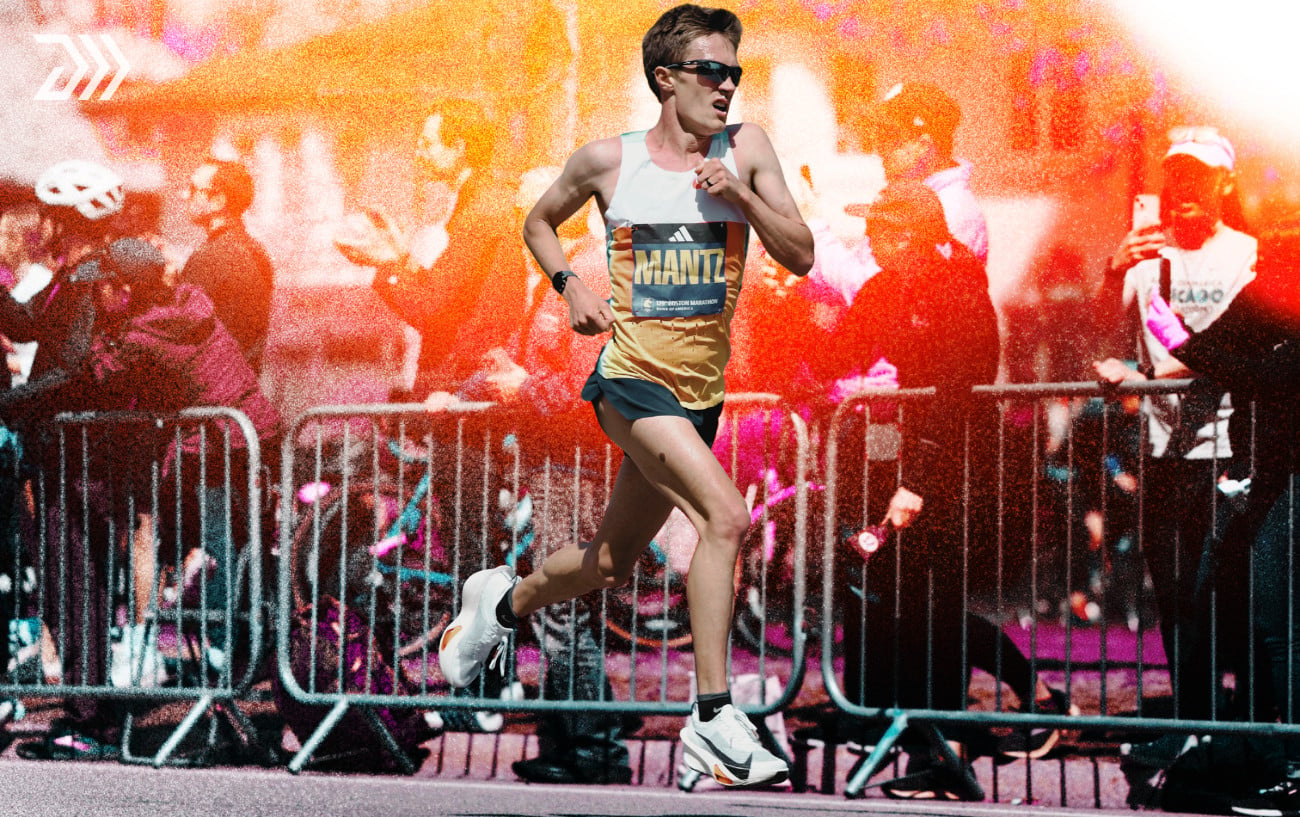
Conner Mantz arrives at the New York City Marathon as the fastest record-eligible American ever, carrying the 2:04:43 he ran in Chicago last October. New York will be his first marathon since that run. He spent most of 2026 recovering from two stress fractures in his sacrum and has raced just twice this year, both times with this race in mind, and he lines up against a men’s field led by defending champion Benson Kipruto and the one American who has run faster than him, Zouhair Talbi.
Conner Mantz at a Glance
- Age: 29 (born Dec. 8, 1996, in Logan, Utah)
- Hometown: Smithfield, Utah
- College: Brigham Young University (BYU)
- Coach: Ed Eyestone
- Sponsor: Nike (professional since December 2021)
Personal Bests
- Marathon: 2:04:43 (Chicago, 2025)
- Half-marathon: 59:17 (Houston, 2025). He also ran 59:15 at the 2025 New York City Half, which is not a record-eligible course.
- 10K (road): 27:26 (Beach to Beacon, Cape Elizabeth, Maine, 2025)
- 10,000m: 27:25.23 (2022)
- 5,000m: 13:10.24 indoors (Boston, 2022); 13:11.81 outdoors (Eugene, 2022)
- 1,500m: 3:37.92 (Eugene, 2023)
Records
- American marathon record: 2:04:43, Chicago, Oct. 12, 2025. Still current. Talbi ran 2:03:45 at Boston in April, but Boston’s point-to-point course is not eligible for records.
- American half-marathon record: 59:17, Houston, January 2025. Still current. It took 26 seconds off the 59:43 Ryan Hall ran in 2007.
Marathon Results
- 2022 Chicago: 7th, 2:08:16 (debut)
- 2023 Boston: 11th, 2:10:25
- 2023 Chicago: 6th, 2:07:47
- 2024 U.S. Olympic Trials: 1st, 2:09:05
- 2024 Paris Olympics: 8th
- 2024 New York City: 6th, 2:09:00
- 2025 Boston: 4th, 2:05:08
- 2025 Chicago: 4th, 2:04:43
Titles and Championships
- U.S. Olympic Marathon Trials champion (2024)
- NCAA Division I cross-country champion (2020 and 2021)
- U.S. half-marathon champion (2021)
- U.S. 20K champion (2022 and 2025)
- 8th at the 2024 Olympic marathon in Paris
- 12th at the 2026 World Half-Marathon Championships in Copenhagen
From Smithfield to BYU
Mantz grew up in Smithfield, a few miles north of Logan, and never left Utah to run. At BYU he was coached by Ed Eyestone, a two-time Olympic marathoner, and that partnership has carried on through his whole professional career.
On the grass he won the NCAA cross-country title for the pandemic-delayed 2020 season, then won it again in the fall of 2021 in 28:33.1, a course record. Earlier that year he had finished second over 10,000m at the NCAA Outdoor Championships. He signed with Nike in December 2021 and moved up to the marathon within a year, running 2:08:16 for seventh in Chicago in October 2022.
Seven of Eight Marathons as the Top American
Mantz has been the first American man home in seven of his eight marathons, starting with his debut. The exception was Boston in 2023, where he finished 11th and third among Americans.
He won the U.S. Olympic Trials in 2:09:05 in February 2024, finished eighth in Paris that August as the top American in the Olympic marathon, and came back three months later to take sixth in New York in 2:09:00, just ahead of Clayton Young.
In January 2025 he ran 59:17 in Houston to take the American half-marathon record, and in April he finished fourth at Boston in 2:05:08. He won the U.S. 20K title and set the Beach to Beacon course record over the summer, then went to Chicago in October and ran patiently behind the leaders, reaching halfway in 1:02:19 and holding record pace into the final miles. His 2:04:43 for fourth took 55 seconds off Khalid Khannouchi’s American record of 2:05:38, which had stood since the 2002 London Marathon.
The Long Road Back to New York
Mantz did a hard long run the day after Chicago, and he later told David Monti of Race Results Weekly that it “gave me a false sense of confidence, and how recovered I was.” Three weeks after Chicago he paced his wife, Kylie, through her marathon debut in Fresno, and by mid-November his Strava showed mostly elliptical and arc trainer sessions.
Hip and back pain turned out to be a sacral stress fracture, the pain came back when he tried to return to training, and he ended up with two fractures in all. He missed the World Cross-Country Championships in Tallahassee in January and, on March 31, withdrew from the Boston Marathon, saying his fitness had “not progressed well enough.” He was not able to run on land again until mid-May. “It was just overtraining, overuse, and had taken on a little bit too much,” he told Race Results Weekly in an interview published by LetsRun.
After the second fracture Eyestone changed the plan. Mantz now does more physical therapy, sleeps more, eats better and trains with less intensity, and two of his recovery runs each week are on a treadmill fitted with a LEVER system that takes about 15 percent of his body weight off his legs.
He finally raced again at the Falmouth Road Race on Aug. 16, finishing fourth in 31:19, only two seconds behind Talbi, with both men under Alberto Salazar’s 1982 time on the course. “I think it showed that I’m not there yet, but I’m on the right track,” Mantz said afterward. Five weeks later he went to the front early at the World Half-Marathon Championships in Copenhagen, eventually faded, and finished 12th in 1:00:08, his fastest half of the year. Sweden’s Andreas Almgren, who sat behind him early, won the title in 58:06 and will make his marathon debut in New York too.

What to Expect From Conner Mantz in New York
“We’re trying to be more cautious this go-round,” Mantz told NBC Sports, describing the main goal as getting to the start “100% healthy.” He told CITIUS Mag he would only settle on a race goal with Eyestone on Oct. 30, two days before the start, and that he believes he can compete if the mileage is in his legs.
New York’s course, with its bridges and its late climb up Fifth Avenue into Central Park, rewards the kind of patient running he showed in Chicago, and it has no pacemakers. The course record is 2:04:58, so the times from Chicago and Boston matter less here than racing sense. Mantz knows the course from 2024, when he finished 81 seconds behind the winner, Abdi Nageeye, who is back this year along with two-time champion Geoffrey Kamworor.
Kipruto has the fastest personal best in the field at 2:02:16, followed by Deresa Geleta (2:02:38) and CyBrian Kotut (2:03:22). Talbi and Mantz are the two fastest Americans in marathon history, and Talbi, who became a U.S. citizen in 2025, can represent the United States from 2027, which puts him in contention for the 2028 Olympic Marathon Trials in St. Louis on March 25, 2028. A healthy Mantz has made a habit of being the first American across the line, and New York is the first chance to see how much of the 2025 version has come back.
The professional men start at 9:05 a.m. ET on Sunday, Nov. 1. Our guide to watching the New York City Marathon has the full broadcast details, and we’ll be following the race on our live coverage page.
Get more running stories — join RunClub
Daily running news, a community of 300,000+ runners, free training plans for every distance, and a daily running game. Free to join — no card.
‘;
pfOverlay.addEventListener(‘click’, function(e){ if (e.target === pfOverlay || e.target.closest(‘.rc-news__pf-close’)) pfOverlay.style.display=’none’; });
document.body.appendChild(pfOverlay);
}
pfOverlay.querySelector(‘.rc-news__pf-body’).innerHTML = r.data.html;
pfOverlay.style.display = ‘flex’;
}).catch(function(){});
}
root.addEventListener(‘click’, function(e){
var a = e.target.closest(‘.rc-news__author’); if (!a) return;
e.preventDefault(); openProfile(a.getAttribute(‘data-user’));
});
// Reply targeting (composer lives outside the re-rendered box).
var pill = document.getElementById(‘rc-artc-reply-pill’);
var pillName = document.getElementById(‘rc-artc-reply-to’);
var input = document.getElementById(‘rc-artc-input’);
var formEl = document.getElementById(‘rc-artc-composer’);
function setReply(pid, name){ replyParent = parseInt(pid,10)||0; if (replyParent && pill){ if (pillName) pillName.textContent = name||’comment’; pill.style.display=”; } if (input) input.focus(); }
function clearReply(){ replyParent = 0; if (pill) pill.style.display=’none’; }
var rcx = document.getElementById(‘rc-artc-reply-cancel’); if (rcx) rcx.addEventListener(‘click’, clearReply);
box.addEventListener(‘click’, function(e){
var b = e.target.closest(‘.rc-news__reply-btn’); if (!b) return;
setReply(b.getAttribute(‘data-parent’), b.getAttribute(‘data-name’));
if (formEl) formEl.scrollIntoView({block:’nearest’});
});
// Show-all (load the full thread).
box.addEventListener(‘click’, function(e){
var s = e.target.closest(‘.rc-artc__showall’); if (!s) return;
s.disabled = true;
post(‘mh_artc_thread’, {post_id:postId, sort:currentSort, all:1}).then(function(r){ if (r.success && r.data.html) box.innerHTML = r.data.html; }).catch(function(){ s.disabled=false; });
});
// Sort tabs.
Array.prototype.forEach.call(document.querySelectorAll(‘#rc-artc .rc-news__sort’), function(tab){
tab.addEventListener(‘click’, function(){
var ss = tab.getAttribute(‘data-sort’); if (ss === currentSort) return;
currentSort = ss;
Array.prototype.forEach.call(document.querySelectorAll(‘#rc-artc .rc-news__sort’), function(t){ t.classList.toggle(‘is-active’, t===tab); });
post(‘mh_artc_thread’, {post_id:postId, sort:currentSort, all:1}).then(function(r){ if (r.success && r.data.html) box.innerHTML = r.data.html; }).catch(function(){});
});
});
// Composer: emoji (all) + member image upload + submit.
var msg = document.getElementById(‘rc-artc-composer-msg’);
var mediaIds = [];
if (formEl){
var emojiBtn = document.getElementById(‘rc-artc-emoji-btn’);
var emojiPop = document.getElementById(‘rc-artc-emoji-pop’);
var emojiLoaded = false;
if (emojiBtn) emojiBtn.addEventListener(‘click’, function(){
if (!emojiLoaded){ emojiLoaded = true;
var sc = document.createElement(‘script’); sc.type=’module’; sc.src=’https://cdn.jsdelivr.net/npm/emoji-picker-element@1/index.js’; document.head.appendChild(sc);
var picker = document.createElement(’emoji-picker’);
picker.addEventListener(’emoji-click’, function(ev){
var u = ev.detail && ev.detail.unicode; if (!u) return;
var s0 = input.selectionStart||0, s1 = input.selectionEnd||0;
input.value = input.value.slice(0,s0) + u + input.value.slice(s1);
input.focus(); input.selectionStart = input.selectionEnd = s0 + u.length;
});
emojiPop.appendChild(picker);
}
emojiPop.hidden = !emojiPop.hidden;
});
var preview = document.getElementById(‘rc-artc-media-preview’);
var attachBtn = document.getElementById(‘rc-artc-attach-btn’);
var fileInput = document.getElementById(‘rc-artc-file’);
function renderPreview(){ if (!preview) return; preview.innerHTML=”; mediaIds.forEach(function(m){ var d=document.createElement(‘div’); d.className=’rc-news__pv’; d.innerHTML=’

‘; preview.appendChild(d); }); }
if (attachBtn && fileInput){
attachBtn.addEventListener(‘click’, function(){ fileInput.click(); });
if (preview) preview.addEventListener(‘click’, function(e){ var x=e.target.closest(‘.rc-news__pv-x’); if (!x) return; mediaIds=mediaIds.filter(function(m){ return String(m.id)!==String(x.getAttribute(‘data-id’)); }); renderPreview(); });
fileInput.addEventListener(‘change’, function(){
var files = Array.prototype.slice.call(fileInput.files||[]); fileInput.value=”;
files.forEach(function(file){
if (mediaIds.length >= 4) return;
var ph = document.createElement(‘div’); ph.className=’rc-news__pv is-loading’; ph.textContent=’…’; preview.appendChild(ph);
var fd = new FormData(); fd.append(‘action’,’mh_newsroom_upload’); fd.append(‘nonce’,upnonce); fd.append(‘file’,file);
fetch(ajax,{method:’POST’,body:fd,credentials:’same-origin’}).then(function(r){return r.json();}).then(function(r){
ph.remove();
if (r.success){ mediaIds.push({id:r.data.id, url:r.data.url}); renderPreview(); }
else { msg.className=’rc-news__composer-msg is-err’; msg.textContent=(r.data||’Upload failed.’); }
}).catch(function(){ ph.remove(); });
});
});
}
var btn = formEl.querySelector(‘.rc-news__send’);
var authorEl = document.getElementById(‘rc-artc-author’);
var emailEl = document.getElementById(‘rc-artc-email’);
formEl.addEventListener(‘submit’, function(e){
e.preventDefault();
var content = (input.value||”).trim();
if (!content){ msg.className=’rc-news__composer-msg is-err’; msg.textContent=’Write something first.’; return; }
var payload = {post_id:postId, content:content, parent:replyParent, sort:currentSort, all:1};
if (authorEl) payload.author = authorEl.value;
if (emailEl) payload.email = emailEl.value;
if (mediaIds.length) payload.media = mediaIds.map(function(m){ return m.id; });
btn.disabled = true; msg.className=’rc-news__composer-msg’; msg.textContent=’Posting…’;
post(‘mh_artc_comment’, payload).then(function(r){
btn.disabled = false;
if (r.success){
input.value=”; clearReply(); mediaIds=[]; if (preview) preview.innerHTML=”;
box.innerHTML = r.data.html;
msg.className=’rc-news__composer-msg is-ok’; msg.textContent = r.data.approved ? ‘Posted.’ : ‘Posted — awaiting moderation.’;
setTimeout(function(){ msg.textContent=”; }, 5000);
} else {
msg.className=’rc-news__composer-msg is-err’; msg.textContent = (r.data || ‘Could not post.’);
}
}).catch(function(err){ btn.disabled=false; msg.className=’rc-news__composer-msg is-err’; msg.textContent=’Error: ‘+err.message; });
});
}
})();