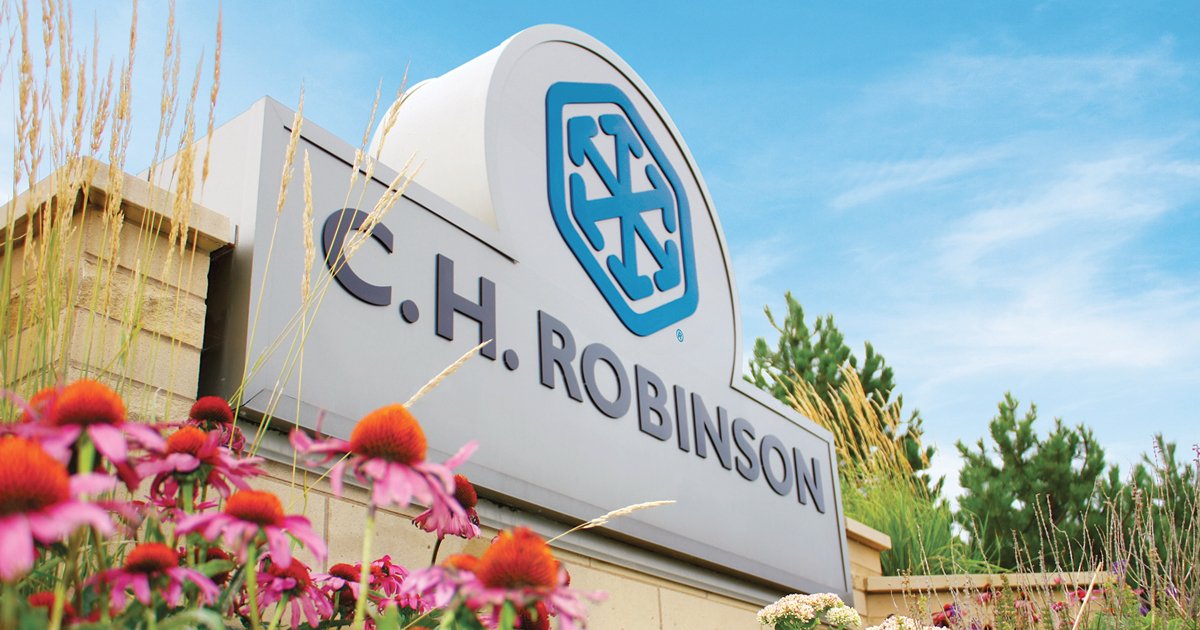
“The thing that doesn’t change and will never change is that safety is a core principle,” Capers said. (CH Robinson)
key takeaways:
- The Supreme Court ruled on May 14 in the case Montgomery v. Carib that federal law does not protect freight brokers from state negligence-hiring lawsuits.
- Industry executives and analysts said the decision resolves the federal court split but creates uncertainty because brokers must meet an undefined “reasonable care” standard.
- Brokers like CH Robinson are tightening carrier screening processes as courts and the industry determine how liability standards will be enforced going forward.
CH Robinson expressed hope that a recent Supreme Court decision in a case involving the company provides needed clarity for freight brokers choosing carriers.
Eden Prairie, Minn. The logistics and shipping company based there was accused of negligently hiring a motor carrier involved in an accident. The resulting case, Montgomery v. Carib Transport II, asked whether freight brokers are protected by federal law from state lawsuits over claims of negligent hiring practices. The Supreme Court ruled on May 14 that the Federal Aviation Administration Authorization Act does not protect brokers from such claims.
“The Supreme Court’s decision in Montgomery v. Carib gives the industry the clarity we wanted on whether freight brokers will continue to be governed by a clear, nationally consistent safety framework or a 50-state patchwork of standards,” Dorothy Capers, chief legal officer at CH Robinson, told Transport Topics.
The Federal Aviation Administration Authorization Act generally prohibits states from regulating broker prices, routes, and services. But it also includes a separate protection state authority on motor vehicle safety. Federal courts were divided over whether the law prevents negligent hiring claims, creating a regulatory patchwork.
Shawn Montgomery brought the case after he was struck by a truck operated by Carib Transport II. Their lawsuit claimed that the accident was caused by negligence because the driver and carrier had a recent history of accidents. The lawsuit accused CH Robinson of sharing liability because it hired the carrier despite those issues.
“The answer is that under certain circumstances, brokers can be held liable in state courts on trucking accidents,” Capers said. “In his concurring opinion, Justice Brett Kavanaugh said liability is not automatic.”

TT Top 100 Logistics Companies
The largest 3PL in North America faced volatile business conditions last year, ranging from compressed margins to tariff-driven supply chain turmoil. read more
Kavanaugh stressed in that opinion that the decision should not be interpreted to mean that brokers will routinely be subject to state tort liability in the wake of truck accidents. Legal experts and analysts have also reiterated the same point. Susquehanna International Group said in a report that while the ruling creates adverse implications for the brokerage model, the language of the consent decree was not as harsh for brokers as the headline result of the ruling suggests.
“This decision also creates a new question mark because the Supreme Court requires shippers and brokers to exercise ‘reasonable care’ in selecting a carrier, but did not define what that standard entails,” Capers said. “It is now up to shippers and brokers to determine how they define ‘reasonable care’ and apply it to their operations.”
Benesh said a similar thing The client alert warned the court that it had not defined what reasonable care was. But the law firm uncovered some potential clues in the concurring opinion, such as an acknowledgment that brokers may not always be in a good position to objectively evaluate the relative safety of different trucking companies. In summary it concluded that this means that freight brokers should not be held to an unattainable standard of care when evaluating carriers.
“The thing that doesn’t change and will never change is that safety is a core principle,” Capers said. “That’s why our standards exceeded legal requirements even before the Montgomery decision, and why we implemented new safeguards within a week of the decision.”
CH Robinson said in a notice shortly after the decision that this ambiguity shows the importance of getting one’s own standards right. The company took additional steps in its carrier security and screening processes in order to exceed the standard of reasonable care. The set of carrier safety and risk criteria includes carrier authorization, federal safety ratings, auto liability coverage and an internal safety analysis in which carriers are re-evaluated on a regular basis.
“The Montgomery decision affects the entire industry,” Capers said.
CH Robinson is ranked No. 2 on the Transport Topics Top 100 list of the largest logistics companies in North America and No. 21 on the TT Top 50 list of the largest global freight companies.