Nord Stream conspiracy: The inside story of the blast that shook the worldby Bojan Pančevski
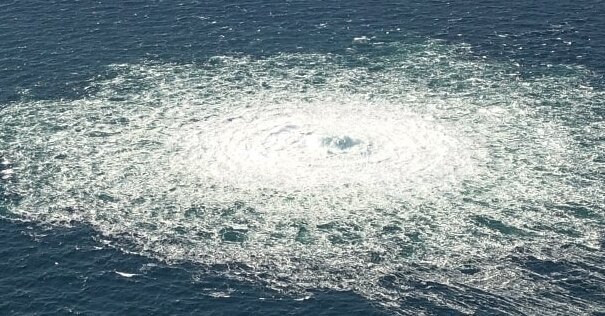
Most people remember the demolition of the Nord Stream gas pipeline in 2022, if they remember it at all, because of a striking image: a wide, foaming geyser on the blue surface of the Baltic Sea. It was the first visual indication that someone had planted explosives on the 760-mile-long undersea pipeline – the world’s longest – destroying three of its tubes and sending $2 billion worth of pressurized gas upward. it has been said biggest act of sabotage in modern times.
The explosions ended Germany’s energy dependence on Russia in one fell swoop, sparking years of intense debate over where the gas originated, and who was responsible. This was an argument that no one initially wanted to resolve, because blaming any of the three potential saboteurs – Russia, the United States, and Ukraine – would have inconvenient political consequences.
There is now no doubt who did it, although conspiracy theories are still fringe. It appears that Ukrainian intelligence officers conceived the plan, and carried it out with a single-masted sailboat and a skeleton crew of patriotic sailors and divers, one of whom was sick with Covid when he descended into 260 feet of cold and deep dark water to plant the explosives. Their motive was also no secret: They wanted to prevent Germany from providing billions of dollars in annual gas payments to the Russian war machine.
We have all these details – despite the Ukrainian government’s persistent denials – partly because of a stubborn and meticulous German police investigation, and partly because of some very stubborn journalists. Bojan Pančevski, a Russian-speaking correspondent for The Wall Street Journal, spent years unraveling the conspiracy. His book, “The Nord Stream Conspiracy”, is a brilliant feat of investigative journalism, based on his close access to senior Ukrainian intelligence chiefs who he says hatched the idea and to the German police officers who eventually tracked him down.
“The Nord Stream Conspiracy” is a multifaceted tale, a police procedural set against a backdrop of political and economic interests woven together in strange and contradictory ways. The saboteurs dealt a major economic blow to Germany by cutting off the main source of energy for heating and industry. Yet Germany is also one of the biggest supporters of Ukrainian independence, and some German officials privately acknowledged that the destroyed pipeline was a blessing in disguise. Leaders of some other governments, notably Poland, were open from the beginning about their belief that the conspirators deserved rewards, not prison sentences.
According to Pansevsky, the pipeline work was a quintessential example of Ukraine’s culture of innovation and bravery, in a government that was run by groups and clans within “ministries, the military, spy services, a mini-state within each state”. Pansevsky traces these patterns of unruly behavior to the Cossack warriors who roamed the steppes of Ukraine centuries ago, and makes the interesting observation that the country’s notorious corruption is related to the entrepreneurial shrewdness that has fueled its narcissism. Defiance, in good and bad ways, has become second nature to Ukrainians.
The two senior officials who led the Nord Stream plot were so independent that they were already fired for insubordination when Russia launched its full-scale invasion in February 2022. He helped defend Kiev with infantry troops, and after being reunified, he conceived a plan to destroy the pipeline. Although Volodymyr Zelensky has always maintained that he never knew anything about it, he says that he initially cleared it with his superiors, who later shrugged it off.
Another interesting theme that emerges from Pansevsky’s reporting is the evolution of Ukraine’s intelligence service into a world-class weapon. Until 2014 the service, known as the SBU, was not fully independent from Russia; Many officers took orders from Moscow. The “Revolution of Dignity” that took place that year to protest government subservience to the Kremlin catalyzed a new sense of national pride, and the SBU emerged as a group of patriots with unmatched powers to penetrate Russia. The CIA took notice and sent its officers to teach and learn. The Ukrainians “blend the best practices of two opposing systems and intelligence practices, American and post-Soviet,” Pensevsky writes, “shaping a new, hybrid espionage culture.”
My only real complaint about Panczewski’s book is that it is written in what might be called blockbuster prose: lots of one-sentence paragraphs that are clearly supposed to surprise, a stripped-down style that sometimes disdains verbs. Given the ongoing legal sensitivities, his insistence on identifying his heroes by nicknames – the Snowman, the Priest, the Colonel – is understandable. But I sometimes got the feeling that the author was pushing his story a little too eagerly in a Hollywood direction.
Nevertheless, “The Nord Stream Conspiracy” is a remarkable book, and hopefully it will help restore the reputation of the saboteurs. After the conspiracy was exposed, in the predictable ass-covering frenzy, they were mostly fired or demoted or even sent to jail. But as a senior politician in Ukraine’s intelligence community told Pansevsky, these people are heroes, and, in the end, “they will be given the medals they all deserve.”
Nord Stream conspiracy: : The inside story of the explosions that shook the world | by Bojan Pančevski | garden | 321 pp. | $29.99