Sprawling, sexually frank, and often harrowing, The Disappearers turns the enforced secrecy of gay life in Jamaica into richly layered fiction.
The Disappearers by Marlon James. Riverhead Books, 640 pages. $32
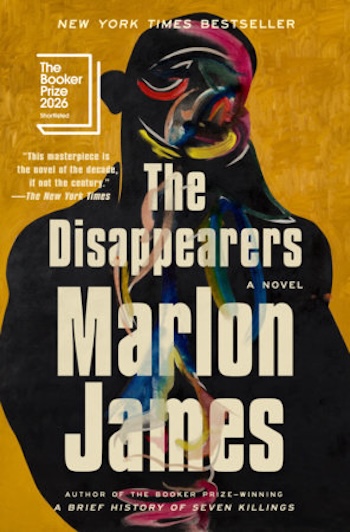
The Jamaican-American novelist Marlon James is riding high. The Disappearers, his propulsive sixth novel, is currently shortlisted for the Booker Prize and the National Book Award for Fiction. The novel is James’s first fictional return to his native Jamaica since the magisterial A Brief History of Seven Killings, which won the 2015 Booker Prize in a unanimous decision. In The Disappearers, James plunges the reader into the anguished lives of a series of gay men trying to live in 1980s Kingston, where being a “battyman” carries dire legal, social, and emotional risks.
Several characters, including the sensitive Edmond “Eddy” Porteus and the worldly stage director Havelock Titus, meet in secret to stage the controversial play Fortune and Men’s Eyes by the Canadian playwright John Herbert (who faced plenty of strife trying to get it performed in the late ’60s). The script focuses on the psychosexual power dynamics in a men’s prison. It’s an avant-garde pick for a production, though the symbolic resonance of confinement meeting desperation is vividly relevant given the city’s social pressures.
Police break into the rehearsals without a hint
Police break into the rehearsals without a hint of probable cause and commit raw acts of violence that will have repercussions that the characters will be responding to decades later. The novel’s cast of characters is extensive, with different supporting players appearing in and out of the narrative, which spans decades and locations. All of them must sooner or later deal in some way with what happened that hideous night. The various forms the reckonings take keep the story fresh and engaging throughout a densely plotted six-hundred-page novel.
James deftly immerses us in externally closeted but inwardly expansive lives. We pore through characters’ diaries, overhear their interviews with journalists, and read private correspondence. Music is central, both as a communal touchstone and as a private space for comfort and identity. Prince, INXS, Kurt Cobain, Booker T. and the MG’s, disco, and even some of the lyrics to “Hotel California” are cited, words that the the characters use to contextualize their plights in various ways.
Even though these figures are forbidden from expressing themselves fully, James’ narrative voice is masterful at doing something fiction is superbly suited for: giving these marginalized people the fictional depth and inwardness their repressive reality denies them. As one character puts it: “Because it’s all just a dance, isn’t it?…No, a ritual, and we all do it just to get through it, but closeted battymen most of all because everybody knows normality is just a process, it’s an achievement, there’s even a certificate you get at the end of it.”
There’s a lot of sex, written
There’s a lot of sex, written with a rough immediacy that makes sense both narratively and aesthetically. James wants us to see the furtive world these characters are forced to inhabit: they can’t simply meet in public and start flirting and canoodling as straight people can. The sex isn’t always affectionate or even joyful, suggesting that when free expression—erotic or otherwise—is denied, darker forces take hold. Ordinary self-consciousness becomes fear when a walk, an outfit, or a taste in music can betray who one is—and invite danger.
The brutality of how these characters are treated, both by their familiars and by society at large, is shocking and effective in its bluntness: “the parents couldn’t deal with a gay in the family…Daddy didn’t have the decency to send me to a prostitute to sort me out…so he did what any concerned father would do. Man beat the shit out of me—not me, mind you, but the gay…All the time saying that it couldn’t be his side of the family because nobody was ever that way.”
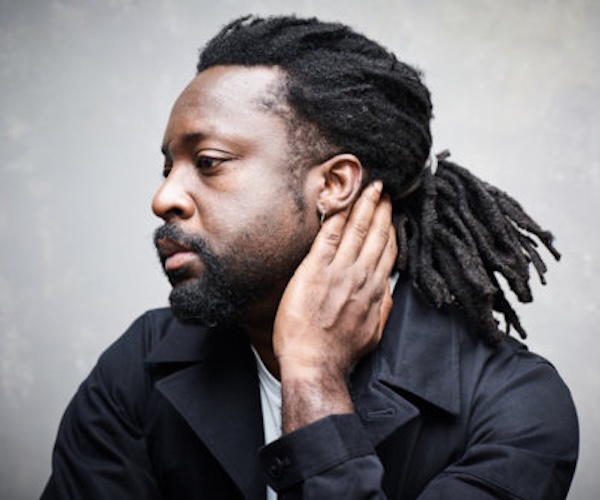
Marlon James. Photo: Mark Seliger
The police brutality is deliberately shocking. At one point, a character boasts of spitting possibly HIV-infected blood into the faces of the men who beat and disfigure him, hoping to infect at least one of them. The violence at home is bad enough; homophobia enshrined in law compounds the horror. All this darkens the “we-be-jammin’” tourist fantasy of an island devoted to beaches and ganja.
Of course, Jamaica’s distinctive, tenacious culture cannot be
Of course, Jamaica’s distinctive, tenacious culture cannot be reduced to its worst elements. Safiya Sinclair’s moving memoir How to Say Babylon offers another perspective: a bright, talented young woman’s struggle with a less violent but no less rigid patriarchy, rooted in Rastafari and the wider culture. In James’ novel, reggae star Buju Banton’s “Boom Bye Bye (Batty Buoy)” supplies a recurring threat, its homophobic slurs escalating into fantasies of sadistic violence. Banton has since distanced himself from the song, but its sentiments have lost none of their sting. One long chapter imagines—or perhaps enacts—a character’s equally savage retaliation against the singer.
It would be comforting to consign the novel’s atrocities to the past. But Jamaica still criminalizes sex between men under an 1864 law that punishes “buggery” with up to ten years’ imprisonment and hard labor.
Homophobia is hardly peculiar to Jamaica. The cult of imperial masculinity can poison a body politic: the more a culture worships male power and aggression, the more readily it punishes anyone deemed weak or effeminate. And when the rich and powerful begin fretting over their nation’s virility—and legislating to enforce it—you can bet that nothing good is on the horizon.
Matt Hanson is a contributing editor at The Arts Fuse whose work has also appeared in The American Interest, The Baffler, The Guardian, The Millions, The New Yorker, The Smart Set, and elsewhere. A longtime resident of Boston, he now lives in New Orleans.