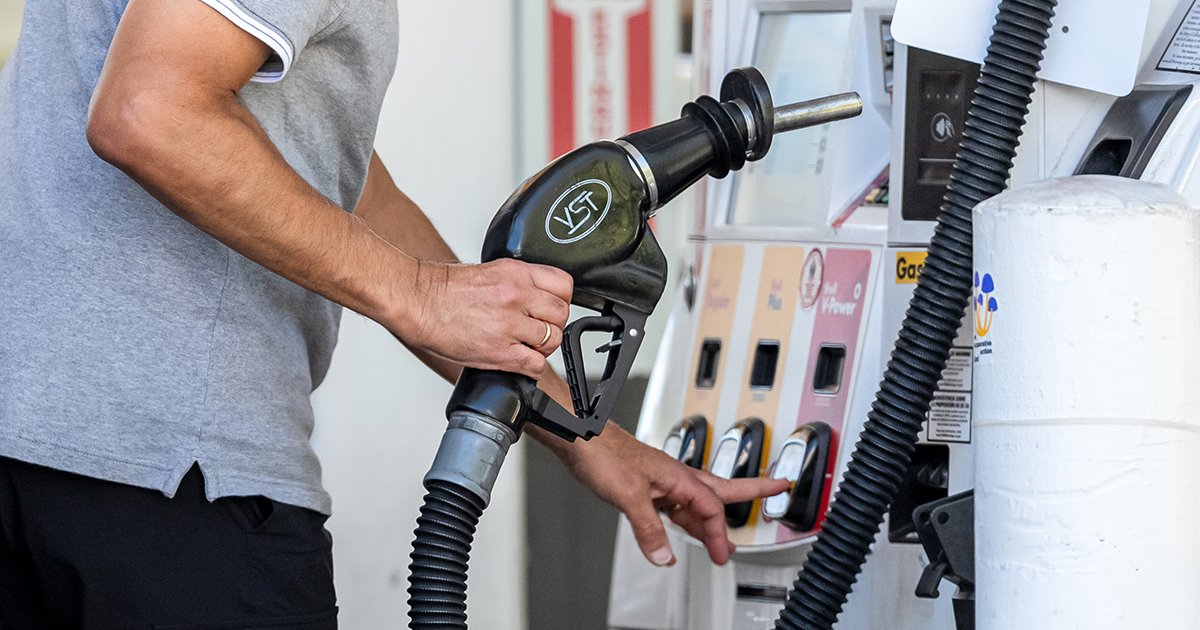
A driver prepares to refuel at a gas station in Palo Alto, California. (David Paul Morris/Bloomberg)
key takeaways:
- The Big Five are expected to report their third-highest quarterly profits after the Iran war boosted crude oil prices and fuel markets.
- Analysts expect companies to earn $45.8 billion as refining margins remained strong and trading operations benefited from supply disruptions and market volatility.
- The earnings report will test political pressure on higher fuel prices as President Donald Trump investigates pump pricing and Middle East tensions continue to impact oil markets.
The world’s oil majors are set for another bumper set of quarterly results after the Iran war sent crude prices soaring — and fuel prices soared even higher.
Analyst estimates suggest the combined earnings of the five supermajors will likely be the third-highest on record, as they profit from the largest supply disruption in history. Crude topped $120 a barrel in late April, and although prices later recovered, the refined-products market remains strong.
Read more: Goldman says Brent could rise above $120 if Hormuz disruption continues
“Refining is a significant tailwind to second-quarter earnings,” said Biraj Borkhataria, energy analyst at RBC Capital Markets. Margins have become even stronger since the end of the period, he said.
In a boon for big integrated oil companies, Texan giant ExxonMobil Holdings Corp is set to record its biggest refining profits in nearly four years after investing heavily in expansion on the US Gulf Coast.
For Europeans, the increased volatility offers big opportunities in BP PLC, Shell PLC and TotalEnergies SE, all of which have extensive trading operations that allow them to thrive during market turmoil.
Analysts expect the Big Five global companies – including Chevron Corp – to post profits of $45.8 billion in the period, the most since 2022, when Russia’s invasion of Ukraine sent energy prices soaring. ExxonMobil and Chevron will likely lead this group, partly due to accounting amendments on derivatives positions, which led to large paper losses in the first quarter.
The Iran war upended global energy markets when it effectively closed the vital Strait of Hormuz in late February, blocking vast amounts of crude and products from transiting the Persian Gulf.
Buyers had to look for replacement barrels elsewhere, especially from the US, creating many opportunities for traders to earn cash. A wave of Ukrainian attacks on fuel plants in Russia in recent months has also put pressure on petroleum products, pushing refining margins to record highs.
“If you look at oil prices and refining margins, we are close to the highest levels since the start of the Russia-Ukraine war,” RBC’s Borkhataria said.
That market reality is reflected in Big Oil’s stock performance. TotalEnergies has jumped more than 30% this year, while BP and Shell have gained more than 20%. America’s two biggest companies have increased by about 25%.
gasoline, diesel
While crude oil markets declined in May and June as Persian Gulf producers managed to ship more barrels through Hormuz and Chinese demand eased, prices for gasoline, diesel and jet fuel remained high. This trend continues, threatening to increase inflationary pressures around the world.
“There will be structurally higher prices for jet fuel, diesel and other distillates for at least a few years,” James West, a New York-based analyst at Melius Research, said in an interview.

Alex Fraser from Cox Fleet discusses how fleets should respond when a roadside breakdown occurs, testing their safety, compliance and customer service systems simultaneously. Tune in by going above or RoadSigns.ttnews.com.
This is likely to contribute to the political backlash against Big Oil as President Donald Trump prepares for the midterm elections in November. Gasoline prices in the US are once again above $4 a gallon and Trump has ordered the Justice Department to look into pump pricing.
As far as the crude oil market is concerned, much depends on the path of the Middle East war, with prices rising again this month as attacks escalated.
West expects crude to average $80 to $90 a barrel for the rest of the year, although Brent is currently above that range. The global benchmark averaged $96.79 a barrel in the second quarter.