

“>
Oct 26, 2026 : The EditorsAndrew Skurka
Get new posts by email. Unsubscribe anytime.
In the backpacking community, it’s oddly controversial to say what I’m about to say, and that is that I would argue that there is absolutely a right way to backpack.
This is an argument that I made about 10 years ago on my blog, back when people used to read blogs, and I think that the debate is just as relevant today. You have your ultra-lighters and your luxury-lighters and your super-lighters and whatever other categories you might use, everyone arguing that they have some sort of superior way of backpacking.
My argument actually isn’t as offensive as it sounds, but I want to explain what I mean. And what I would like to do is to provide for you some kind of philosophical underpinning that you can use to justify and explain your own approach to backpacking.
Hi, I’m Andrew Skurka. I’m a former thru-hiker. I was the first person to hike the Sea-to-Sea Route, the Great Western Loop, and the Alaska-Yukon Expedition. For the last 17 years, I’ve been leading a guided backpacking company. We run about 50 trips a year in locations like Utah, Alaska, the High Sierra, and Yellowstone.
This is part of a weekly video series that I do with The Trek. We drop a new video every Monday at noon Mountain Time.
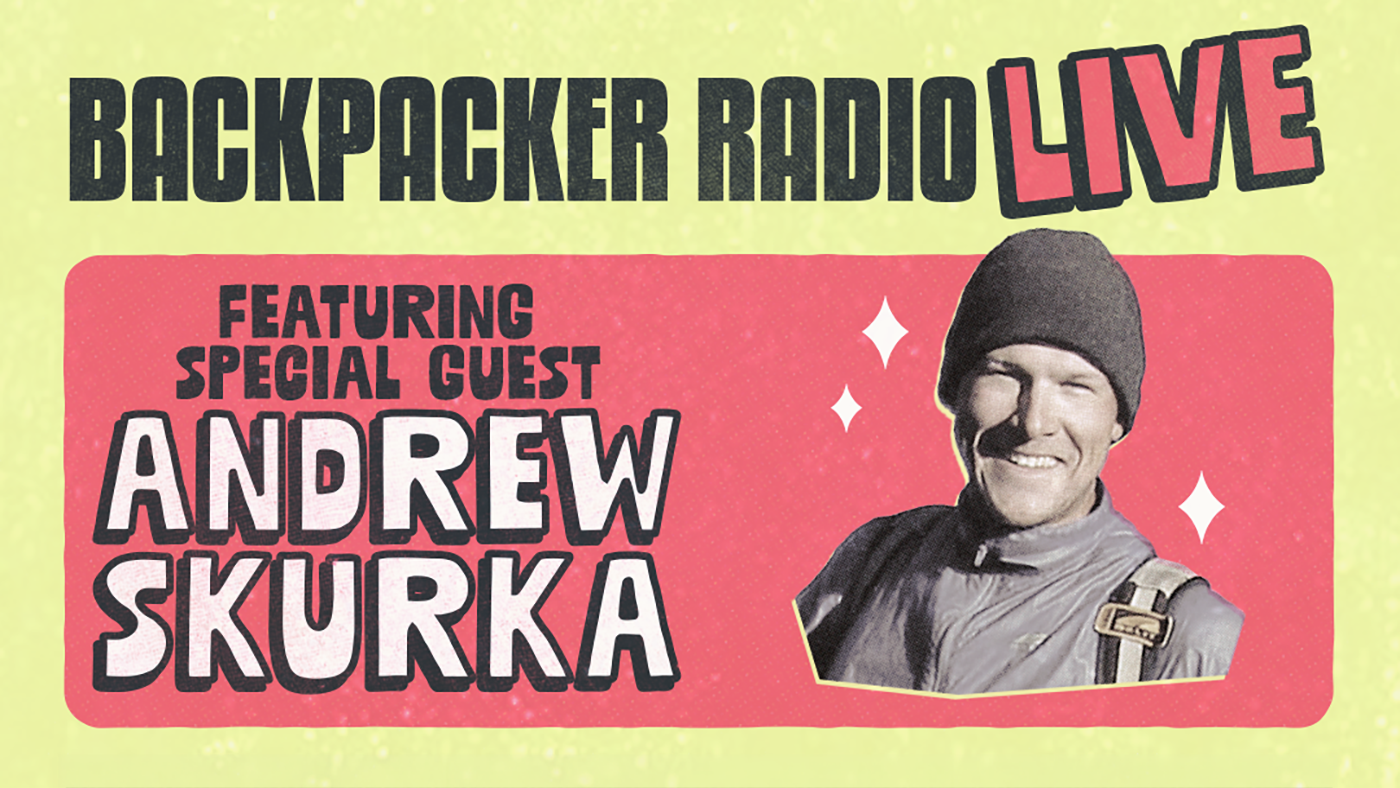
If you are watching this video before Saturday, December 5th, and if you live in the Denver, Colorado metro area, I would invite you to join us for a live podcast with Backpacker Radio. It’ll be at the Skylark Lounge in Denver, December 5th.
Get your tickets here.
There Is Absolutely a Right Way to Backpack
Okay, so let’s go back to this statement that I made earlier, and that is that there is absolutely a right way to backpack. And here it is.
As a backpacker, you should have gear, supplies, and skills that are appropriate for the environmental conditions that you’re likely to encounter and for the objective of your backpacking trip.
So we’ll start with a little story.
It’s May of 2002, and I was a 21-year-old college student. I had the goal of thru-hiking the Appalachian Trail between two semesters, which necessitated a pretty quick pace, at least at the time, 24 years ago, of hiking like 22, 23 miles a day.
And I remember meeting this other hiker while I was out there, and of course, the normal conversation of, “Oh, when did you start? Where are you planning on camping tonight?” And I told him when I’d started, and he was just blown away that I had covered as many miles in such a short time as I had.
And he started telling me that I was hiking wrong, that I was going too fast, that I wasn’t able to enjoy myself, that I wasn’t able to see enough things, that I wasn’t taking in the full experience of the trail.
And there had been a saying that I had heard on those early days on the trail, which was to hike your own hike. So I kind of said, “Well, I’m going to hike my own hike,” and I walked away.
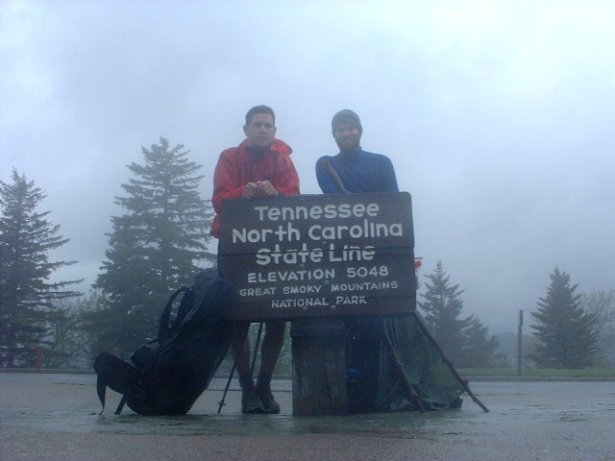

“Hiking my own hike, on a 3-month thru-hike of the AT in 2002. But doing it “the wrong way,” with gear, supplies, and skills that were inappropriate for my trip objective and the conditions. Seriously, can you imagine hauling that monster pack 25 miles per day, or trying to keep comfortable in those wet conditions without a real rain jacket?” Andrew Skurka, 2016
What “Hike Your Own Hike” Actually Means
Now, that saying, “hike your own hike,” it’s a great saying, and I actually think that it’s a really good thing to apply to the trip objective. So that’s like that third piece.
Remember, you should have gear, supplies, and skills that are appropriate for the conditions that you’ll likely encounter and for the objectives of your trip.
So the hike-your-own-hike thing, that absolutely applies to the trip objective. And I think the most useful way to think about the objective of a backpacking trip is you can kind of put yourself on the spectrum of: “where do I want to be comfortable?” “Do I want to be comfortable while I’m hiking, or do I want to be comfortable while I’m camping?”
And nowadays, there aren’t quite the significant trade-offs that you used to have to make, but if you can kind of figure out where you are on the spectrum, it really helps you to figure out what the rest of your approach looks like.
The Hiking-Obsessed Backpacker
So on one far end of the spectrum, you have the hiking-obsessed backpacker.
This would be like a thru-hiker trying to set, say, a self-supported speed record. For them, it’s all about hiking miles with as little effort and with as much comfort as possible, and their camping experience is not really a priority.
They are simply looking for their camping experience to be an eight-hour-long period of rest and recharge so that they can hike a lot of miles again tomorrow.
So again, that’s at one end of the spectrum.
The Backcountry Camper
At the other end of the spectrum, you have basically a backcountry camper. The objective is not to hike very far, not to hike very hard, but to really enjoy that camping experience.
And in addition to the camping experience, maybe you add some extracurriculars. So maybe your backpacking experience has a photography element, or maybe your life is just pretty chaotic and you don’t get a lot of downtime, and you would just like to bring a book with you and sit at some pretty spot where it’s quiet and where the birds are chirping and maybe along a stream, and read a book.
And maybe you’re like, “You know what? I’m going to be spending a lot of time in camp. I’m going to bring at least a sit pad, if not a camp chair, so that I can be comfortable while I’m not moving.”
So again, that’s at this end of the spectrum.
The phrase “hike your own hike,” I think it’s a great one, and I think the key thing is just figuring out where you want to be along that spectrum. How much hiking, how much camping, and then your approach will follow suit.
So Is There a Wrong Way to Backpack?
If it’s true that there is a right way to backpack, then there also probably is a wrong way to backpack.
And the wrong way to backpack is by having an inconsistent approach towards your backpacking objectives.
Back to that earlier story, there’s that hiker who was telling me that I was hiking wrong, and he was telling me that my objective was wrong. And actually, I don’t think you can do that. I think that people have lots of different motivations to go backpacking.
And it’s also possible that you could, as a backpacker, do different trips with different objectives. So, for example, sometimes it’s a mileage-obsessed, go-getter, push-really-hard weekend, and other times it’s a relaxed, casual, camping-centric, just nice, simple, quiet time with my wife. And you can do both things.
You’re backpacking wrong if your approach is inconsistent with that objective, or if it’s not appropriate for the environmental conditions.
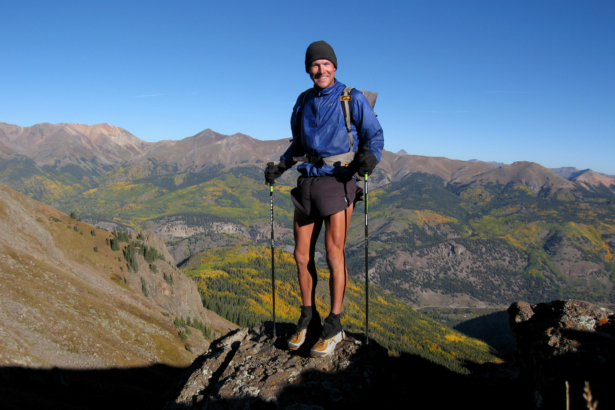

“Doing it “the right way,” on a 7-month 6,875-mile hike around the American West. But it took me a few years still to understand why few embraced my fast, far, and light mentality.” Andrew Skurka, 2016
How I Backpacked Wrong on the Appalachian Trail
When I was hiking the Appalachian Trail in 2002, I didn’t have appropriate gear, supplies, or skills for the likely conditions that I was encountering.
So I remember, boy, I remember, like, just honestly some flat-out suffering in the early days of the Appalachian Trail.
I remember being extremely cold, like kind of borderline hypothermic. Definitely had, like, the stumbles, mumbles going. Roan Mountain in Tennessee, temperatures dropped below freezing. Wasn’t prepared for that with what I had.
I remember being in the Smoky Mountains and taking shelter near Newfound Gap because we got caught in a cold, wet rainstorm, and I didn’t have appropriate rain gear or appropriate clothing to be out in those conditions.
So I was backpacking wrong, again, because I didn’t have appropriate gear for the likely conditions.
I Didn’t Have the Right Skills
I would also say that I was backpacking wrong because I didn’t have good skills.
I remember getting extremely thirsty one day early in the trip. I think it was down in Georgia, and the trail kind of stays on top of a ridgeline, and you go a pretty long distance between watere, not filling up my jugs and not managing my water correctly
I remember getting badly sunburned, believe it or not, in those early days of the Appalachian Trail. Like, I just didn’t even have the skill set to take care of myself.
I remember—we will not, I’ll spare you the image of this—I also remember I didn’t have, like, the—I wasn’t being attentive to my—I’m almost embarrassed to say this—to my personal hygiene, which, you know, I was a 21-year-old boy, so maybe that’s, like, totally excusable.
I came down with this—by the end of the trail, I came down with a case of folliculitis, which is an infection of the hair follicles. And my infection was all on, like, where the sun doesn’t shine.
So this was—you just—I just didn’t have the skills.
I Didn’t Have the Right Supplies
So I was backpacking wrong. Again, didn’t have the right gear. I didn’t have the right skills. And then, again, I also didn’t have appropriate supplies.
I remember really struggling early on in the trip to figure out the food that I needed to keep myself properly nourished. I would try to eat Pop-Tarts because that seemed like a popular trail food, and I remember just having these awful sugar bonks.
I remember on multiple occasions going into a trail town and resupplying and not buying enough food or buying way too much food, and arriving at that next resupply either extremely hungry or with a food bag that still had a lot of calories left over.
You can backpack wrong. And that’s if you don’t have the gear, supplies, and skills appropriate for the conditions that you’ll likely encounter.
How to Assess Environmental Conditions Before a Backpacking Trip
I’ve been mentioning this term, environmental conditions, and I want to break down what I mean by that.
If you don’t complete or go through some sort of assessment of the environmental conditions, what will likely happen is that you’ll justify a lot of the things that you take on the grounds of, “Well, you know, what if?” or “Just in case.”
You’ll be much better off in just doing some homework before you leave. And the homework would be specifically the following assignments.
Temperature
You want to understand the normal high and low temperatures that you will encounter on your trip.
Make sure to adjust for altitude. So, for example, if you’re on the East Coast, you can assume that for every 1,000 vertical feet that you go up or down, there’s about a three-degree temperature difference. As you move further out West, it can be closer to four or five degrees.
So make sure to make that adjustment. What you’ll do is you’ll find seasonal averages for a particular location and then make some adjustments.
So, temperatures.
Precipitation
You also want to be looking at precipitation. And the data that you can typically find for precipitation, or the most useful, would be amount of precipitation for a particular month.
For example, I think I remember doing research once for a trip in West Virginia in the springtime, in like May. In West Virginia in May, it’s like six inches of rain. So that means it’s raining pretty often in West Virginia at that time of the year.
As opposed to, you know, you’re doing a trip in the Colorado Rockies in September, or maybe a better example, a trip in September in the High Sierra. And there’s almost, like, not even measurable precipitation in the High Sierra in September, especially some of the lower elevations, like 7,000 or 8,000 feet.
Sun Exposure
Temperatures, precipitation. Next thing you want to look at is sun exposure.
Are you hiking in a thick tree canopy, or are you out in an open desert, or is it a little bit of mixed, like open forest and varying terrain? Is there alpine terrain?
Because the amount of sun exposure that you’ll get will determine what type of clothing that you’ll want. Or if you don’t want to bring more clothing to protect yourself from the sun, then you’re going to just need to bring more sunscreen.
Daylight
You want to be looking at the amount of daylight you will have.
If you are hiking at a time of year where there’s ample sunshine, you don’t need to bring—not even sunshine, just daylight.
So, for example, you’re hiking in northern Michigan in July or the end of June. You have lots of daylight, more daylight than you can even use. You could get away with a very minimal headlamp.
As opposed to if you’re trying to do what Joe McConaughy did recently, set a fastest known time on the John Muir Trail in August. I think it was the end of August.
He would have needed to bring a pretty heavy-duty, very bright headlamp because he would have been spending a lot of time at night at that time of the year, even versus two months earlier when closer to the summer solstice.
Biting Insects
Next thing you’re going to be looking at is biting insects.
So these are going to be black flies for some parts of the country, but mostly you’re just looking at mosquitoes and then also ticks.
So having some sense for not just the types of biting insects, but also the intensity. And then you have to have a plan to manage them.
Problematic Wildlife
Another thing you want to look at for environmental conditions is going to be problematic wildlife.
So it’s mostly—you should be thinking about mostly bears and mini-bears.
Am I dealing with grizzly bears or black bears? If I’m dealing with either of them, are they conditioned enough around humans that they present a potential conflict around the issue of food?
And then the mini-bears are any of those rodents, mice, raccoons, squirrels, marmots, that might be comfortable enough around humans that they’re going to be wanting to get into your food or maybe chewing on any of your salty gear.
Water Availability
Let me add a few more environmental conditions that you want to be thinking about before you leave for your trip.
Next one would be water availability. So what is the frequency of water
Ground Cover and Trail Conditions
Next one would be ground cover.
So if you’re hiking on a trail, is it like a nice dirt, not a lot of rocks, not a lot of roots type of trail? Or is it something that’s actually pretty technical even though it’s still a trail?
Or are you going to be hiking off-trail, say across a bunch of talus or scree?
If you’re hiking early in the season, so say you’re a Pacific Crest Trail thru-hiker and you’re planning on trying to go up through the High Sierra in May or the beginning of June, you should be thinking also about how much snow is still lingering at that time of the year and what you might need to do for your footwear as a result.
Campsite Quality and Availability
Second to last one would be the quality and frequency of campsites.
Are the campsites typical of, say, the Appalachian Trail, where they’re slopey, they’re rooty, they’re rocky, the ground is really compacted so when it rains, the water tends to pool in the camps?
Or is it going to be like beautiful, abundant, porous-ground campsites, something more like you would find in the High Sierra or in the desert?
Natural Hazards
And finally, the last environmental condition that you’d want to be thinking about would be natural hazards.
These would include avalanches, although that’s usually not something that a three-season backpacker confronts.
You’d be looking at flash floods, high creek crossings, particularly those that are fed by snowmelt, and then something, say, like lightning.
So all of those would be included in that natural hazard category.
How Environmental Conditions Determine the Skills You Need
So what you’re going to do is, before your trip, you’re going to do this conditions assessment, and that way you can be tailoring your gear and your supplies and your skills for your trip objective and for the likely conditions that you’re going to encounter.
And let me give you just a real specific example.
If you do an environmental conditions assessment and you conclude that you absolutely are going to be crossing some very swift and deep creeks, say in the High Sierra in the beginning of June during peak snowmelt season, you would absolutely want to study up on creek-crossing skills.
It would be irresponsible not to do this.
So you would want to be familiar with the diurnal cycles of snowmelt-fed creeks. You would want to be familiar with how to create an eddy line, like the eddy-line crossing system, with a couple of other hiking partners.
You would want to understand what to do if you get to a waterwould need to understand that you could go maybe upstream or downstream to find a more friendly crossing
So, for example, maybe you can go upstream to a place where the creek divides into multiple tributaries, and then you can cross the smaller tributaries one at a time.
Maybe you can go downstream to where the creek flows through—where it not just flows, where it meanders through a meadow. And where it’s meandering like that, the creek is going to be much slower, and maybe it’ll spread out because it has a little bit more area to work with. So that might be a friendlier crossing.
So that’s a good example of where you’re developing or you’re acquiring the skills that are appropriate for the environmental conditions that you will encounter on your trip.
Choosing the Right Gear, Supplies, and Skills
So let’s suppose at this point you know what your trip objective is. Maybe you want to do a thru-hike. Maybe you want to take your young kids backpacking. Maybe you just want a quiet weekend away from a hectic life. Maybe you want to do a section hike. Maybe you want to do a high route.
Whatever that objective is, you can put it on that spectrum, hiking versus camping.
Your next step is you’re going to do that environmental conditions assessment, which I just talked about. And then your last step is going to be acquiring the gear, supplies, and skills that you need, again, that are consistent with your trip objective and that are appropriate for the likely conditions that you’ll encounter.
So let’s break these things down.
Gear: The Easy Part
So gear. This is like probably the easiest thing to do.
You can do a bunch of gear research. It’s very fun. You get online. You go to places like The Trek, andrewskurka.com. Maybe you go old-school and you read a book like this. And then you come up with a gear list, and then you take out your wallet and you buy everything.
You could also go to your local brick-and-mortar store. And I think for some types of trips, the gear that you’ll find at the typical REI is going to be A-okay.
So I’m thinking a little bit more, the itinerary is a little bit more, like, camping-oriented than hiking-oriented.
If your trip objective is to, say, thru-hike the Continental Divide Trail, the Colorado Trail, you’re going to want to mostly stay online with those cottage brands.
If you want to have a fun weekend with your family or your spouse, by all means, go to REI. Buy that Big Agnes Copper Spur tent, and you won’t be disappointed.
But bottom line, gear, it’s easy. It’s fun. You just take out your credit card at the end of it and buy it all.
Supplies: Food and Resupply Planning
Supplies are kind of similar.
You’re going to need to do some homework on backpacking food, figure out how much food you need, what types of food are appropriate, do some personal experimentation, maybe on some lower-risk day hikes, and then stock up.
Similar thing.
Skills: The Hardest Part of Backpacking Preparation
You can develop some skills without ever leaving your house, just mostly by watching videos. It’s pretty difficult to read through skill tutorials, but videos are a decent option.
But there’s really nothing that replaces the in-person experience, that tactile being in the moment, and developing the skills that you need.
So as a theoretical matter, you might have found a post on Reddit Ultralight about how to manage your water in the desert. But until you’re in the desert, looking at a watermuch water you need to get you 25 miles to the next watertical
And I think people—what’s the Mark Twain saying? “A man who carries a cat by the tail learns something he can learn in no other way.”
And as a cat lover, particularly a lover of two cats, Esmeralda and Luxor, I would never encourage you to hold a cat by its tail, but I think the quote has some resonance here.
So again, get in the field. Start developing those skills. Start with lower-risk outings where you’re not taking on a high level of risk, where you’re not putting yourself way out there.
And just slowly over time, and like each day, each week, each season, each decade, your skill set will get better and better and better, and you’ll be able to be more comfortable and more competent outdoors than when you first started.
It’s definitely a lifelong learning curve.
The Right Way to Backpack Comes Down to Preparation
So that wasn’t that controversial, was it?
There is a right way to backpack, and I will tell it to you one more time.
It’s that you should have gear, supplies, and skills that are appropriate for your trip objectives and for the environmental conditions that you will likely encounter.
If you use that as your guiding light towards your backpacking trips, I think you’ll be in really good shape and you’ll get some good outcomes.
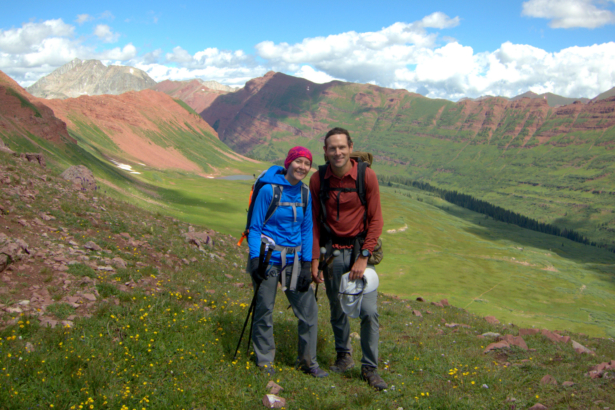
“Hiking the Aspen Four Pass Loop “the right way” with Amanda. We packed light and moved efficiently so that we could handle the mileage and vertical with relative ease over a long weekend. But we were not without creature comforts, like multiple coffees per day, plush sleeping pads, and a hot wash cloth each night.” Andrew Skurka, 2016
If you have enjoyed this video, please do me a favor. Please like and subscribe.
If you agree or disagree with me, or if you have some story about how you backpacked the wrong way at some point, please leave a comment.
And then if you live in the Denver metro area, please get tickets for this live podcast I’m doing with Backpacker Radio. It’s Saturday, December 5th at the Skylark Lounge in Denver.
If you liked this video, expect another one every Monday at noon Mountain Time.
Oh, and one more thing. We’re opening registrations for my guided trips, my 2027 guided trips, on Monday, December 7th.
Okay, we’ll see you next week.

This website contains affiliate links, which means The Trek may receive a percentage of any product or service you purchase using the links in the articles or advertisements. The buyer pays the same price as they would otherwise, and your purchase helps to support The Trek’s ongoing goal to serve you quality backpacking advice and information. Thanks for your support!
To learn more, please visit the About This Site page.