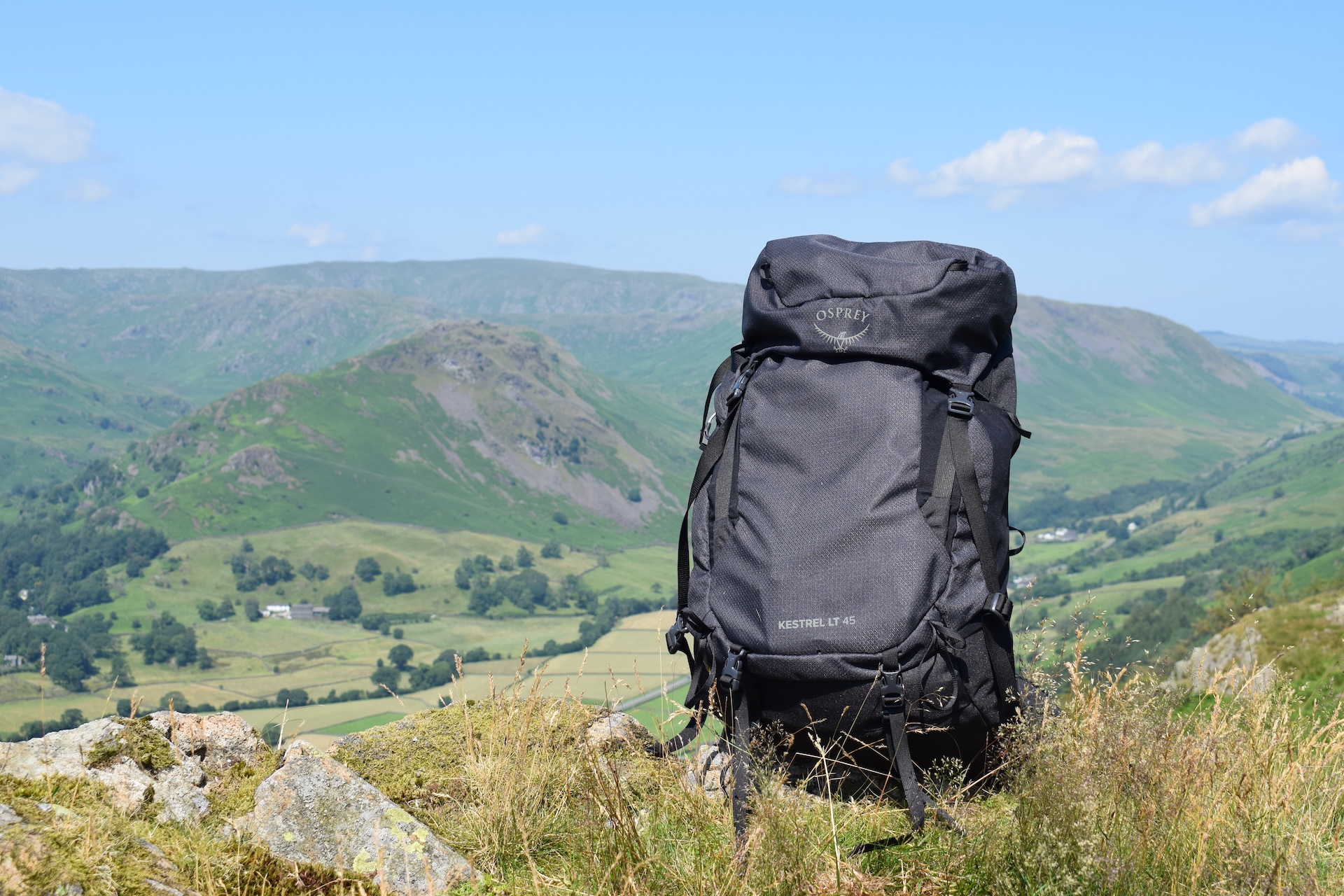
The Osprey Kestrel 48 has been one of my go-to backpacks for years. I’ve used it on hikes throughout Wales, the Lake District and the Highlands, including plenty of route checking for my guidebook,Peak Bagging Wales. It’s a pack I know well, so I was interested to see what the lighter LT version would bring to the table.
At 1.83kg the Osprey Kestrel LT 45 is a light-ish pack. It’s not ultralight, but not too far out of the category either. And perhaps most importantly, it still feels like a proper hiking pack, with the support, practical features and robust construction that have made the original such a dependable option.
I’ve been testing the Kestrel LT 45 throughout summer and into autumn. It accompanied me on the 50-mile Golden Valley Pilgrims Trail through Herefordshire and eastern Wales, where I spent three nights camping, and on a summer campout in Pembrokeshire’s Preseli Hills. Our tester James Forrest also took it on the Wordsworth Way in the Lake District over two days in hot summer conditions – as you can see in the video below.

I’ve used it with a full lightweight camping setup, including atwo-person tent, three-season sleeping bag, inflatable sleeping mat and cooking system. It’s a capable pack for this sort of adventure, but you need to be sensible about what you take. There isn’t a huge amount of room left for extras once the essentials are inside.
Price:£165
Weight:1.83kg
Capacity:45 litres
Best for:Lightweight backpacking, hut-to-hut trekking, summer long-distance walking and big days in the hills
What we liked:Comfortable carrying system, durable construction, good adjustability, useful front access and practical storage
What we didn’t like:The top lid and hipbelt aren’t removable, and 45 litres can feel restrictive with bulky camping kit
Overall rating:5/5
★★★★★
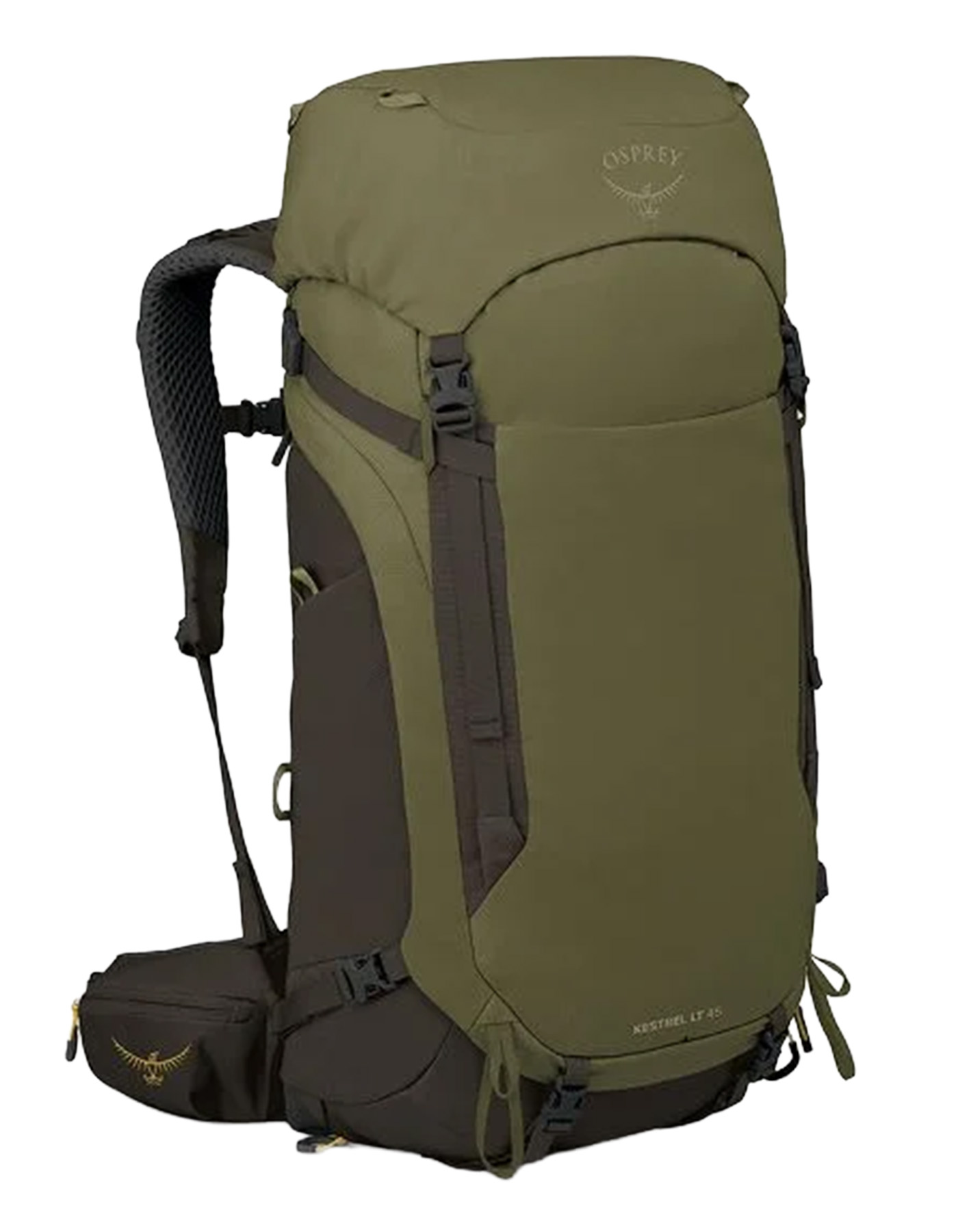

Osprey Kestrel/ Kyte LT 45L
Our tester’s verdict: “If you want a pack that is fully-featured and durable with a high-tech back system, the Kestrel is a sensible choice. It’s a real gear-hauler that works well for overnighters.”
Check women’s Kyte 45L price at Osprey
Check men’s Kestrel 45L price at Osprey
A Lighter Take on a Classic
The Kestrel LT 45 strikes a good balance between weight and durability. It’s not an ultralight backpack in the strictest sense, but it’s considerably lighter than the traditional trekking pack I’ve used for years, without feeling as though Osprey has compromised the things that matter.
That’s particularly impressive when it comes to the fabric. I’ve regularly scuffed the pack against rough rock and dragged it over abrasive ground while heavily loaded, yet I haven’t noticed any damage. It feels robust enough for regular use on demanding trails, and I haven’t had any concerns about the lighter construction affecting its durability.
Osprey’s All Mighty Guarantee is another big plus. I’ve generally found its backpacks to be built to last, and that long-term warranty reassurance helps justify the price. You’re paying more than you would for some budget alternatives, but you’re also getting a pack that feels designed to withstand years of outdoor use.
The LT is a more streamlined take on the Kestrel concept, with lighter materials and a simplified design compared with the traditional model. The difference is noticeable when carrying it over long distances. It isn’t a radical transformation, but it’s enough to make this my favourite version of the two.
Comfortable Carrying, With Plenty of Adjustment
Comfort is one of the Kestrel LT 45’s strongest points. Osprey knows how to design a carrying system, and this pack gets the fundamentals right.
The AirScape back panel combines padded support with ventilation channels, while the frame and hipbelt help transfer weight away from your shoulders. The pack sits close to your back, creating a balanced centre of gravity that works particularly well on uneven ground.
The back panel isn’t as breathable as a suspended mesh back system, but I generally prefer this closer-fitting design. Suspended systems can leave the load sitting further away from your body, making a pack feel less connected and sometimes a little ungainly. The Kestrel LT feels stable and controlled, even when moving over rough terrain.
The padding isn’t excessively plush, but it’s well designed and comfortable enough for long days on the trail. There’s plenty of adjustment, too, including five inches of torso-length adjustment and a sliding sternum strap. The latter is particularly convenient, allowing you to make quick adjustments to get the harness sitting comfortably
The pack’s relatively narrow profile also helps it feel unobtrusive when negotiating obstacles. It doesn’t feel excessively wide or awkward, and the compression straps help keep everything tidy when you’re not carrying a full load.
45 Litres: The Right Capacity for the Right Trip
The capacity is where you need to think carefully about how you intend to use the Kestrel LT 45.
For lightweight camping, it works well. I managed to fit my tent, sleeping bag, sleeping mat and cooking system inside, but there wasn’t much room left for additional clothing, food or other bulky items. If you’re carrying a heavier sleeping bag or a more substantial camping setup, you’ll probably find it restrictive.
For that reason, I’d recommend it for single overnighters, ultralight multi-day trips and hut-to-hut trekking rather than extended wild camping with a full load of equipment. It would also make a good choice for a long-distance route such as the Camino de Santiago, where you need space for spare clothes, a sleeping bag liner, lunch and daily essentials, but not necessarily a tent and cooking system.
It’s also an excellent large daypack. On winter hillwalks, when you need to carry extra layers, technical equipment and emergency supplies, the additional capacity is useful without requiring a much larger trekking pack.
If you want to carry bulky camping gear over several days, I’d look at the 65-litre version instead.
Practical Features That Make a Difference
One of my favourite details is the large front zip, which gives you direct access to the main compartment. Rather than rummaging blindly through everything from the top, you can open up the pack and see what’s inside. This is particularly useful when staying in mountain huts, where you can lay it on a bed and access your kit almost like a suitcase.
The storage is generally well thought out. The deep mesh side pockets, while a little on the tight side, are useful for water bottles, while the hipbelt pockets are large enough for snacks, a phone or a Garmin inReach satellite communicator.
There’s also a front stash pocket, although it doesn’t offer the same stretch or capacity as a fully mesh alternative. You won’t be squeezing a helmet into it, for instance. On the other hand, stretch-mesh pockets can be vulnerable to tears and snags, so the more robust design is consistent with the pack’s durability-first approach.
Other useful details include trekking-pole and ice-axe attachment points, additional straps at the base for carrying equipment, glove-friendly zip pulls and a supplied rain cover. The adjustment hardware is straightforward to operate, even with cold hands, and there aren’t many loose straps flapping around once everything is tightened and tucked away.
The pack also retains its shape well when lightly loaded. The compression straps help prevent it from sagging or becoming unwieldy, although the structured design means there isn’t much give if you want to cram in extra equipment.
Weather Resistance and a Few Compromises
The fabric is water-resistant rather than waterproof. It sheds light rain and short showers well, but prolonged downpours are a different matter. That’s where the supplied rain cover comes in. I’d still recommend keeping particularly important items in dry bags during wet weather. This isn’t a criticism unique to the Kestrel LT; it’s simply something to account for when carrying essential kit in wet hill country.
My biggest criticism concerns the lack of removable components. The top lid and hipbelt aren’t removable on the 45-litre version, which limits how far you can strip the pack down for lighter trips. I’d like to see Osprey offer this option, as it would make the LT more versatile for people who sometimes carry a full camping setup and sometimes head out with a minimal load.
How Does It Compare With Other Backpacks?
The Osprey Talon is a useful alternative to consider. Despite its nominally smaller 44-litre capacity, I find its stretchy front stash pocket gives it a little more flexibility when carrying bulky extras. However, the mesh on my own Talon has developed a small hole. It hasn’t affected its function, but it’s a reminder that this sort of pocket can be vulnerable to damage.
The Highlander Ben Nevis 52 is another option. It offers greater capacity at a considerably lower price, although I wouldn’t expect the same level of refinement or long-term durability as the Osprey.
If minimising weight is your priority, the Rab Syclon XP is worth investigating. It takes a more minimalist approach, with lower weight and less emphasis on the sort of robust construction and extensive features found on the Kestrel LT. The Sierra Designs Flex Capacitor 40–60L is also worth considering, particularly if you want adjustable capacity and clever storage features, although it’s heavier.
Ultimately, the Kestrel LT 45’s appeal is that it occupies a useful middle ground. It’s lighter than a traditionaltrekking pack but retains much of the comfort, support and durability that make those packs dependable. Osprey’s warranty support is another advantage.
Verdict
The Osprey Kestrel LT 45 is an excellent backpack for anyone looking to reduce weight without moving to a genuinely minimalist design. It carries comfortably, sits close to the back and has the sort of practical features that make a real difference over several days on the trail.
Its biggest strengths are the durable construction, well-balanced carrying system, generous adjustability and easy access to the main compartment.
The main compromises are the £165 price, the lack of removable components and the limited capacity for bulky camping equipment. If you’re planning extended wild-camping trips with a heavier setup, the 65-litre version is likely to be a better choice.
But for lightweight backpacking, hut-to-hut trekking, summer long-distance walking and big days in the hills, I think the Kestrel LT 45 gets a lot right.