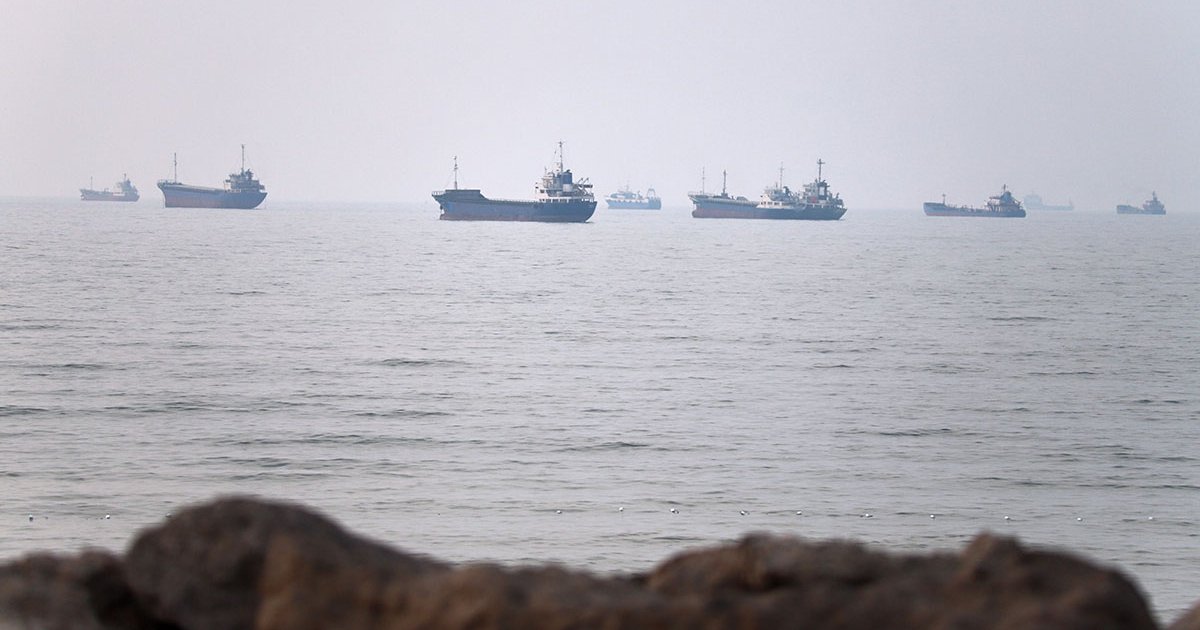
Commercial ship in the Strait of Hormuz near Bandar Abbas, Iran. (Amirhossein Khorgui/ISNA via Associated Press)
key takeaways:
- The US carried out airstrikes on Iran for the fifth consecutive day, targeting missile storage and launch sites on Greater Tunb Island on 15 July.
- The renewed conflict has restricted shipping in the Strait of Hormuz and pushed Brent above $85 a barrel, extending this week’s gains as much as 13%.
- Iran said the strait would remain closed until the US attacks and the US blockade end, while Trump said Tehran wanted fresh talks.
The US launched more airstrikes on Iran on July 15, after President Donald Trump pledged to intensify bombing unless Tehran stops attacking ships in the Strait of Hormuz and agrees to open the waterway.
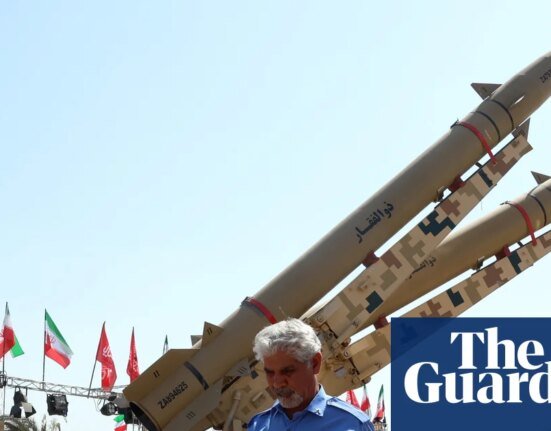
US forces struck missile storage and launch sites on Greater Tunb Island, located in the Persian Gulf near the strait, in a 90-minute operation at noon Iranian time. US Central Command said the second wave arrived at 3 pm US Eastern time.
This was the fifth consecutive day of American attacks. On the night of July 14, US forces attacked several military targets, prompting retaliatory attacks by Tehran on US targets in the Gulf Arab states, including Kuwait and Bahrain.
The US-Iran interim peace deal signed about a month ago has virtually collapsed over the past week as the two sides tussle over control of the vital strait through which Saudi Arabia, Qatar, the United Arab Emirates and others send most of their energy exports. On July 15, oil rose for a third day, with Brent jumping above $85 a barrel, giving it a gain of 13% for the week.
Trump reiterated his claims that he wants more talks after US strikes have reduced Iran’s missile and drone capabilities.
“When I was coming here we got a call saying they wanted to meet,” Trump said in an interview with Fox Business. “They always want to meet.”
However, Tehran has not publicly confirmed its willingness to resume talks.
At 3 pm ET, the US military launched operations today for a second wave of strikes against Iran. The attacks are targeting Iranian military capabilities that are used to threaten ships freely transiting through the Strait of Hormuz, an international waterway vital to global commerce. …- US Central Command (@CENTCOM) 15 July 2026
Connected: UN maritime chief warns Hormuz too dangerous for ships
As Iran threatened to attack ships trying to cross the strait, the US said it had assisted a double-digit number of ships overnight. The US military said it had resumed the blockade of Iranian shipments through the Strait of Hormuz and turned back two ships.
The head of the International Maritime Organization, a UN body, told Bloomberg Radio on July 15 that the Strait of Hormuz remains too dangerous for commercial ships to transit. It was the most significant warning to the shipping industry since the June agreement.


Alex Fraser from Cox Fleet discusses how fleets should respond when a roadside breakdown occurs, testing their safety, compliance and customer service systems simultaneously. Tune in by going above or RoadSigns.ttnews.com.
Each side blames the other for violating the terms of the so-called memorandum of understanding, which vaguely stated how soon ships would have free passage through Hormuz.
The latest wave of US strikes have mostly targeted military sites, such as radar, missile and drone facilities in the south of the Islamic Republic. The bombing campaign is much less intense than during the height of the war in March and early April, when Tehran and other major cities were under constant fire.
Connected: US supports Iraq-Syria pipeline that would bypass Hormuz
Iran has shown little sign of backing down. On July 15, the Islamic Revolutionary Guard Corps – whose navy is behind many of the threats against commercial ships – said the strait would remain closed until the US ends its attacks and blockade of Iranian ports.
“The region’s oil and gas exports are either available to everyone or available to no one,” the IRGC said, according to a report by Iran’s Press TV.
Parliament Speaker and top negotiator Mohammad Bagher Ghalibaf said Iran has no reason to remain committed to the deal if Tehran is not benefiting from it, but declined to formally withdraw from it.
In Washington, congressional Republicans are moving forward with plans to increase war spending despite the political risks of supporting an unpopular military campaign that has sent consumer prices rising.
And Trump administration officials are pushing ahead with plans to expand shipping exemptions, making it easier to move oil, fuel and fertilizer around the U.S., as renewed war in Iran raises the prospect of prolonged supply disruptions.
Meanwhile, the European Union’s aviation safety regulator has raised its threat level for airlines flying to and from the Middle East. It cautioned carriers against flying over the airspace of Bahrain, Kuwait, Qatar, the United Arab Emirates and the Gulf of Oman.
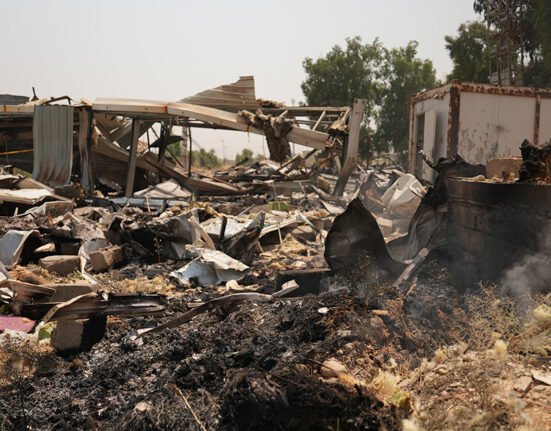
The Iranian government said more than 30 civilians have been killed in US strikes in recent days. Tehran’s military said on July 15 that a missile attack on a barracks in the city of Iranshahr in the southeast killed seven people.
However, the US is sticking to the decision to restart the naval blockade, a move that has angered the Islamic Republic and could further weaken its troubled economy. The blockade was first imposed in April and was lifted last month after the MoU was agreed.
Written by Kate Sullivan, Fiona MacDonald and Katherine Lucy