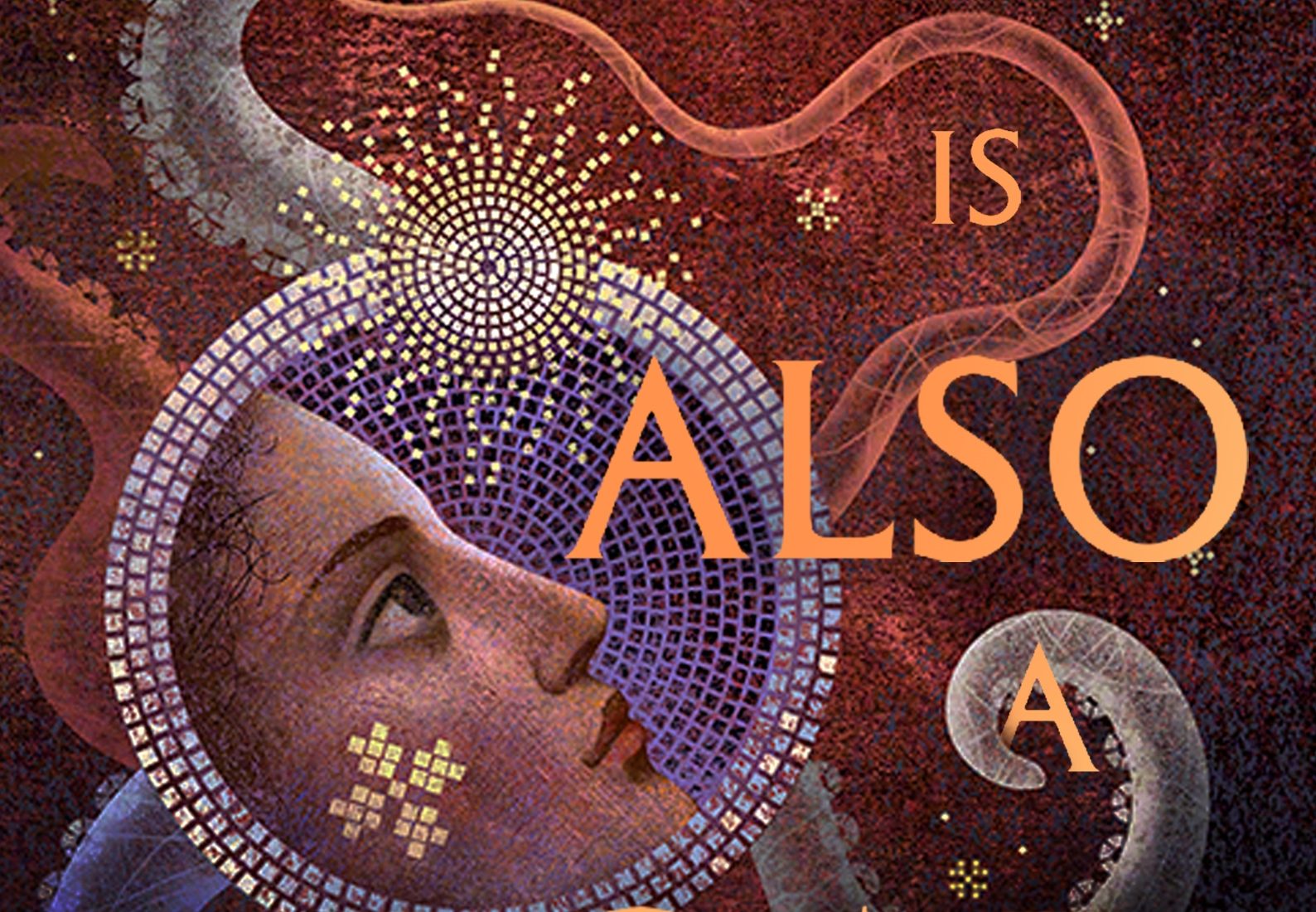
I’m disappointed by Annalee Newitz’s new novel A Wall Is Also a Road. That’s partly because it promises so much, from the premise to the title to the setup. But, in its full execution, it has the bagginess of a short story played out over 300 pages.
A Wall Is Also a Road
By Annalee Newitz
Tor; 304 pages
With its protagonist, Gardenpath a unicellular slime mold graduate student from the galactic center, A Wall not only decenters human experience, it decenters the human galaxy, and multicellular life as a whole. The Rational People (their name for the civilized molds — some of whom are funding an adjacent war) do not believe that multicellular life is possible and, separately, do not believe (have a vested interest in not believing) that there is life in the spiral, a remote section of which hosts Earth.
This is a fascinating premise for a book and Newitz delivers on the initial work of making it believable — condensing huge field-sized amoebas into characters in a university satire. Gardenpath has a fascinating back story, not only does this incredible slime mold believe in life on Earth, he/she/it (the pronouns shift because, y’know, slime mold) but finds it and makes first contact as well as significantly more intimate contact.
Sadly, though, Newitz fails on the, seemingly simpler,
Sadly, though, Newitz fails on the, seemingly simpler, work of making the encounter and its outcome into a fully fledged novel. She’s made plot-filled novels before in Autonomous and The Future of Another Timeline. And even though The Terraformers ran on a little, it never lacked for plot. Like its protagonist, though, the plot of A Wall is unicellular. Without spoiling it, the bad guys are, each in their own way, very simply overcome.
So, either make it a short story (perhaps a novella) or, if not a short story, then relieve the constant back and forth from the Rational Memory to Pompei by making the visits more consequential.
The research that Newitz did into the culture and history of pre-eruption Pompeii is evident and illuminating. The sexuality, culture, gender, and racial diversity of that era’s southern Roman Empire is suggestively evoked. Likewise Newitz successfully skirts absurdity to evoke the Rational People as a thought-experiment and a projection of a particular part of human culture. Giving Gardenpath a human lover and a human name — Peristyle — are smart touches and ways of connecting the two frames of reference. But we know what happens to Pompeii and, pretty quickly — way too soon — we know what is going to happen in Gardenpath’s civilisation.

Despite my cavils, Newitz’s 2025 novel Automatic Noodle
Despite my cavils, Newitz’s 2025 novel Automatic Noodle went on to be a best seller, but I still stand by my review. If not intellectually dishonest, the novel achieved its cozy status through a series of wilfully blind optimistic choices in the face of semi-apocalypse. The new one harkens back to the earlier The Terraformers (2023) in its insistent and laudable attempt to make the least human creatures seem capable of human feelings, emotions and romantic attachments. This isn’t an Ann Leckie-like move to try and make aliens seem alien, it’s a relatively transparent attempt to help humans understand what it is to be human.
That’s a good move: to broaden human empathy to beings that are not and do not identify as exact analogues of the perceiving humans. I just wish there was more payoff for the other 200 pages.