Functional core strength is important for everything we do, but its training is often done in the gym. While compound lifts like back squats, deadlifts and bench presses challenge the core, adding direct core work can be beneficial as you age. Your core helps maintain posture, transfer force between your upper and lower body, and resist unwanted motion as your arms and legs work. A physical therapist says there’s a simple kettlebell exercise that checks all those boxes.
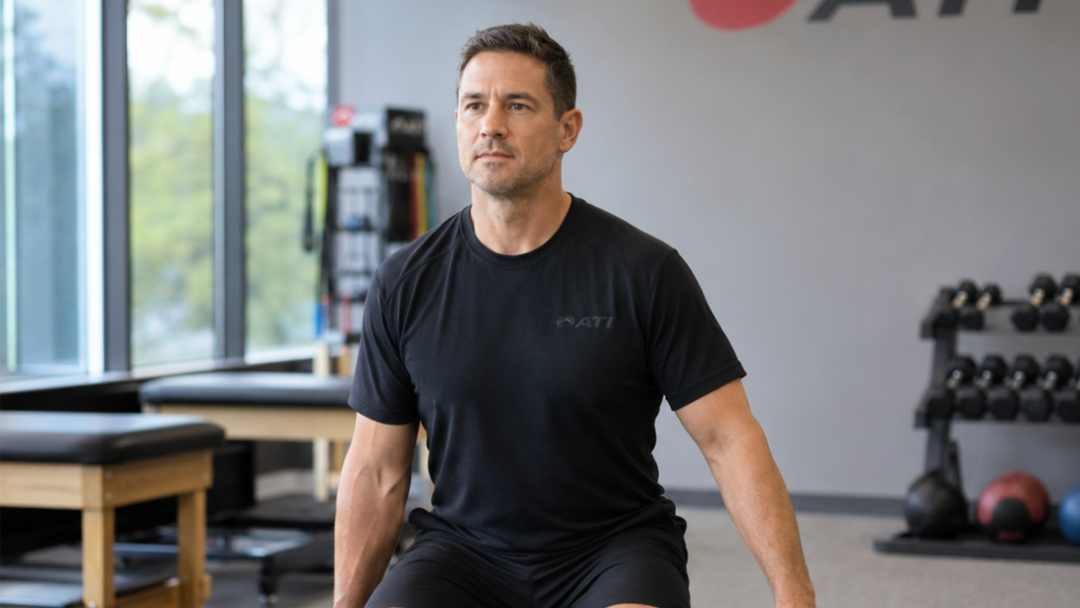
“The kettlebell suitcase squat is one of the best exercises that men over 50 can use to improve functional core strength,” says Tom Denninger, DPT, OCS, FAAOMPT, vice president of Clinical Development. extreme physical therapy. “It’s simple, efficient and closely matches the way people use their bodies in daily life. This exercise combines a squat with an asymmetric load, meaning the kettlebell is held to one side of the body like a suitcase. This makes it much more than just a leg exercise.”
In the kettlebell suitcase squat, the uneven load forces your torso to remain upright as your hips, knees and ankles move through the squat. Your abdominals, obliques and spinal stabilizers work to prevent your body from leaning or rotating toward the kettlebell. It accomplishes everyday tasks like carrying groceries or luggage with one hand, training the core and lower body to work together.
RELATED: Trainer Claims This ‘Unseen’ Lower-Body Machine Can Help You Unlock Heavy Squats and Lateral Strength
How to Do Kettlebell Suitcase Squats
extreme physical therapy
- Stand with your feet shoulder-width apart and hold a kettlebell in one hand at your side like a suitcase. The kettlebell should hang naturally at your side without resting on the foot.
- Sit in a squat by keeping your hips low and back, keeping your knees bent and toes in line. Keep your weight balanced on both feet and avoid leaning toward or away from the kettlebell.
- Apply pressure to the floor and stand straight.
- Do 2 to 3 sets of 6 to 10 reps on each side.
Benefits of Kettlebell Suitcase Squats
Because the suitcase squat is a compound exercise, it trains multiple muscle groups and movement qualities at the same time. Suitcase squats target the quads, glutes, hamstrings and calves, while also working the abs, obliques, spinal stabilizers, upper back, shoulders and forearms. The asymmetric kettlebell position increases the demand on the lateral trunk and anti-rotation muscles, especially the obliques and deep spinal stabilizers.
‘In plain language, the legs are doing the squat, but the core is working hard to keep the body from pulling out of position,’ Denninger says.
Kettlebell suitcase squats also improve balance, grip strength, hip mobility, ankle mobility and movement confidence. Lower-extremity strength is especially important as we age because it helps with climbing stairs, getting up from a chair, recovering from stumbles, and staying independent.
Revision and progress
To modify the exercise, start with a lighter kettlebell, decrease the depth of your squats, or use a box or bench as a target for the glutes. To advance the exercise, increase the weight, slow down the lowering phase, pause longer at the bottom and gradually add more reps or sets over time.
You can also do a front rack squat where the kettlebell is held to one side near the shoulder, or a single-arm overhead squat with the kettlebell extended over the head.
RELATED: A Trainer-Approved 45-Minute Kettlebell Routine That Strengthens Full Body Without a Gym