USA: The Alliance for Automotive Innovation and the Automotive Logistics Executive Committee have asked the Surface Transportation Board to deny the Union Pacific-Norfolk Southern merger, citing risks to finished-vehicle shipments.
The Automotive Logistics Executive Committee (ALEC) and the Alliance for Automotive Innovation (AAI) submitted their joint comments on November 18 in Docket No. FD 36873, the case in which Union Pacific seeks control of Norfolk Southern. The associations argue that the applicants have not met the heavier burden of proof set by the board’s 2001 Merger Rules, which this case will apply for the first time. They ask the board to deny the application.
General Motors filed its own comments on the same day. GM lists three concerns: vertical foreclosure of competing railroads, tighter control over the autorack fleet and service disruptions during integration. Unlike the associations, it does not ask the board to reject the deal. Its conclusion reads:
“Given this merger’s unprecedented scale, it presents a significant level of risk to GM.”
Why automakers rely on rail for finished vehicles
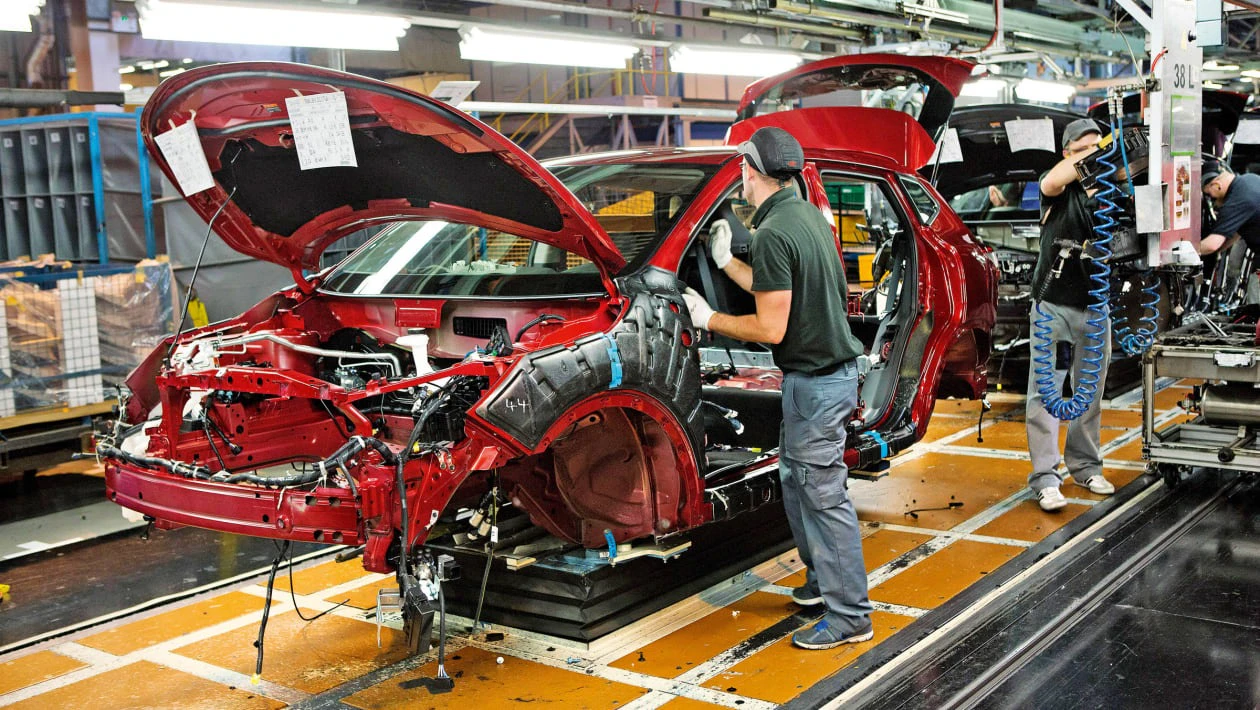
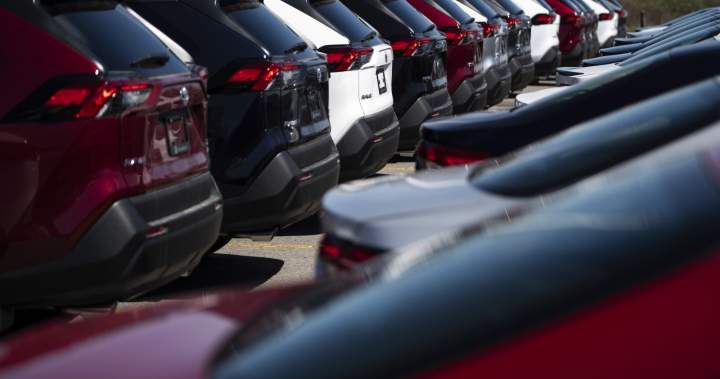
In a verified statement attached to the associations’ filing, Bryan Burkhardt, Executive Director of ALEC, says automakers use rail for high-volume shipments of roughly 300 miles or more. A tri-level railcar typically carries 15 passenger cars and a bi-level about nine SUVs or trucks, while a truck hauler takes nine cars or six SUVs and trucks. Burkhardt also says about 38% of ALEC members’ auto production facilities are served only by Union Pacific or Norfolk Southern.
Burkhardt, who spent 33 years at GM, says reliability matters more to automakers than the faster single-line service Union Pacific says the merger would bring:
“Although faster rail service can be beneficial, it is not as critical as service reliability and consistency since most vehicles go to dealer inventory.”
Gateway pricing and service remedies leave finished vehicles out
ALEC and AAI reject the application’s view that automotive traffic is “highly competitive” with trucks. On that basis, they say, the applicants left finished vehicles out of Committed Gateway Pricing (CGP), the remedy offered for interline moves with BNSF and CSX, and out of the service dispute resolution program.
The groups also describe CGP as narrow for the traffic it does cover. It applies only at the Chicago, St. Louis, Memphis and New Orleans gateways, only to connections with BNSF and CSX and only to contracts of up to three years, and it leaves out facilities that open after closing. The applicants’ own economist found that about 104,000 of roughly 258,000 eligible carloads would see any rate benefit.
GM makes a related point about service remedies. Its comments say the Alternative Dispute Resolution program excludes exempt traffic, which includes finished vehicles, and that both it and the Targeted Access Program exclude contract traffic, under which all of GM’s finished vehicle traffic moves. ALEC and AAI add that switching ordered under the Targeted Access Program lasts only six months, and the program itself ends three years after the board approves the merger.
| Remedy | Scope | Finished vehicles | Time limit |
|---|---|---|---|
| Committed Gateway Pricing (CGP) | Chicago, St. Louis, Memphis and New Orleans gateways; BNSF and CSX connections only | Excluded | Contracts no longer than three years |
| Damages arbitration for service failures | Non-exempt traffic under common carrier service; recovery capped at $2 million | Excluded as exempt traffic | Three-year integration period |
| Targeted Access Program | Carload traffic under common carrier rates; contract traffic excluded | Excluded when moving under contract | Switching orders last six months; program ends three years after approval |
Finished vehicles are excluded from CGP and from damages arbitration, and GM says it ships all of its finished vehicles under contracts, which the Targeted Access Program does not cover. ALEC and AAI say the program reaches exempt traffic, while GM says it does not; both say contract traffic is excluded. Data from the ALEC and AAI comments (pages 25–32) and the GM comments (page 8), both summarizing the applicants’ filings; terms are as described by the commenters, not by the Surface Transportation Board.
TTX ownership and the autorack fleet
The associations’ filing also focuses on TTX, the pooling company that supplies specialty railcars equipped with autoracks. Union Pacific holds 37.03% of TTX and Norfolk Southern 19.78%, alongside CSX at 19.78%, BNSF at 17.4%, CN at 3.2%, CPKC at 2.2% and Ferromex at 0.6%. Together, the merged railroad would own 56.81%.
The applicants have committed to sell down to no more than 49% on “commercially reasonable terms.” The associations note that there is no deadline and no commitment to complete the sale at closing, and that at 49% the merged company would still hold about 2.5 times the stake of CSX, the next largest owner. GM likewise warns that a 49% holder could, with the support of just one other shareholder, influence how TTX manages the autorack fleet.
The 1996 Union Pacific-Southern Pacific merger and CSX concerns
ALEC and AAI also point to the 1996 Union Pacific-Southern Pacific merger, after which service broke down so badly that the board ordered Union Pacific to let shippers under contract move their traffic to other carriers. They argue that a combined Union Pacific and Norfolk Southern would likely lead BNSF and CSX to merge, and that without such a deal CSX, given its overlap with Norfolk Southern in the East, would bear the larger share of the harm.
Next steps in the Surface Transportation Board review
The November 18 filings met the deadline for comments, protests and requests for conditions in the procedural schedule the board adopted on August 18. Preliminary comments from the U.S. Department of Justice and the U.S. Department of Transportation, if any, are due December 3. Responses to the comments and the applicants’ rebuttal are due February 16, 2027, and final briefs by May 28, 2027, with a public hearing to be held before then on a date the board has not yet set.
Federal law gives the board 90 days from the close of the evidentiary record to issue a final decision. The board has also said it cannot issue that decision until the environmental review required under the National Environmental Policy Act is complete.
Rail’s share of new-vehicle shipments
The Association of American Railroads says rail carries nearly 75% of new cars and light trucks bought in the U.S. and that Class I railroads haul about 1.5 million carloads of motor vehicles and parts in a typical year. Much of that equipment sits in a shared pool: TTX describes its automotive fleet as multi-levels, uni-levels and frame flats, with railroads typically owning the rack structure and TTX providing the flatcar underneath.
A year before the new filing, the Alliance for Automotive Innovation was among the trade associations, chambers and businesses that signed a November 24, 2025, letter urging the board to thoroughly scrutinize the merger proposal.