When the modern EV truck market began taking shape, automakers and startups largely followed the same strategy: build something bigger, faster, more powerful, and more technologically advanced than anything that came before it.
That approach produced impressive vehicles. The Tesla Cybertruck, Ric trucks could deliver astonishing acceleration, serious capability, and luxury-car levels of technology. But they also shared something else in common: most entered the market at premium prices
Now, after years of headlines dominated by expensive electric pickups, there are signs the industry may be entering a different phase, one focused less on maximizing capability and more on expanding affordability.
That’s what makes Slate’s reported reservation count so
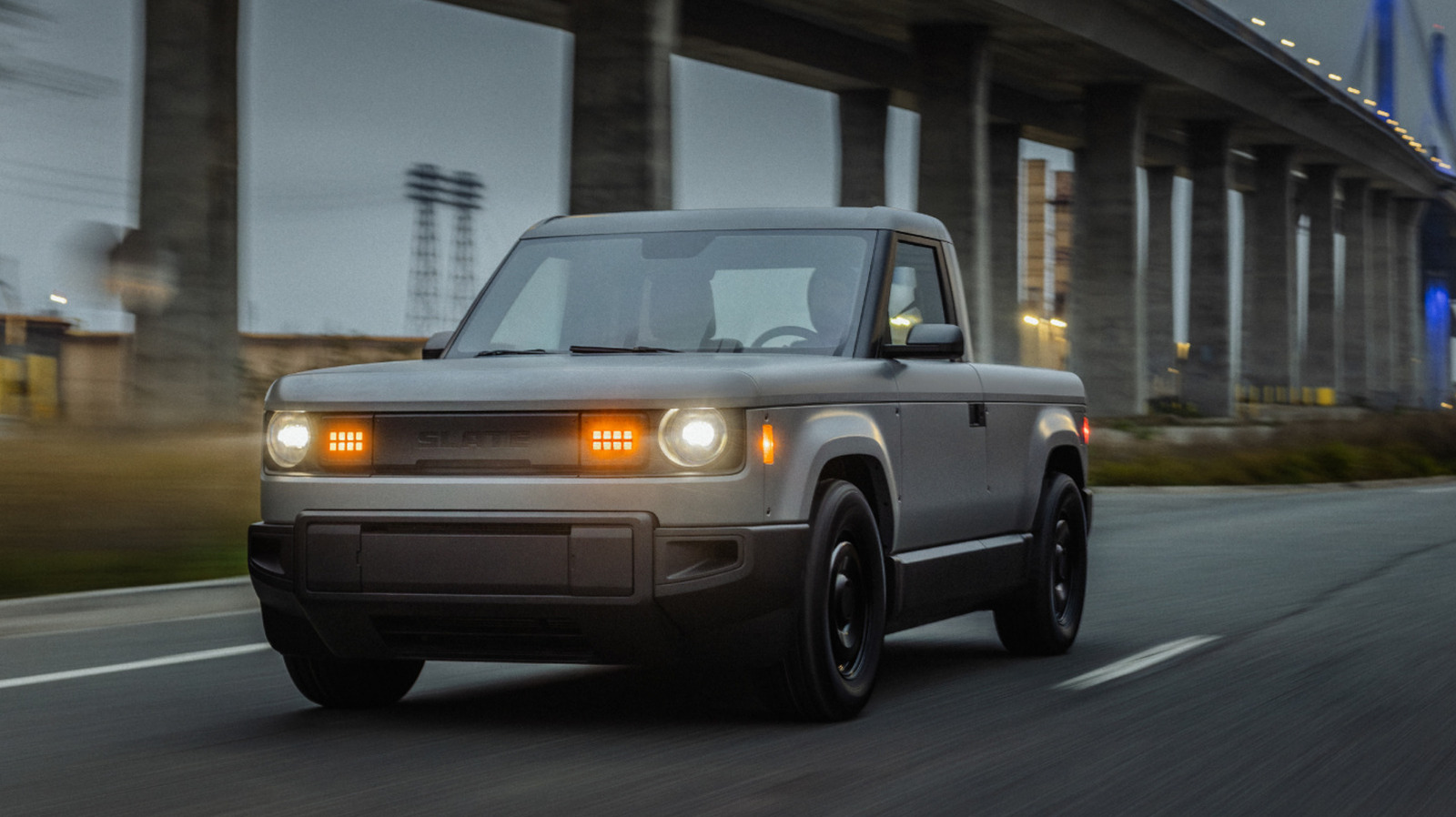
That’s what makes Slate’s reported reservation count so interesting. It’s also why Ford’s upcoming Fathom may be one of the most important EV truck launches in years. Rather than chasing six-figure price tags, both vehicles appear focused on bringing electric trucks to a much broader audience.
| Electric Truck Model | 2026 Starting MSRP / Price Range |
|---|---|
| Slate Truck (Pickup) | $24,950 |
| Ford Fathom | $28,350 |
| Chevrolet Silverado EV | $52,800 – $96,100 |
| Ford F-150 Lightning | $56,975 – $87,190 |
| GMC Sierra EV | $62,400 – $98,600 |
| Tesla Cybertruck | $79,990 – $117,235 |
| GMC Hummer EV | $96,500 – $105,300 |
The Premium-Truck Strategy Made Sense
To be fair, the industry’s original approach wasn’t irrational.
Battery costs were significantly higher, production volumes were lower, and automakers were investing billions into factories, platforms, and supply chains. Premium trucks offered the margins needed to justify those investments while demonstrating what electric pickups could achieve.
The Rie Cybertruck attempted to reinvent what a pickup truck could look like, and the Hummer EV became an engineering showcase built around extreme capability. The goal wasn’t affordability. The goal was proving electric trucks could compete with gasoline trucks at the highest levels
I Wanted an Electric Truck, Not Necessarily a Cybertruck
When I reserved a Cybertruck in 2019, there
When I reserved a Cybertruck in 2019, there were essentially no mainstream electric pickup options available. Like many early reservation holders, I wasn’t looking for a stainless-steel conversation piece. I simply wanted an electric truck, and at the time the Cybertruck seemed like the clearest path toward that future.
More importantly, many of us realized we weren’t attached to one specific truck. We were attached to the idea of electric trucks. Once buyers suddenly had multiple options, affordability, practicality, and overall value became far more important than loyalty to any single vehicle.
Slate and Ford Are Asking a Different Question
Slate’s approach is radically different from the trucks that defined the segment’s early years.
Instead of leading with horsepower, towing numbers, or luxury features, the company is leading with price. Its truck is expected to start at $24,950 and intentionally embraces simplicity, with manual crank windows, physical climate controls, and a minimalist design philosophy.
Ford’s upcoming Fathom targets many of the same
Ford’s upcoming Fathom targets many of the same affordability concerns, albeit through a very different strategy. Starting at $28,350, it serves as the flagship for the company’s new low-cost EV platform while retaining features modern buyers expect.
Despite their differences, both vehicles point in the same direction. Neither is trying to become the next $100,000 electric truck.
Did Automakers Overestimate Demand for Premium EV Trucks?
The strongest evidence for this shift may actually come from outside the EV market.
The Ford Maverick demonstrated there’s still substantial demand for smaller, more affordable trucks. Its popularity challenged the idea that buyers always want larger, more expensive vehicles loaded with features.
That makes Slate and Ford’s latest EV efforts
That makes Slate and Ford’s latest EV efforts particularly interesting. Rather than asking how much capability can be packed into a truck, they’re asking how much truck can be delivered at a price ordinary buyers can still afford.
Which raises a bigger question: did automakers overestimate long-term demand for premium electric trucks?
If reservation interest ultimately translates into purchases for $25,000 to $30,000 electric pickups, manufacturers may need to rethink many of the assumptions that shaped the EV truck market’s early years.
What’s particularly interesting about Slate and Ford’s focus on affordability is when it’s happening.
Just a few years ago, the industry’s biggest EV truck announcements centered on larger batteries, luxury interiors, and increasingly ambitious price tags. The Cybertruck, Hummer EV, R1T, and F-150 Lightning represented a belief that electric trucks would enter the market at the premium end and work their way down later.
Today, that confidence appears less certain.
Tesla recently announced plans to wind down Cybertruck
Tesla recently announced plans to wind down Cybertruck production around the middle of 2027, and reported U.S. sales estimates have fallen well below the volumesonce discussed during the truck’s launch period. Ford, meanwhile, is moving in the opposite direction, centering its next major EV truck effort around affordability.
That doesn’t mean premium electric trucks are disappearing. There will likely remain a market for high-end EV pickups. However, it does suggest manufacturers may be rethinking one of the segment’s core assumptions: that buyers primarily wanted bigger batteries, more technology, and increasingly expensive vehicles.
Of course, affordable EV trucks succeeding doesn’t necessarily mean premium trucks failed.
The first wave of electric pickups helped prove the concept, attracted early adopters, and justified the enormous investments required to launch new EV platforms.
It’s entirely possible the market isn’t rejecting premium
It’s entirely possible the market isn’t rejecting premium electric trucks. Instead, it may simply be broadening beyond the buyers willing to pay luxury-vehicle prices.
If that’s the case, trucks like the Slate and Fathom won’t replace premium models. They’ll expand the market.
The EV Truck Market May Be Entering Its Second Chapter
The first wave of EV trucks proved electric pickups could be fast, capable, and desirable. The next phase may answer a different question: can they also be affordable?
If Slate and Ford succeed, the biggest story
If Slate and Ford succeed, the biggest story won’t be the trucks themselves. It may be that the next growth opportunity in electric pickups wasn’t another six-figure flagship, but a vehicle ordinary truck buyers could actually afford.
For years, the industry largely assumed buyers wanted bigger, faster, and more expensive electric trucks. Slate and Ford are testing a different theory. They believe many truck buyers never wanted a six-figure EV pickup at all. They simply wanted an electric truck they could afford.
The next phase of the EV truck market may not be a battle to build the biggest or fastest pickup. It may be a competition to build the most attainable one.
What do you think? Did automakers spend too
What do you think? Did automakers spend too much time chasing premium electric trucks, or are affordable trucks like Slate and Ford’s Fathom simply expanding the market? Let us know in the comments below.
Blake Lowry is a tech forward automotive enthusiast with a background in software development and animation working with clients such as Car & Driver, Hot Wheels, Google, Microsoft and the History Channel where he contributed on various interactive experiences. Blake’s automotive passion is centered around his hands-on experience with electric cars and trucks, alternative/green energy and practical applications in the real world. At Torque News, Blake’s articles focus on Ford F-150 Lightning, Chevrolet Silverado EV, GMC Sierra EV, Rivian R1T, Ford F-150 PowerBoost, Ford Maverick hybrid, Chevy Bolt and Slate Truck coverage.
Read more of Blake’s work on his author profile page.
You can also follow Blake here:
Renders by Blake Lowry. Image by Slate Auto.