
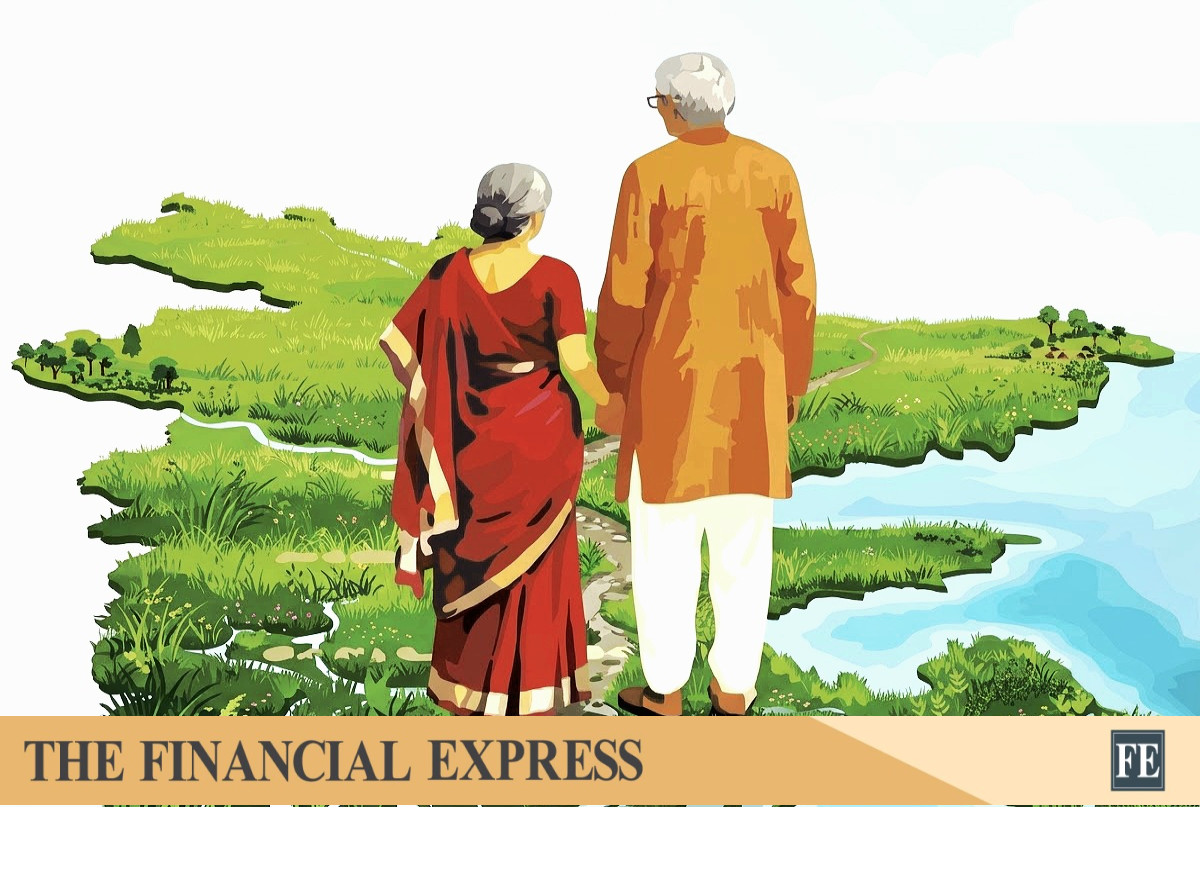
Bangladesh is getting older, and faster than most of us realise. Life expectancy rose from about 65 years in 2000 to around 73 in 2021. But a longer life is not automatically a healthier one. Without planning, the extra years can become years of illness, loneliness and debt.
In 2011, older people made up about 7.5 per cent of our population. By 2023, their share had passed 9 per cent. The World Bank projects that one in five Bangladeshis will be 60 or older by 2050. Soon almost every family will be caring for an elderly member. The question is not whether this will happen. It is what kind of old age we want for our parents, and for ourselves.
A recent study offers a useful answer. In a review article titled “Healthy Aging in Bangladesh: Prospects of Changing Behavior From Reactive Medical Response to Proactive Fitness Approach” published this year in Health & Social Care in the Community, this scribe, along with two researchers – Salwa Jahan and Afia Ibnat – examined how Bangladesh cares for its elderly and its homemakers. The finding is simple: our health system waits for people to fall sick and then treats them. It does little to keep them well. The authors argue for a shift from this “reactive” medical model to a “proactive” fitness approach, built on physical activity, social contact and community programmes. They propose using the country’s community clinics as the base for a national fitness drive for older people and women who work at home.
The cost of waiting: According to a 2023
The cost of waiting: According to a 2023 World Bank study cited in the paper, about 74 per cent of health spending in Bangladesh comes directly from people’s pockets. For older citizens, households bear around 93 per cent of the cost of illness. One hospital stay for a parent with heart disease can wipe out years of savings. For poorer families, it can mean selling land, taking loans or pulling a child out of school.
Most of these illnesses are non-communicable diseases (NCDs): heart disease, stroke, diabetes, chronic lung disease and cancer. NCDs caused 43 per cent of deaths in Bangladesh in 2000 and 70 per cent by 2019. Many can be prevented or delayed simply by staying active.
The World Health Organization (WHO) recommends that older adults do at least 150 minutes of moderate activity a week. That is just over 20 minutes a day of brisk walking or light exercise. Yet nearly two-fifths of elderly Bangladeshis do not meet this basic target. Every person who stays active is less likely to need costly medicines, surgery or long hospital stays. Across millions of people, the savings for families and the state would be very large.
More than a body problem: A survey
More than a body problem: A survey in Tangail district found that more than 80 per cent of people aged 60 and above reported anxiety or depression. As joint families decline, many older people spend most of their days alone.
Group exercise offers a remedy medicine alone cannot. A morning walking club or a weekly session at the local clinic brings people together. It gives them a reason to leave the house, a routine and a sense of belonging. Research shows that physical activity eases anxiety and depression and helps protect memory. A fitness programme for the elderly is also a mental health programme, and a cheap one.
There is a wider benefit too. Older people who stay fit can mind grandchildren, work part-time, volunteer or run small businesses.
The women we overlook: The paper rightly focuses
The women we overlook: The paper rightly focuses on women, especially homemakers. They are often the last to receive care and the first to give it. Many spend more than 15 hours a day on household work and childcare. This work is unpaid, unseen and physically demanding, and years of it leave many elderly housewives with chronic back pain.
Women also have few chances to exercise. Parks and streets are largely male spaces. A 2014 ActionAid survey found that nearly half of women did not feel safe in public places. Social norms discourage women from walking alone or taking time for themselves. The share of overweight women rose from 12 per cent to 32 per cent in a decade, raising their risk of diabetes and heart disease.
A fitness policy that ignores these realities will fail. Women need safe, women-only spaces and programmes timed around household duties. When a mother or grandmother is healthy, the whole household benefits.
A network already in place: Bangladesh does not
A network already in place: Bangladesh does not have to build this from scratch. More than 13,000 community clinics serve the country, each reaching around 6,000 people. These clinics helped bring down maternal deaths. They are trusted and within walking distance for most rural families.
The paper’s central proposal is to add fitness promotion to their work. Health workers can advise older patients and women on physical activity. Clinics can host group sessions and track simple measures: how often people take part, whether their health improves, and how they rate their wellbeing. This makes the programme measurable and easy to expand.
What to do: Based on the research, five steps may be proposed for consideration by the policymakers.
First, make fitness a formal part of primary
First, make fitness a formal part of primary healthcare, with clear guidelines and modest funding for community clinics. Second, design for women from the start, with safe sessions, flexible timings and outreach through trusted local figures. Third, launch a national awareness campaign. Bangladesh succeeded with such campaigns in family planning, immunisation and oral saline. Mosques, temples, churches, schools and local leaders can help carry the message. Fourth, make cities walkable. Urban elders are often less active than rural ones because they have nowhere safe to go. City corporations should protect parks, repair footpaths and create open spaces that welcome the elderly and women. Fifth, bring in the private sector. With the right incentives, the fast-growing fitness industry can partner with government to offer affordable programmes for seniors.
None of this is radical. China has built a nationwide public fitness system. The “Exercise is Medicine” initiative links doctors with community fitness re Physical Activity offers a ready framework. What we need is political will
Programmes in Bangladesh must be adapted to local conditions. Start as a test case in a few districts and learning from the experiences may help to move ahead. The country has turned community health ideas into national successes before: in family planning, immunisation and maternal health. It can do the same for healthy ageing.
The choice is clear. We can keep waiting
The choice is clear. We can keep waiting for our elders to fall ill and then pay heavily, in money, suffering and lost years. Or we can invest a little today to help them stay strong, connected and independent. Prevention is cheaper than cure. It is also kinder. For a country growing older every year, it is the only sensible path.
The writer is a Political and International Affairs Analyst, and Research Fellow, Bangladesh Neeti Gobeshona Kendra.





3 Comments