1952
Article continues after ad
Clay Lockhart’s screams echoed half a mile down the rain-soaked beach as a late January storm swept across the Outer Hebrides – an isolated, windswept region of the archipelago in western Scotland. The rain came quickly, driven by a bitter cold wind that pierced the old, rattling window panes to the bone. In Saltwell – a small coastal community along St. Magnus Bay – residents closed the windows, called their children, and hid cattle indoors, as they always did when a westerly storm struck their fortified homes.
But Clay Lockhart opened his oak front door and stepped out into the storm, a body hunched and heavy in his arms: golden hair sprouting from a pale skull, arms flailing like wet litter.
Neighbors up the beach saw her image in the glow of moonlight amid storm clouds, and they noted the white dressing gown she still held in her arms – now stained with blood from the waist down.
He led her to the cliff edge of his property, overlooking the cruel sea, and he began digging. The job would take an hour to complete, when he finally knelt down – knees in brown mud, hair matted by ocean rain – and placed it carefully in the earth, just as he had done with his parents a decade earlier. He went back to the house to retrieve the two small bodies. They were mere stones, as small as garden squash, not yet ripe. He placed them next to his wife, near her ribs, then began the arduous task of shoveling the wet soil back into the three-wide grave.
This story – of the night when Clay Lockhart buried his wife and their newborn twins in the mud on the beach – may have been the only story told the next morning. If this had been the only disturbing thing that happened that unusually stormy night, it would have been broadcast as the most notable news item in the Northern Isles for many weeks afterwards.
But it was not.
Clay Lockhart staggered back to his home, bent over with grief and the burden of the digging work. The sea rain howled through the open door, and when he disappeared inside, the storm began to howl and spit – as if it had been pushed no longer from the sea to the shore, but above the underworld.
Auld Wives and Pike StavesTheir neighbor Neil Hagedorn, a particularly bad-tempered sheep farmer, would later recall the violence of the storm that night, noting the way the sky had turned sulfurous green. The rain is hitting the walls of every house like the black stones of Lochmul Beach.
Neil Hagedorn heard the ground cracking, the sound of water rushing, as if a landslide was rolling down the treeless marshy hills to the east. The breaking of the rocks sent tremors throughout the islands and many believed it was an earthquake, or the fabled long-sleeping giant Benandonar, who had awakened from his centuries-long rest and was now displacing the land, raising feet and elbows from the storm-soaked earth. But it was neither an earthquake nor a giant earthquake that shook the Hebrides.
By morning, when Neil Hagedorn opened his door and looked toward the beach, he discovered that the white-washed house atop the sea cliff – where Clay Lockhart lived with his pregnant wife – was gone.
But it was not only the house that disappeared. The entire piece of land was missing. Neil, despite his bad hip, was the first to climb the steep ledge and look over where the house once stood, half expecting to see it reduced to a heap of broken beams and glass and foundation stones far below the edge of the cliff. But there were only waves crashing against the rocks, and no sign of the house.
Or land.
Neel raised his eyes and looked towards the sea, the sky was calm now, the wind was playful and strange. And he was surprised. . .
In the years that followed, stories spread from neighbor to neighbor, from one island town to another, the stories of Clay Lockhart, whose wife died in childbirth, and whose grief was so deep and widespread that the night of the storm the ground cracked, causing the house and the four hectares of land it stood on to be separated from the mainland and swept into the Atlantic.
Sea-mad sailors, fishermen and stern captains swore they saw the newly formed island with its white house, perched on a stony peak, jutting out into the far reaches of the dark brown Atlantic. People would visit their graves insisting that they had seen someone on that island, Clay Lockhart, still distraught with grief, wandering on the rocky shores of the island without the intention of calling ships for help. Of always abandoning the place where he buried his wife and two newborn children.
It is known as Saltwell Island, a haunted ship, a fictional floating island that must be avoided. A cursed heap of land. But these warnings faded over time. The old stories were dismissed as superstition and hearsay. Clay Lockhart, in his despair, probably jumped off the cliff that night. And as for the house, perhaps it broke in a storm – torn to pieces, falling into the sea along the rich, grassy shoreline – and locals preferred to tell stories of islands lost in the Atlantic than the truth: a man whose grief drove him into the sea.
It would be many decades later, on some foreign, distant beach, before anyone else would see this elusive island and dare to set foot on its rocky shores.
A girl named Eleanor Mills, whose life will change one rainy, stormy night. Which will be both remembered and forgotten because of that island. Because what will happen? And what was already there.
__________________________________
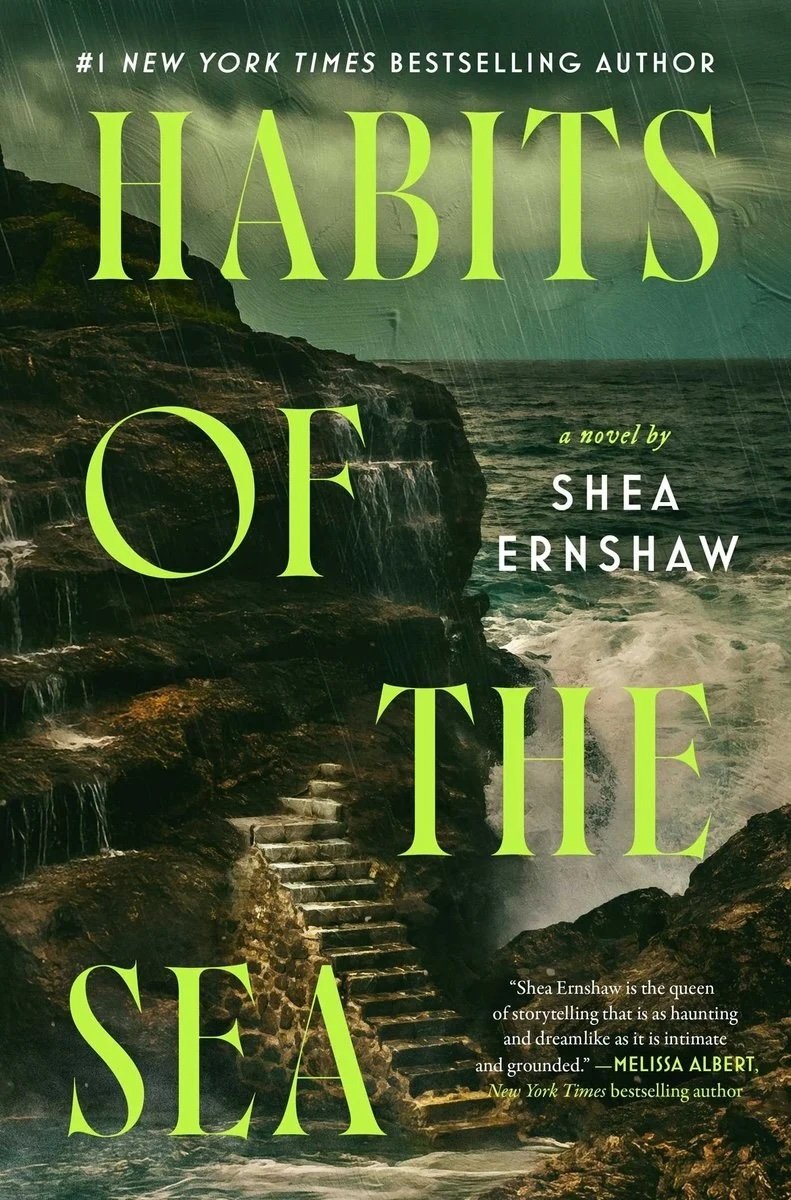
From habits of the sea By Shea Earnshaw. Used with permission of the publisher, Atria Books. Copyright © 2026 by Shea Earnshaw.