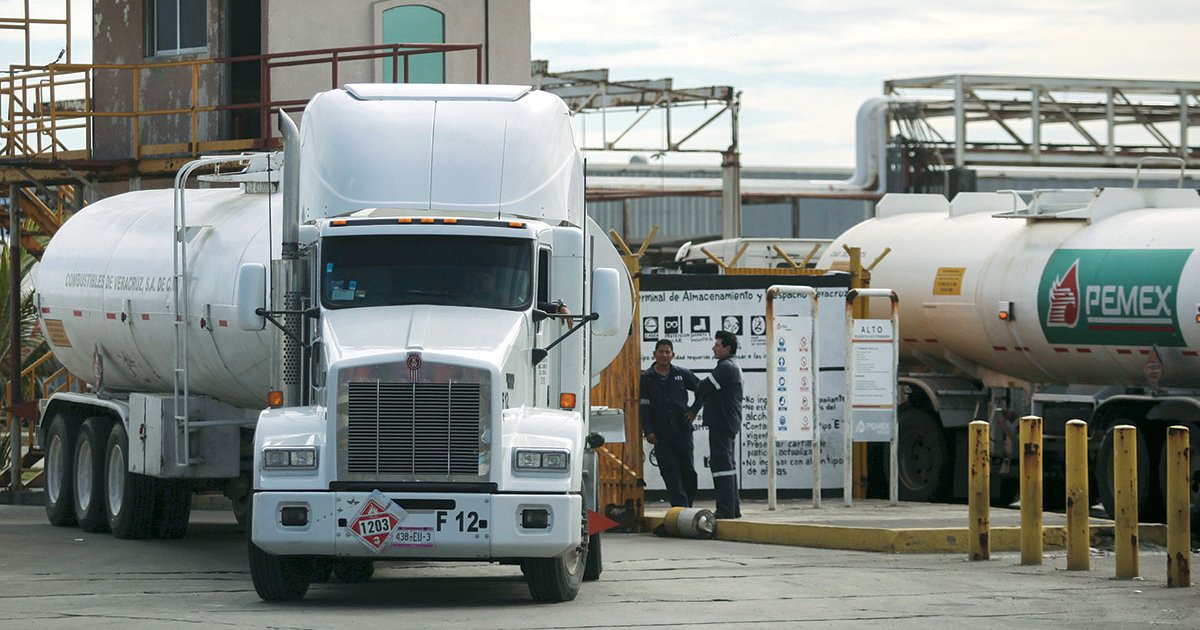
Tanker trucks wait at Petroleos Mexicanos’ storage and dispatch terminal. (Felix Marquez/Associated Press)
key takeaways:
- The US Treasury imposed sanctions on two Mexican nationals and nine Mexico-based companies on June 30 over alleged fuel-smuggling ties to the CJNG cartel.
- Illegal fuel smuggling costs Mexico more than $11 billion annually and is the cartel’s biggest source of income after drugs, officials said.
- Oscar Guillermo Juradini Silva and J. Companies associated with Refugio Ruiz Villagomez did not immediately respond to requests for comment.
The US Treasury announced sanctions against two Mexican nationals and nine companies in the country the agency said are linked to a fuel-smuggling scheme linked to a cartel.
The move was the latest action by the US government to fight the illegal cross-border fuel trade, which costs the US and Mexico billions of dollars in lost revenue annually. Drug cartels are smuggling vast quantities of American gasoline and diesel into Mexico, bringing the fuel clandestinely to avoid taxes. The operation has become so widespread that it has become the largest source of income for the cartel after drugs.
According to a statement from the US Treasury on June 30, the US sanctioned nine companies linked to two Mexican nationals: Oscar Guillermo Juradini Silva and J. Refugio Ruiz Villagomez, an owner of transportation, financial services and real estate businesses who allegedly worked with the cartel to smuggle fuel from the US to Mexico.
Connected: Authorities crack down on several diesel fuel theft gangs
According to the statement, both men are accused of conducting millions of dollars of transactions through the US financial system with third parties linked to the Cartel del Jalisco Nueva Generación or CJNG cartel.
Illegal fuel smuggling cost the Mexican government more than $11 billion in tax revenue last year, and Mexican President Claudia Sheinbaum has expanded Mexico’s cooperation with U.S. agencies in recent months to curb the problem.
Zuraidini is accused of using shell companies on behalf of CJNG and mislabeling fuel imports to avoid Mexican import taxes. Ruiz is accused of owning companies that pay criminals who control ports of entry between the US and Mexico to import fuel illegally.
Companies linked to Juradini and Ruiz did not immediately respond to requests for comment.
While Mexico pumps more crude than most OPEC members, its aging refineries cannot meet domestic demand for diesel and gasoline. The country imports more than 60% of its domestic fuel, mainly from the US.
About 1 in 3 liters of fuel sold in Mexico is obtained illegally, according to an estimate by the country’s largest association of fuel distributors and service station operators.