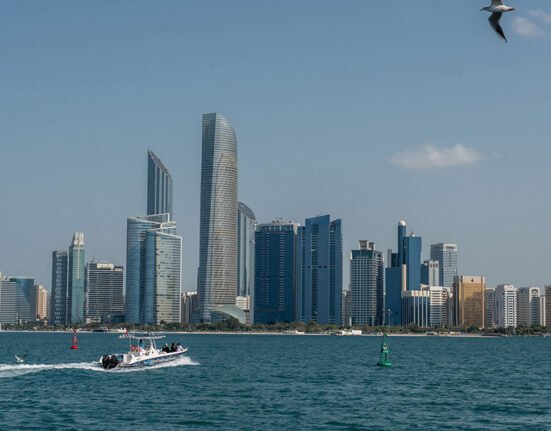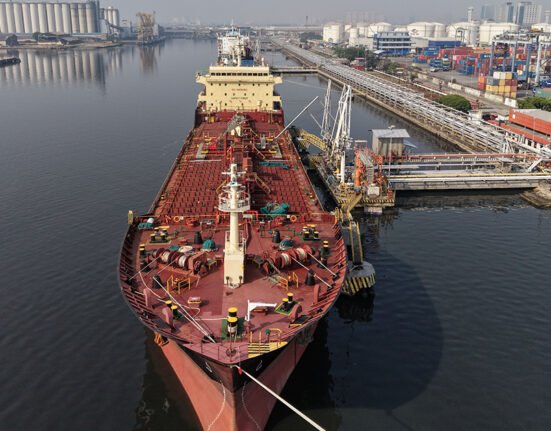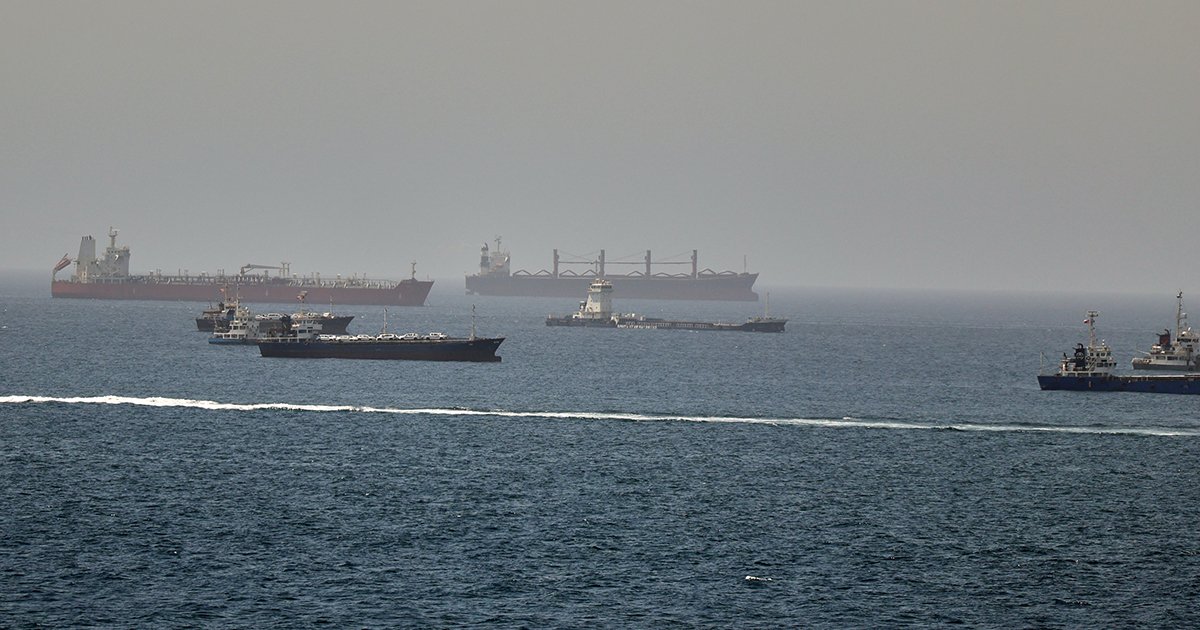
On June 16, tankers and cargo ships overflowed into the Gulf of Oman on shipping routes linking the Strait of Hormuz and the Arabian Sea. (AP photo)
key takeaways:
- Ship traffic through the Strait of Hormuz has increased since the US-Iran interim agreement, although volumes remain below pre-war levels and tensions remain over control of the waterway.
- Experts and industry groups said the dispute matters because potential tolls and restricted transit could disrupt global trade and violate long-standing maritime laws that guarantee free passage.
- Negotiators have 60 days to reach a final agreement, shipping recovery is expected to take several months and uncertainty remains over future administration and toll policies.
NEW YORK – Ship traffic in the Strait of Hormuz has boomed since Iran and the United States signed an interim agreement to end the war that has disrupted global oil supplies and fueled inflation, but questions over control of the vital waterway and whether ships will be charged toll to transit it could hamper talks to build a lasting peace.
Tehran and Washington clashed again over the Strait of Hormuz last weekend. Citing Israel’s latest attacks on Lebanon, Iran announced it had again closed the strait. America was quick to protest. Marine tracking data showed dozens of ships passed through on Saturday and Sunday, although far fewer than the daily average before the war.
President Donald Trump suggested the US could impose its own toll on strait crossings if a final deal with Iran is not reached during the countries’ 60-day negotiation period. The passage was free before the war, but Iran last month set up a new government authority to collect money from ships and has said it is still expected to register ships with the Persian Gulf Strait Authority.
The Strait of Hormuz, which borders both Iran and Oman, is not owned by any one country. Last week’s memorandum of understanding allows Iran to manage the strait for the time being while discussions with Oman and six other Gulf states “to define the future administration and maritime services” of the waterway. Iran agreed not to collect tolls from transit vessels for 60 days.
Legal experts and maritime unions have repeatedly stressed that the toll system would upend decades of international trade practices in the world’s waters. If the US and Iran reach a final deal, analysts say it could take months for the flow of oil, natural gas, fertilizers and other commodities to return to pre-war levels.
Here’s a closer look at the situation in the Strait of Hormuz:
Ships sailing but not at pre-war speed
Data and analytics company Kpler said its tracking confirmed that 71 ships traveled through the strait between Friday and Sunday, with a peak of 35 ships passing through on Saturday. In contrast, about 100 to 130 ships a day traveled before the US and Israel launched attacks on Iran in late February, and Tehran responded by increasing its attacks and effectively closing the waterway.
The rise of Hormuz remains delicate
Strait of Hormuz crossings increased rapidly during 19–21 June, with 71 confirmed transits and a weekend peak of 35 on 20 June, supported by blockade lifts and refurbished free-way signals. Commercial crossing recovered with AIS transponder on,… pic.twitter.com/2YnT6kTnU3
– Kepler (@Kpler) 22 June 2026
As part of the provisional Iran-US framework, Iran said it would undertake mining operations within 30 days and remove “technical and military barriers” to shipping. Iran’s chief negotiator and parliament speaker, Mohammad Bagher Qalibaf, told Iranian state media on June 22 that his country would manage the strait in accordance with international maritime law.
The main central route through the Strait of Hormuz is still mined and remains closed. The ships are using the shorter northern route, which goes through Iranian waters, and the southern route, which goes through Omani waters. But “caution is still evident” with many ships either sticking to Iran’s designated route or trying to hide their position and identity by keeping their transponders off, Keppler said.
Both Iran and America have threatened toll
At the beginning of the war, Iran threatened to attack ships that tried to use the Strait of Hormuz without its approval and began screening ships in a pay-to-pass scheme, which shipping analysts dubbed “tollbooth.” Iran also demanded the right to collect tolls as a precondition for giving up its occupation of the strait in early April.
Although the Trump administration imposed sanctions on the Persian Gulf Strait Authority late last month, which Treasury Secretary Scott Besant opposed as an attempt by Tehran to extort global maritime trade, the president suggested on June 20 that the US could impose its own toll for “the services it has provided as a guardian angel to the countries of the Middle East.”
The administration has not provided details on how the US would impose any tariffs on the ships if talks with Iran do not produce a deal. Shipping analysts have expressed surprise at how much control the initial agreement gives Iran over the strait.
Philip Belcher, maritime director of Intertanko, a trade group of independent tanker owners, said on June 18, “Almost all the power goes to Iran to determine further arrangements in the future. We really need clarity on this.”
Experts say toll would violate maritime law
Collecting tolls in the straits may violate an enduring principle of international maritime trade: freedom of peaceful navigation. This concept was codified by the United Nations Convention on the Law of the Sea, which came into effect in 1994.
Strait of Hormuz. (Maps4media/Bloomberg)
The treaty grants ships the right of unimpeded “transit passage” through more than 100 straits around the world, including the Strait of Hormuz. This applies only to natural waterways, so authorities can charge ships to transit man-made waterways such as the Panama Canal and Suez Canal.
Oman is among more than 170 countries that have ratified the UN convention, but the US and Iran have not. Maritime unions have argued that all nations will remain subject to the provisions of the treaty.
James Kraska, a US Naval War College professor of international maritime law, says both the US and Iran are members of the International Maritime Organization, the UN agency that oversees safety and security measures in international shipping. Both countries are also parties to the International Convention for the Safety of Life at Sea, a treaty that regulates standards for the construction and operation of ships.
In the Strait of Hormuz, fees can only be applied at established ports of entry or for services specifically requested by the ship, such as special navigation assistance through dangerous areas, according to Kraska, who is also a visiting professor at Harvard Law School.
“If Iran wants to apply these to everyone, it will have to adjust the traffic separation scheme rules, and this can only be done through International Maritime Organization member states,” he said.
“You can’t charge a ship for exercising its right of transit passage,” Kraska said. “So the bottom line is no – fees are not legal in this context.”
He said sometimes countries band together to share the cost of maintaining the strait. For example, Indonesia, Malaysia, and Singapore worked with the International Maritime Organization and later other countries to develop such agreements. strait of malaccaBut this involved negotiated contributions from states using the route, not fees on individual ships.
Disruption could last for months

Eaton’s Jason DiNardo and Leah Bogle address common misconceptions about automated manual transmissions and examine what today’s drivetrain service environment requires. Tune in by going above or RoadSigns.ttnews.com.
Conditions in the Strait of Hormuz have escalated or deteriorated rapidly during the war. Marcus Baker, global head of marine, cargo and logistics at insurance brokerage and risk management company Marsh, said that although the outlook for shipping has improved since the US and Iran promised to extend their ceasefire, “there is a certain amount of nervousness about the situation.”
“As far as the insurance situation is concerned, there is a lot of support for shipowners trying to get out during this period,” Baker said, but the interim agreement between Iran and the U.S. does not include language keeping the strait toll-free beyond the negotiation window.
“We’ll see what the next six weeks bring us,” he said.