By Christopher Moorby. Chris is the co-founder of Commission StudioA branding agency in London working with the likes of Lacoste and Zegna.
David Hockney was always my hero. This is where I first saw his work Salt Mill in Bradford At about 13 years of age.
Amidst the heady scent of lilies was an eclectic collection of work exquisitely observed and exquisitely photographed, from naivety and graphically painted, to boundary-pushing photo montages. Here was an artist who could do it all, who attacked every medium with creative force and enthusiasm.
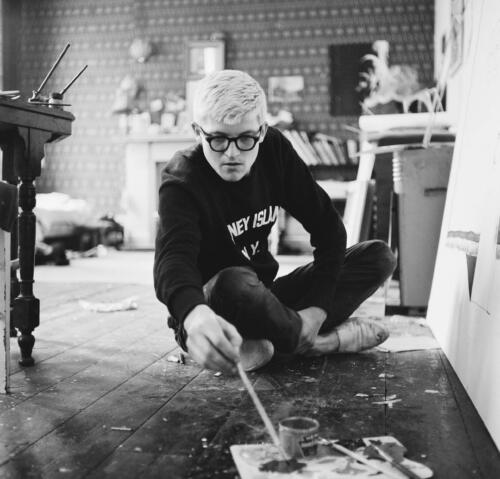
What I loved most about Hockney’s work was that once you saw his incredible ability as a draftsman, you would know that everything you saw was exactly how he wanted you to see it.
If a painting was done in a childish manner, it was because he wanted to convey it to you that way. His work was a perfect window to his imagination because he could bring his imagination to life physically. He was not limited by ability.
The work experience at Salt’s Mill and the introduction to pop art at that age certainly helped form my own graphic eye and helped set the course for my interest in graphic design.
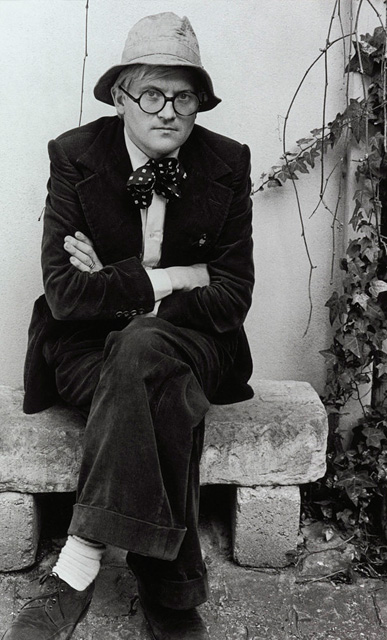
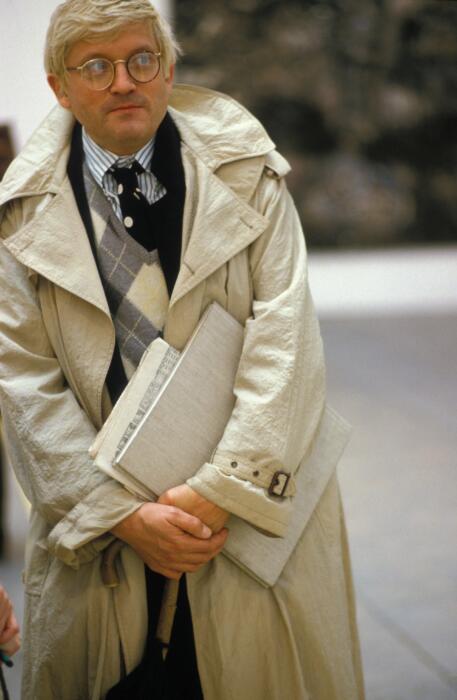
As my interest in clothing and dressing grew in later years, I was inspired by another example of Hockney’s creative eye: his wardrobe.
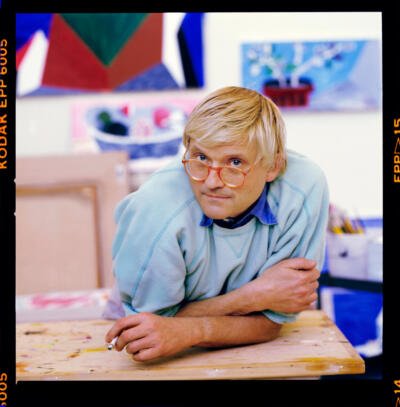
Hockney wore clothes that perfectly suited his art. At its peak his clothing combinations were a saturated version of everyday colors and patterns. A pin streak, but a super pin streak. Embossed polka dots. Jumbo Windowpane Blankets. Bright blue and sweet pink.
Classic options, but their exaggerated version. This approach was highly prevalent in the 60s and 70s.
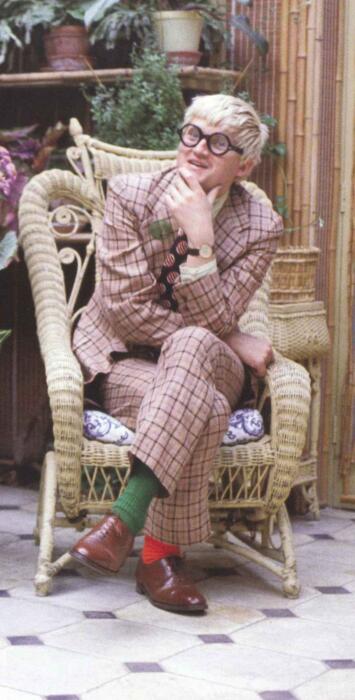
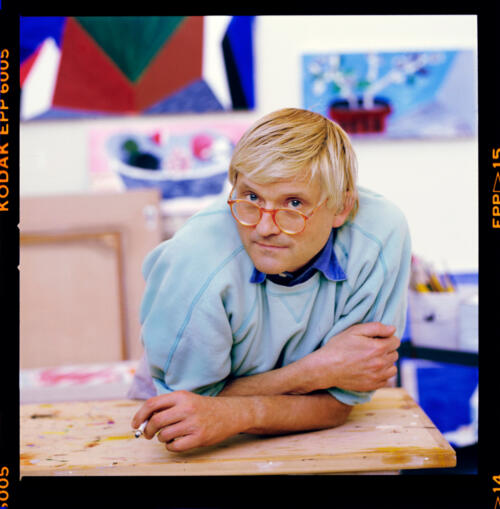
For me, his dress sense was at its peak in the eighties. He has reached his stride. Long gone are the days of the 70s when wearing everything at once proved your sartorial expertise and taste. No need for peacocks in the 80’s anymore.
The glasses were still attractive and iconic, but more sophisticated than the thick rims that framed his face in the sixties and seventies, when he was developing his voice and identity.
The eccentricity of the classic British outfit is on display in my favorite photograph of them that leads this article: red socks and patterned slippers get the party started, while the horizontal and vertical stripes above put them at the risk of looking like an optical illusion. The pastel blue cardigan may have been a lot of one color, but Hockney’s quiet confidence made everything look easy. An outfit that felt ‘thrown together’ by someone with a keen eye for color and pattern.
In his later years the more rigid frames were dismissed, but his memory brought them up in their faces regardless. The power of such an iconic look. As an old man who had nothing left to prove, there was no need to try too hard anymore.
Echoes of his sartorial flair were present in the carnation button holes and patterned braces, but there was no time to worry too much about dressing himself when there was plenty of painting to do, and to adopt new techniques before his age. Painting in a fine suit has rarely felt more comfortable.
There was a certain amount of Britishness in his style. We see traces of these eccentricities in people like King Charles, who has a special talent for unexpected pattern combinations. Prince Michael of Kent has a similar eye and pairs it with his signature full Windsor tie knot. We can also include people like Gilbert and George in this category.
An appreciation of British tailoring seems to be a fundamental part of it, but the adventurous approach to it comes from characters who are confident in their own taste and creative eye. Mistakes will be made, but it’s all part of developing your harmonic voice.
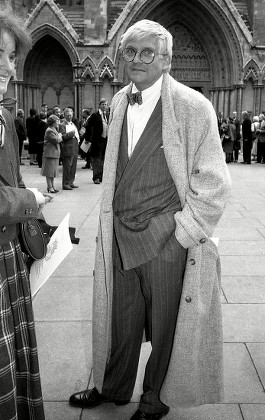
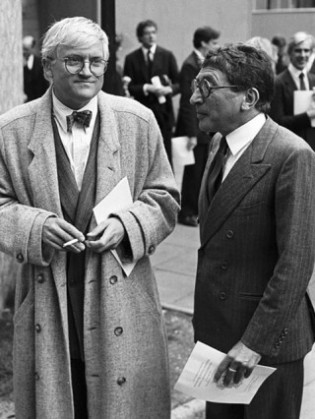
I think there’s something wonderful about getting things a little wrong, but doing it with a flippant attitude. This was typical of Hockney: a pocket square cascading from the breast pocket was a ridiculous amount, but it appeared to be because it was stuffed without much thought.
I don’t know what we call this British carelessness, but it’s certainly different from Italian ‘sprezzatura’. It hasn’t been studied at all – it’s a kind of careless trend. I really admire anyone who can embody this feeling. This is a rare quality, but certainly reflects a person who is comfortable in his dealings.
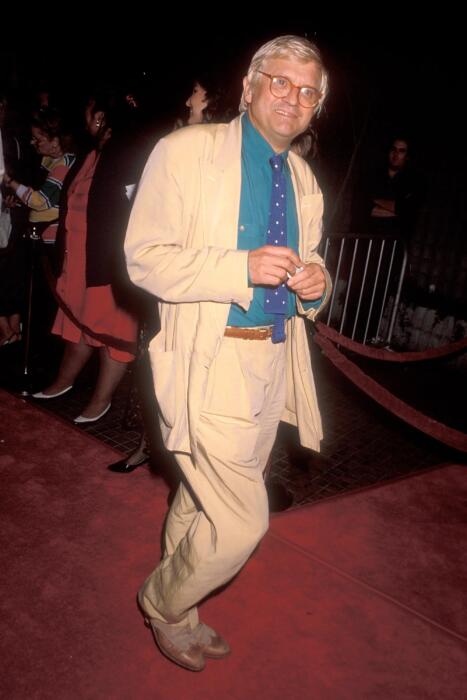
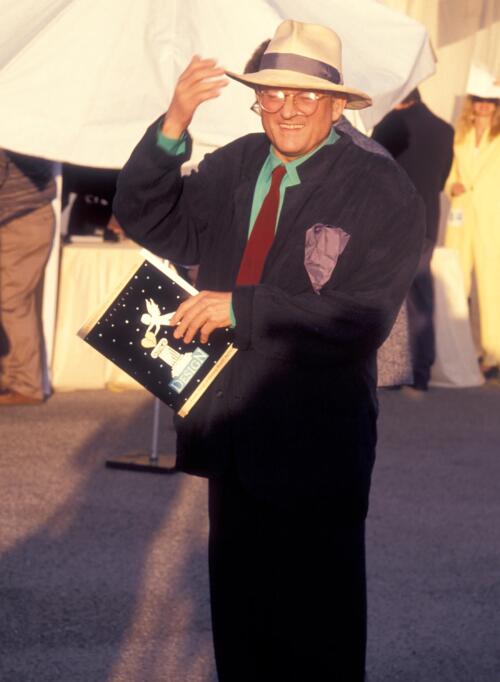
A final reason I liked Hockney’s wardrobe and sense of style was that it always reflected him and where he was in his life.
He dressed according to his age and experience, without losing his flair. It was an outward reflection of the personality of an artist who always wore his imagination on his sleeve.
He also made good use of quality clothes. He lived and painted in it. In my opinion tailoring should be done with rigor – fine, but not expensive. This is something I really value. buy a good thing; Have a good time with it.
As I enter my mid-forties, I’ve begun to apply some of the lessons I’ve learned from observing Hockney’s style over the years. I want clothes to reflect my age and my feelings, but I also want to dress with the confidence of knowing more about myself and what I like and also not being too precious.
It may mean getting things a little wrong, but that makes preparing yourself more fun; It certainly always seemed like David was having a good time.
English painter and designer David Hockney recently passed away at the age of 88. RIP.