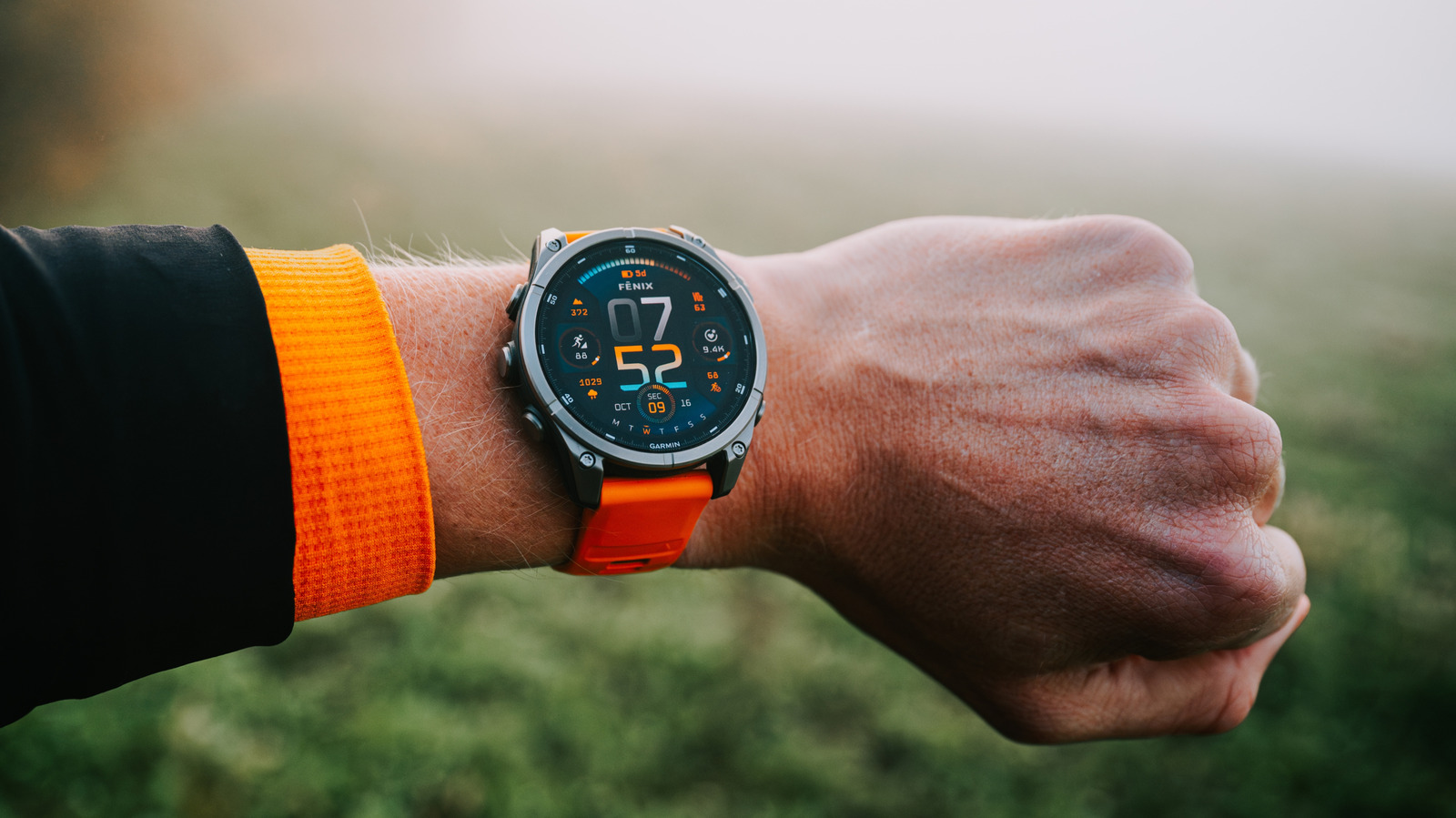
If you’re in the market for a sports watch, but you don’t want to spend a lot on a high-end Garmin, or you don’t like how they look, there are fortunately several options you can choose from, including the Apple Watch Series 12, if you have an iPhone, or other models like the Coros Pace 4 and Amazfit Active 3, as they bring better price points, health sensors, and different styles that can be more your vibe.
To choose these smartwatch recommendations, BGR focused on more recent releases that are focused on people trying to create or maintain a fitness habit. For example, for those thinking about upgrading to an Apple Watch, it has several features for runners to make the experience more enjoyable, while cyclists can also take advantage of some specific settings for their next ride.
Whatever your choice is going to be, the smartwatch market is big and full of options, and, even though several customers prefer the Garmin experience for its reliable sensors and rugged design, it isn’t the only option if you want a sports or more versatile watch for working out at the gym, going for a morning run, playing tennis, or a nice dinner. These are five Garmin alternatives to consider if you don’t want an expensive sports watch that will serve you as well as if you’re getting a Garmin.
Apple Watch Series 12
If you have an iPhone and avoiding a Garmin watch, then the Apple Watch Series 12 can be the perfect smartwatch alternative. After all, the watch has a design cool enough for everyday wear, while still working as a powerful fitness tracker. Built with Apple’s watchOS system, it offers advanced health monitoring, including an all-new heart rate sensor, ECG readings, blood-oxygen tracking, temperature sensing, and more — as highlighted in our review. For sports, it has specific features depending on the workout, such as heart rate zones focus, automatic stroke detection for swimming, or power and cadence metrics for running and cycling.
The Series 12 also features a high-brightness Always-on display that stays readable under direct sunlight, so athletes can view their structured interval training, pacer alerts, and more. It also features a tight integration with third-party apps like Strava, Nike Run Club, TraininPeaks, and others that let you understand and share your workout with others.
That said, while Garmin heavily focuses on multi-day endurance and recovery analytics like Training Readiness and Body Battery, the Apple Watch is the go to option for everyday connectivity and app selection. While the Apple Watch’s battery only lasts a day, which is its biggest trade off, casual-to-serious athletes who want one device for work and workouts will have a great time with the Apple Watch. Especially with a price point of $399 — with cheaper or more expensive versions, depending on if you’d prefer an Apple Watch SE or Apple Watch Ultra.
Coros Pace 4
The Coros Pace 4 smartwatch is specifically built for runners, triathletes, and weight-focused athletes who want high-end performance metrics without extra weight. At just 32 grams with a nylon band, this watch packs a vivid AMOLED display, dual-frequency GPS tracking, and an upgraded optical heart sensor array compared to previous models. With that, it features advanced training metrics like Effort Pace, real-time training load analysis, VO2 Max estimation, and structured interval workouts directly through the Coros ecosystem. This smartwatch also features route navigation, barometric altimeter tracking, and offline music support, so users can workout listening to their favorite tunes even without an internet connection.
What makes the Coros Pace 4 shine is its physical digital crown, which makes it easy to navigate menus with sweaty hands or gloves during a high-intensity session. Thanks to its lightweight body, you barely feel it during long distances and a dual-frequency GNSS gives city runners and trail athletes precise pace and distance tracking under dense tree cover or even surrounded by tall buildings.
For $249, the Pace 4 directly challenges mid-tier Garmin Forerunner models at a significantly lower price. Unlike Garmin, which blocks some advanced software metrics on entry-level watches, Coros provides its full EvoLab analytics across all devices without charging extra. Still, Garmin’s Connect ecosystem still holds an edge in non-running sports tracking and daily smartwatch widget functions, meaning that this watch is a better option for runners than those practicing other sports.
Amazfit Active 3
The Amazfit Active 3 is a great option for those looking for an entry-level athletic watch that delivers high-end hardware specs at a budget-friendly price point. At $169, it has a stainless steel casing, a sharp 1.32-inch AMOLED screen, and built-in 6-system GPS with offline map navigation. The watch also tracks over 160 sports modes, which includes automatic strength training rep counting, while using the BioTracker PPG sensor to record heart rate, blood oxygen, and stress.
The Active 3 smartwatch brings offline turn-by-turn navigation and route importing at a price tier where competitors rarely offer that feature. Besides that, battery life lasts up to 10 to 12 days on regular use, which makes this a killer option. The watch also features AI training plans targeted race goals. And if you want to know if it works, BGR already tested AI programs to train for marathons before
Those looking for a Garmin alternative will see that Amazfit emulates many of its key features, like readiness scores, sleep tracking, and workout templates at a better price point. While Garmin will provide more validated algorithms for advanced training load, Amazfit counters with a sleeker display and longer battery endurance compared to devices like the Vivoactive models.
Polar Pacer
Another dedicated running watch, the Polar Pace was made to keep training simple and distraction-free. Using a highly readable display that thrives in direct outdoor lighting without draining battery, it’s powered by Polar’s proprietary Precision Prime heart rate technology that provides continuous cardiac tracking, sleep stage analysis through Nightly Recharge, and specialized performance testing.
Runners can enjoy Polar’s accurate heart rate and training load science, as the Pacer model can guide athletes through personalized running tests to establish baseline VO2 Max, maximum heart rate, and training zones. Features like FuelWise offer smart carb and hydration reminders during long endurance sessions based on real-time effort, which is great when you’re training for a long-distance run.
The Polar Pacer competes with Garmin’s entry-level Forerunner series, as it focuses heavily on cardiac response and overtraining prevention through its Polar Flow companion app. Athletes who prefer clean, data-driven coaching without the complicated menu structures found in Garmin Connect will have a great time with Polar’s streamlined software. For $299.90, this smartwatch promises to last days and days — although a full-accurate experience will drop the battery to around 32 hours. The smartwatch can be paired with both iPhone and Android, which means you’re not tied to a specific operating system, and, even though it works best for runners, it also properly tracks several workouts to ensure you have enough diversity of training not to overdo your runs.
Fitbit Charge 6
Last but not least, another alternative for the Garmin is the Fitbit Charge 6, as it offers a compact, lightweight form factor for users who dislike wearing traditional bulky sports watches. With a built-in GPS, optical heart rate sensor calibrated for high-intensity tracking, an ECG app, and an EDA sensor for stress monitoring, the Fitbit features Google integrations with Google Maps navigation, Google Wallet payments, and YouTube Music controls right from the users’ wrists.
The Charge 6 shines in gym environments but also casual outdoor workouts. One of its key features for athletes is real-time heart rate broadcastinge gym equipment like treadmills, rowers, and exercise bikes. With over 40 exercise modes and up to seven days of battery life, this Google alternative covers daily activity tracking with minimal bulk
With that in mind, the Charge 6 could be a great competitor against Garmin’s Vivosmart series. Still, while Garmin provides richer sports telemetry and interval options, the Fitbit device has a more intuitive health-and-wellness interface centered on daily sleep scores, stress management, and lifestyle activity tracking. Another important selling point is its smaller design, which offers a more discreet look than a regular smartwatch, and a great price point, as it costs $159.95. That said, this is one of the most affordable smartwatch options from a big company that also offers everyday features like the Google Wallet support or Google Maps navigation.
How did we choose these products
When selecting these smartwatches, BGR wanted to find capable, reliable options that can be great alternatives for the Garmin without sacrificing essential athletic tracking sensors. After all, even though Garmin dominates the sports watch market, its flagship devices come with steep price tags and complex menus that can be overwhelming for everyday athletes. BGR focused on these five devices regarding their release date, training accuracy, value for money, and battery endurance.
For example, it’s hard to recommend a smartwatch for athletes that doesn’t feature precise hardware and each of these devices feature reliable GPS location tracking and dependable heart rate monitoring, which can ensure the workout stats can be trusted. Second, a more affordable price is important, as customers are usually paying a premium price for features that they’re not necessarily using, so this list focuses on functions that actually matter when practicing sports. Finally, all of these watches can easily last a full day, whether or not you put in long workout sessions.
That said, these smartwatches are great Garmin alternatives because they address specific weakness in Garmin’s lineup while matching its strengths where it counts most.