


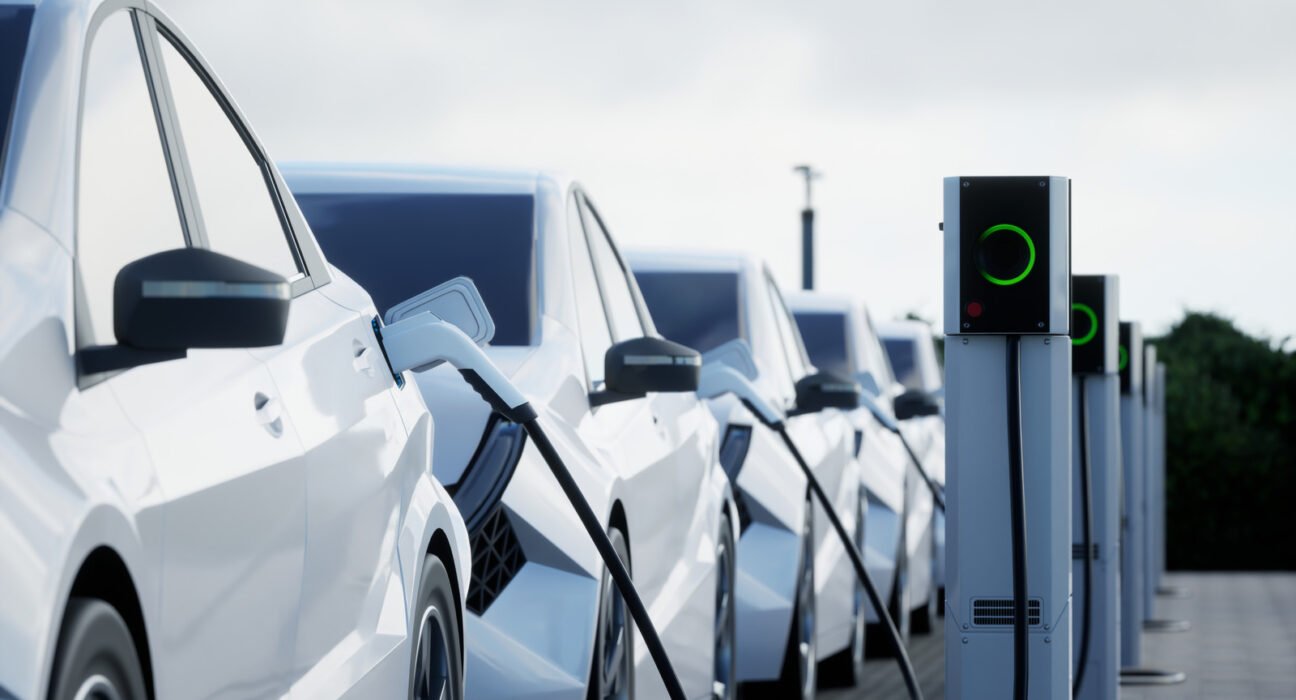
In the 21st century, adding an “e” to the name of electric vehicles has become a common way to let people know that they are different from their conventional predecessors. Random transportation examples range from increasingly popular e-bikes to electrified muscle cars like the Ford Mustang Mach-E. Yet the MPG-E actually takes a slightly different turn on the situation. Although this is actually a way to track the efficiency of an EV, the letters here technically refer to “miles per gallon gasoline equivalent.” This is how it works.
The Environmental Protection Agency (EPA) has determined that one gallon of gas contains the energy equivalent of 33.7 kilowatt-hours of electricity. So if a given gas-only car gets 30 mpg, that vehicle uses 33.7 kWh of energy to travel 30 miles. With this as a baseline, you can also see how many kWh of energy a given EV requires to go a set distance, then calculate backwards to convert your answer into gallons of gasoline. To be exact, the equation is MPG-e = miles/kWh x 33.7. For example, let’s take a look at the 2026 Nissan Leaf – a car that’s light-years better than the last-gen model. With its 75-kWh battery pack, the Leaf gets 28 kWh/100 miles, the EPA’s preferred metric. This reduces to 3.57 miles for every kWh. Finally, you multiply that result from above by 33.7, and the bottom line comes to 120.3 mpg-e combined for our Leaf.
Which new EV has the highest MPGE rating?
We reported on the most efficient EVs in the country at the end of 2025, and it was the Lucid Air Pure leading the way with a top combined mark of 146 mpg-e — which is unchanged for 2026. Lucid also sets the pace for three-row SUVs with the Gravity. This impressive machine can score 111 MPG-e combined. Yes, some Tesla Model Y trims can top 130 MPG-e, but the optional third row isn’t even worth the name. Meanwhile, the larger Model And if you’re looking for an alternative all-electric sedan, you might consider the Mercedes-Benz CLA250 Plus which is good for 126 MPG-e. The top choice among compact electric SUVs is the 2026 Toyota BZ. Significantly revised compared to the 2025 bZ4X it replaced, the BZ can achieve 131 MPG-e combined – an increase of 12 MPG-e over last year’s entry. For some further context, other mainstream options like the Mach-E or the Kia EV6 are limited to 110 and 115 mpg-e, respectively.
As far as all-electric pickups are concerned, they’ve lost some momentum since Ford discontinued the F-150 Lightning, and Ram never got around to producing its own EV pickup before ending the project. This combined gives the Rivian R1T an efficiency title of 87 mpg-e. In contrast, the Tesla Cybertruck’s MPG-e high point is 79. The GMC Hummer lives up to its reputation of being a fuel-sucking gas-only monster of the 1990s, realizing only 53 mpg-e combined – about 64% less than the Lucid Air Pure.