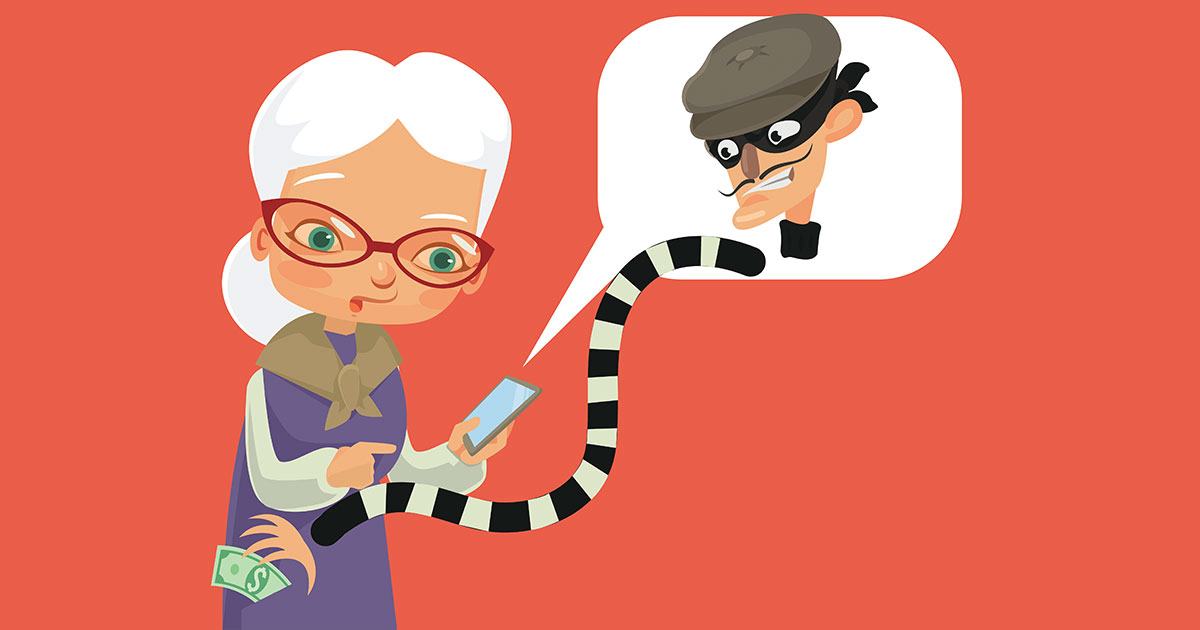
Scams are now a near-universal experience, and a trusted caregiver can be one of the strongest protections an older adult has.
Estimated reading time:3minutes
If you’ve been the target of a scam, or you know someone who has, you’re not alone. In today’s digital world, scams are a near-universal experience. A recent survey by the National Council on Aging (NCOA) found that three-quarters of older adults either experienced an online scam or knew someone who had.
Many scammers specifically target older adults, making it increasingly important for caregivers to be vigilant. Scammers often use technology like artificial intelligence to appear legitimate. Voice cloning, phishing emails, fake texts, impersonation scams, and convincing online messages can make it difficult to distinguish a scam from a real request.
How caregivers can help
When it comes to avoiding and reporting scams, caregivers can play a critical role in helping the older adults they support. Here’s how:
- Encourage a pause before acting. Ask older adults to pause before sending money, sharing personal information, or clicking links. Pressure to act immediately is a warning sign of a scam. It’s important to stop and verify first.
- Make scam conversations routine. Scams often succeed when an older adult has no trusted person to talk to about a suspicious message or financial request. Regular, judgment-free discussions help older adults feel comfortable raising concerns.
- Watch for warning signs. These include unusual withdrawals, secrecy about finances, repeated calls from unknown numbers, new online “friends” requesting money, anxiety about finances, or requests for gift cards, wire transfers, or cryptocurrency.
- Don’t blame or shame. Scams manipulate emotions, not intelligence. Fraudsters exploit trust, fear, urgency, loneliness, and the desire to help. It’s not the older adult’s fault they were targeted.
- Build digital confidence. Provide support and show older adults how to use strong, unique passwords and multi-factor authentication; update devices regularly; recognize phishing emails and texts; and verify unexpected requests through trusted channels.
- Identify trusted contacts. Help older adults identify one or two trusted people to contact before acting on an unexpected financial request. A “check with someone first” plan is especially useful for family emergency and government impersonation scams.
If a scam happens
If you suspect an older adult has been scammed, it’s important to act quickly. Early action can reduce losses and improve the chance of recovery. Take these steps:
- Contact banks and credit card companies immediately
- Cancel compromised cards and change passwords and PINs
- Report the incident to the FBI at IC3.gov and the Federal Trade Commission at reportfraud.ftc.gov
The bottom line
Many older adults do not report scams because they fear judgment, embarrassment, or losing independence. Caregivers should respond with support and problem-solving, not blame. You don’t need to be a fraud expert to make a difference. A trusted relationship can be one of the strongest protections against scams.
Learn more about scams and how to avoid them at ncoa.org/scams.