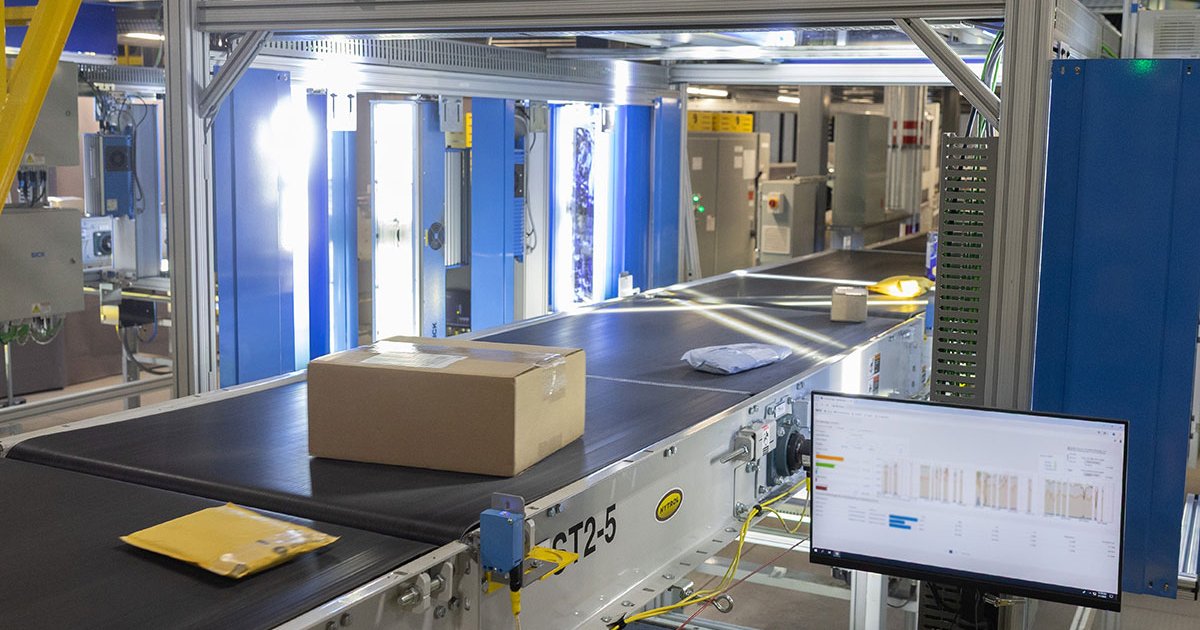
Packages are sorted at a regional processing and distribution center in Phoenix. USPS aims to establish 60 RPDCs. (US Postal Service)
key takeaways:
- USPS is restructuring its logistics network with regional hubs and optimized transportation to improve efficiency and reduce costs.
- Postmaster General David Steiner warned that without structural reforms the agency could run out of cash by the end of the fiscal year.
- The Postal Service has invested approximately $20 billion in modernization, including automation and expanded processing capacity for packages.
The U.S. Postal Service is improving its logistics and transportation network to speed up package flow and cut costs, but the Postmaster General says its business model is draining cash.
This message was given by US Postmaster General and CEO David Steiner During his recent testimony Before the US Senate Committee on Homeland Security and Governmental Affairs.
Steiner said Congress needs to fix the Post Office’s “broken business model,” which is “running out of cash by the end of this fiscal year.” He said the agency’s “unrestricted cash position is worsening to negative $125.9 billion by fiscal year 2035 in the absence of structural changes.”
He delivered a 33-page speech titled “Refixing the U.S. Postal Service’s Broken Business Model” on June 24.
“Every lever that is available to private sector enterprises, or even other government agencies, is unavailable to the Postal Service,” Steiner said.
He said Congress should allow the USPS to “truly operate as an independent agency, free from government-imposed mandates, or we should pay for those mandates. We truly believe that paying for those mandates and using the Postal Service as a growth engine for the $2 trillion mailing industry is what is best for the American people.”
Amid calls for changes, he outlined ongoing logistics efficiency reforms to modernize “operational precision”.

USPS senior public relations spokesman Albert Ruiz told Transport Topics that USPS has invested nearly $20 billion to redesign its facilities and processing to handle higher volumes of letters and automate package processing to efficiently handle today’s evolving mail and package mix.
Changing transportation network
USPS has transformed its transportation network to regional processing and distribution centers with supporting facilities and high-speed routes as the focal point. The goal is an efficient, low-cost transportation network designed for the fast flow of packages and mail.
“Under the legacy network, processing operations were spread across multiple facilities in a given region, making the processing network decentralized and requiring duplicate or excessive transportation trips to move mail and packages between processing facilities,” Ruiz said.
Today’s new RPDC features standardized processing, transportation and cross-docking functions for mail and packages. These centers can also handle higher-powered package sorting equipment – increasing package processing to 88 million in 2025 from 60 million five years ago.
USPS aims to establish 60 RPDCs. It launched three new ones in Nashville, Tennessee on June 29; Oklahoma City and Sacramento, California.
Other active RPDCs
USPS’s other active RPDCs are located in Atlanta; Birmingham, Ala.; Boise, Idaho; Charlotte, NC; Chicago; Greensboro, NC; Houston; indianapolis; Jacksonville, Florida; Jersey City, NJ; Memphis, Tennessee; Phoenix, Portland, Ore.; Richmond, Virginia; And St. Louis.
“Our aging, inefficient and expensive facilities are being systematically replaced with a structured, logical and efficient hub-and-spoke network,” Steiner said.
sorting and distribution center
USPS is also modernizing its transportation system of 19,000 local delivery units in major markets for fewer, larger sorting and delivery centers. By combining operations into centralized facilities the agency plans to streamline processes and improve reliability and efficiency in end-delivery operations.
The agency has now opened 158 SDCs with modern package sorting equipment, electric vehicle-charging infrastructure and optimized transportation to and from processing facilities.
By mid-July, USPS plans to open SDC sites In Colorado, Florida, Idaho, Iowa, Minnesota, South Dakota and Washington state.
regional adaptation
The third component of the reforms is regional transport optimization. This objective aligns transportation schedules between processing facilities and post office locations to improve operational efficiency.
RTO was fully implemented across the country in July 2025. Without making changes to delivery, Ruiz said, the RTO is “focused on more efficient collection, transportation and processing of mail and packages.”