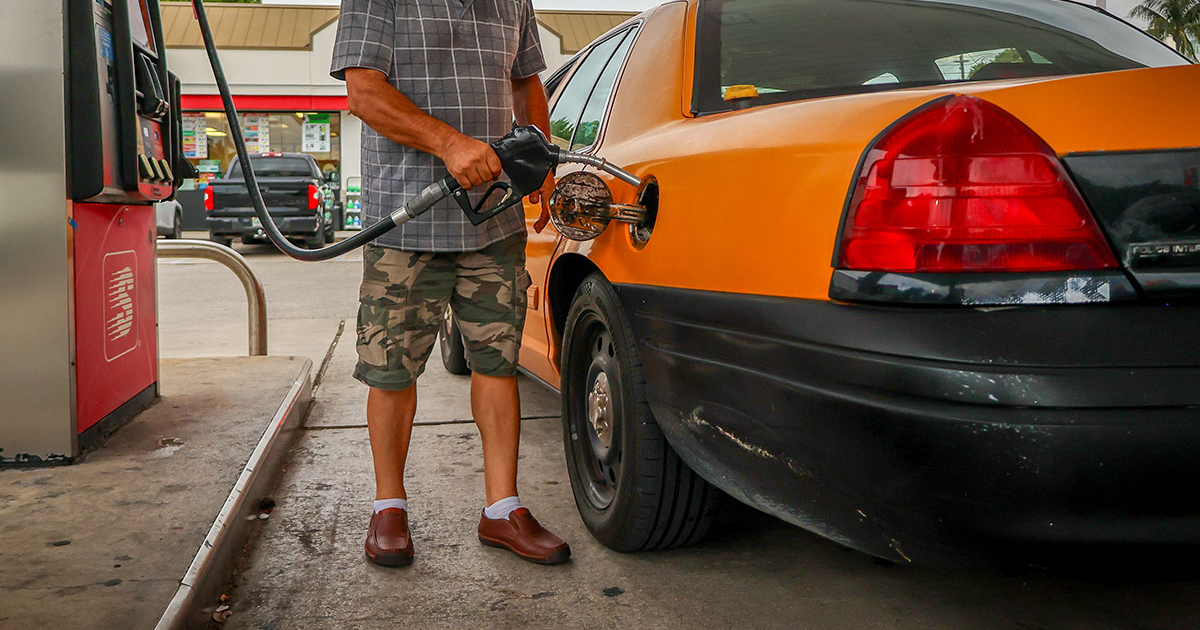
A driver fills a vehicle with gasoline in Florida. (Jack Bennett/Bloomberg)
key takeaways:
- Trump said he ordered the Justice Department to investigate gasoline prices, accusing major oil companies of not lowering pump prices quickly enough.
- National gasoline prices on June 24 were $3.93, above the five-year seasonal average as inventories were near seasonal lows.
- Trump said oil companies could face trouble if an oil spill occurred, while industry officials cited shortages in supply, refining and inventory pressures.
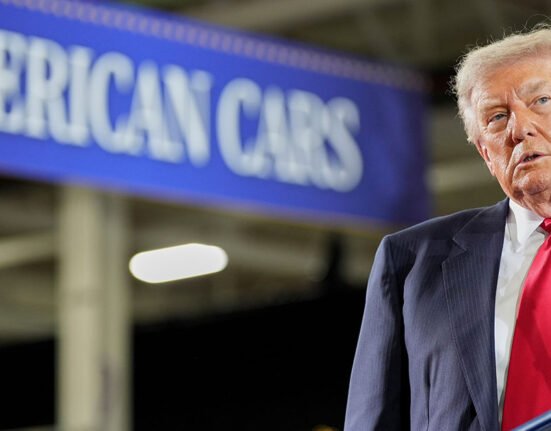
President Donald Trump said he has ordered the Justice Department to look into gasoline prices, complaining that prices are not falling fast enough.
“Big oil companies are not dropping their prices at the pump to keep up with the increasingly low prices being paid for oil,” he said in a post on Truth Social. “Gasoline prices better start going down faster than I’m seeing!”
Trump did not elaborate on the instructions he gave to the DOJ.
Average nationwide gasoline prices hit their highest level since 2022 after the US and Israel attacks on Iran resulted in the closure of the Strait of Hormuz – a key waterway for about a fifth of seaborne crude. They have fallen less rapidly than crude oil – which accounts for half the price of gasoline – after Washington and Tehran signed an interim peace deal that saw traffic through the waterway surge.
U.S. retail gasoline prices remain above the five-year seasonal average of $3.93 as of June 24, according to American Automobile Association data.
Trump said he thinks prices should be $2.25 by now, citing a “boom” of crude coming out of the Persian Gulf now that ship traffic through the strait is increasing. Big oil companies are to blame for pump prices not coming down, he said.
The president said on June 24, “It’s Exxon Mobil. It’s Chevron. It’s Shell. It’s BP – there’s a lot of people in it.”
One reason pump prices haven’t fallen faster is summer demand and fuel requirements.
“It has to do with the seasonal nature of gasoline prices, which are higher in the summer and, in general, there’s about a 10-day lag between wholesale prices on Wall Street and retail prices at the pump,” Dan Struyven, co-head of global commodity research and head of oil research at Goldman Sachs, said on Bloomberg Television. “Structurally, we believe refined product markets are more difficult than crude markets.”
High gasoline prices have become a political weakness for the Republican Party ahead of the US midterm elections in November. Democrats eager to highlight cost-of-living issues are making pump prices a major point of attack.
The supply situation of both crude oil and gasoline has improved, but reserves have been depleted. American Commercial List of gasoline kept by oil Refiner, Trading Firm According to US government data, wholesalers supplying filling stations are currently at their lowest level for the year since 2014.
Historically, economists and energy experts say, oil and gasoline prices often take longer to fall after input costs rise, especially when provoked by physical disruptions — even if those disruptions end.
“Our industry shares the goal of delivering relief at the pump and restoring stability to global energy markets,” American Petroleum Institute spokeswoman Bethany Williams said by email. “Petroleum prices do not move in sync with crude oil, especially during a major global disruption that is still impacting supply, refining and inventories. Our focus remains on supporting market stability and meeting the needs of energy consumers.”
Trump is not the first President to point fingers at oil companies for high petrol prices. Former President Joe Biden repeatedly blamed oil companies, refiners and gasoline retailers for passing the cost onto motorists, when the Ukraine war helped push the cost of a gallon of unleaded beyond $5.
In November 2021, Biden pressured the Federal Trade Commission to investigate potential anti-consumer behavior, citing similar dynamics to Trump: “Gasoline prices at the pump remain high, even as oil and gas companies’ costs are declining.” Nearly a year later, Biden accused oil companies of engaging in “war profiteering.”
Former President Barack Obama announced the creation of a federal fraud task force to investigate whether traders and speculators were jacking up fuel prices in 2011.
Trump’s broadsides come despite his close ties to the oil industry — which helped finance his 2024 campaign for the White House and led to the administration’s adoption of many of his policy priorities.