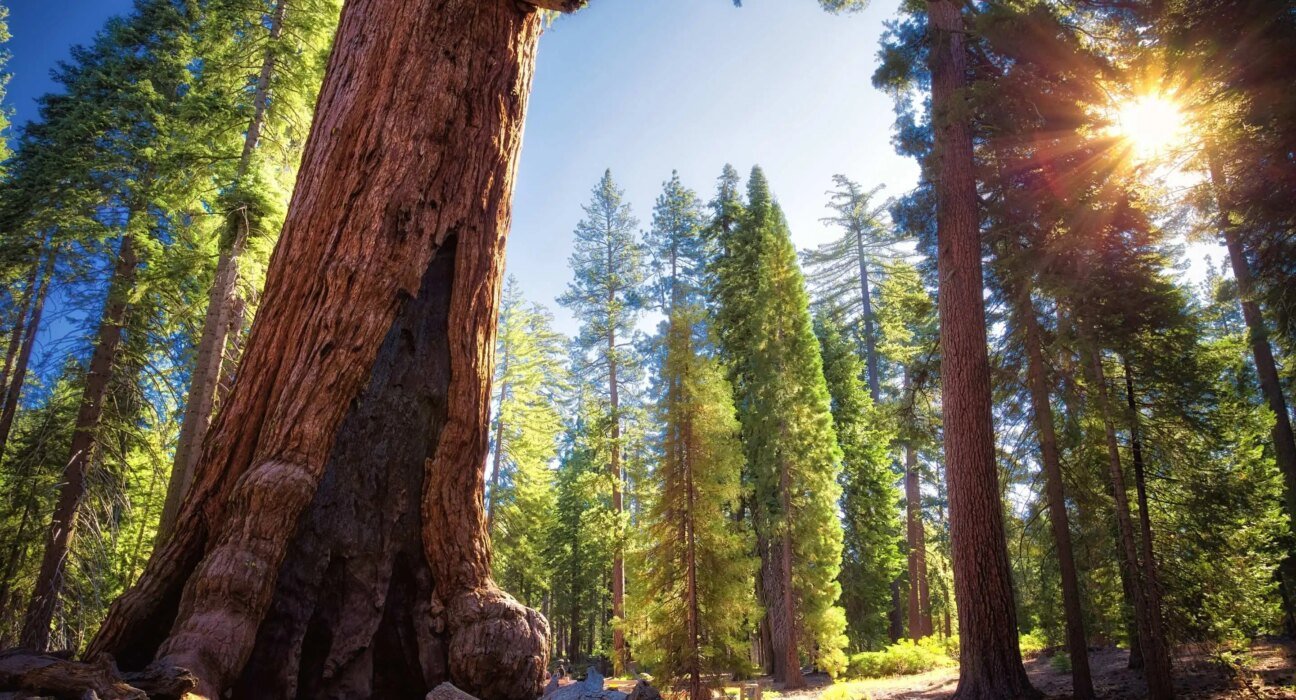
Yosemite National Park is home to one of the most famous (and oldest) groups of trees: the Mariposa Grove. The area is filled with mature giant sequoia trees that are thousands of years old and hundreds of feet tall. The 3,000-year-old Grizzly Giant Tree, looming in the center; Along with Half Dome and El Cap, this tree is one of the park’s most iconic structures.
It has endured climate change, wildfires and invasive species, and scientists and park officials were amazed at how well this old giant is holding up. To find out, a group of researchers climbed the tree (marking the second climb ever) and investigated in depth.
Who conducted the study?
Park staff, Yosemite Conservancy and the Southern Sierra Miwuk Nation asked Ancient Forest Society (AFS) To examine the tree. This non-profit organization focuses on the protection and conservation of old forests and trees.
The study was a 2-day process. First, a crew installed a rope and rigging system to reach the tree, which is 208 feet tall with a diameter of 25.4 feet. Then, on June 17, several researchers examined the tree from the ground up. This tree is so tall and massive that scientists had to get up close and personal with it to truly understand its biology.
What did the study find?
according to a published reportAFS was looking at four tree health factors: water status, reproductive health, basal fire damage, and bark beetle activity.
The report concluded that the Grizzly Giant was in “excellent overall condition”. The amount of water it contains is standard among giant sequoias, meaning it has enough water to support its crown, or uppermost part. The number of cones meant that the reproductive health of the tree was normal.


The tree also showed strong resilience to its two greatest threats. Fire damage was observed to about 70% of the tree’s collar (where the branches join the trunk). Although this is a high number, there has not been a fire in Mariposa Grove since the 1970s, so the damage was decades old. The rest of the circumference of the tree was healthy.
Bark beetles are insects that burrow into trees and eat the inner bark. “The damage caused by their feeding acts as an internal tourniquet that prevents the flow of nutrients from the leaves to other parts of the tree,” the scientists said. Arizona Department of Forestry and Fire Management Explained.
California has both native and invasive species of bark beetles. The former mainly attacks sick or diseased trees, while the latter may attack and kill healthy trees. There is a documented history of bark beetle activity in Mariposa Grove.

AFS scientists found evidence of bark beetles on the tree, mostly on small branches, but the tree struggled. “The researchers observed several instances of an active pitch response, indicating that the tree was successfully defending itself against beetle attack. Resin production was sufficient to drive out the attacking adult beetles before colonization could occur,” the report said.
Interestingly, there are some other inhabitants on the tree as well. Two epiphytic sugar pine trees were actually growing out of the topmost area of the tree, and a family of Douglas squirrels had made a cavity in the tree their home.
How does it matter?
From a scientific point of view, this was a rare and valuable opportunity to study such a large and so old tree at close range. Since 2015, severe wildfires have killed about 17% of the world’s mature giant sequoias. The more data researchers collect, the better they can understand why some giant sequoias survive fires, and others do not.
bark beetles have killed some The largest trees in California’s national parks In recent years, so the fact that despite these bugs, the Grizzly Giant is completely healthy is a major sign of positive news. Once lost, giant sequoias, which take 50 to 100 years to mature, cannot be replaced in our lifetime. The Grizzly Giant will continue to delight, surprise, and inspire visitors to Yosemite for decades to come.