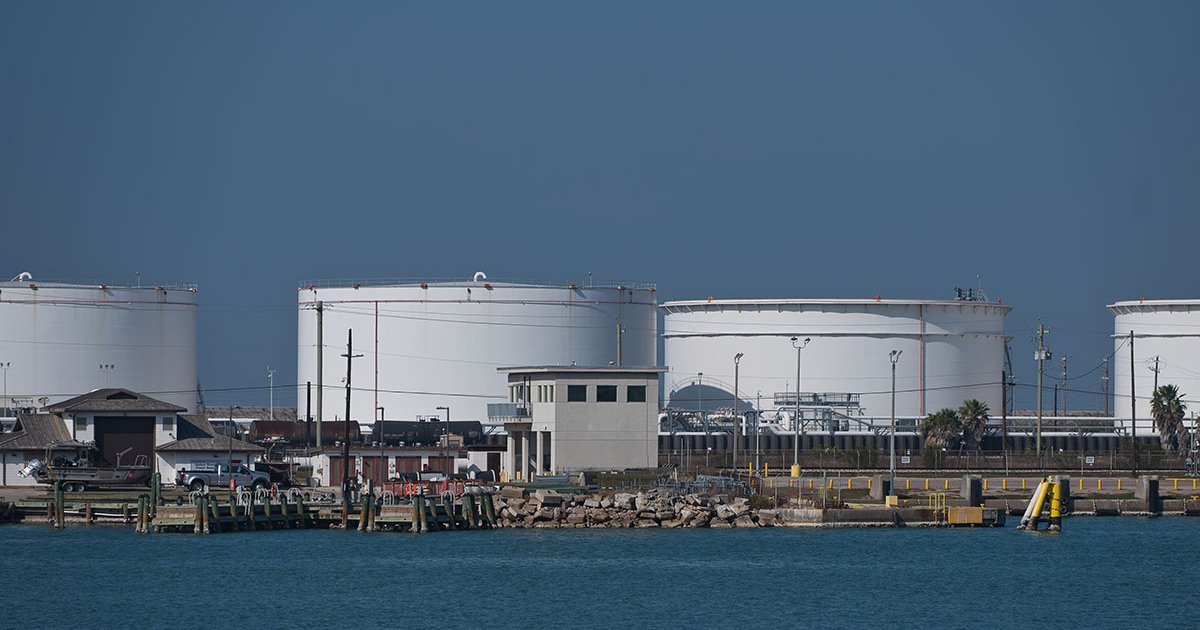
Storage tanks at the Port of Corpus Christi in Corpus Christi, Texas. (Eddie Seal/Bloomberg)
key takeaways:
- U.S. crude oil exports hit record levels after the Iran war disrupted supplies in the Middle East, benefiting Gulf Coast ports including Corpus Christi.
- Up to 6.4 million barrels were shipped daily from the Texas and Louisiana facilities, compared with about 4 million before the war.
- Corpus Christi Cushing, Okla., is discussing the pipeline, while Britton said exports could remain 1 million barrels a day above pre-war levels.
Disruptions to global energy supplies caused by the Iran war are likely to give a historic boost to US crude exports and have also revived interest in new pipeline infrastructure, according to the head of the largest US oil port.
U.S. oil exports surged this year as the closure of the Strait of Hormuz choked off crude from the Middle East and forced buyers to seek alternative supplies. The tightening of the market was a huge boon for American oil companies and the ports that handled their product, including the Port of Corpus Christi.
“It’s been a non-stop parade of ships passing our windows,” Port of Corpus Christi CEO Kent Britton told Bloomberg News on July 14. “The first half of the year was a record high for cargoes of commodities like oil and liquefied natural gas passing through the port’s waterways.”
6.4 million barrels of oil flowed off the coasts of Texas and Louisiana per day, the highest level in US history. Before the war, the US exported about 4 million barrels a day. As a temporary ceasefire between the US and Iran has broken down amid a new wave of attacks, questions remain whether the US will strengthen its position as a backstop in global oil markets.
According to Britton, the US could potentially export one million barrels a day more than pre-war levels. “There has to be a demand signal. There has to be a supply signal from the big E&Ps who have to say they are willing to meet that need,” Britton said, referring to oil producers. Of those, about 400,000 barrels a day could come out of Corpus Christi and the rest through terminals at other Gulf Coast ports, such as Houston and Louisiana.
Gabe Guerra, chairman of the Port of Corpus Christi Commission, said, “There is no coincidence as to why the President was standing in Corpus Christi on the day he decided to go to Iran.”
The boost to U.S. crude exports has also revived talks about a pipeline linking Corpus Christi to the oil hub of Cushing, Okla., which serves as the main conduit for shipping Canadian and Bakken Basin oil to fuel producers and exporters at the U.S. Port of Corpus Christi. Britton said talks about such a pipeline were underway this year, but declined to name the companies involved. Phillips 66 and Plains All American Pipeline previously planned a pipeline on this route, but the project was put on hold due to the slow recovery in US oil production in the wake of the COVID-19 pandemic. Corpus currently exports barrels of oil produced only from the Permian and Eagle Ford basins in Texas.
“If I were building for the future, I would get a pipeline from Cushing,” Britton said.
Plains All American Pipeline is ranked 67th on the Transportation Topics Top 100 list of North America’s largest private carriers.