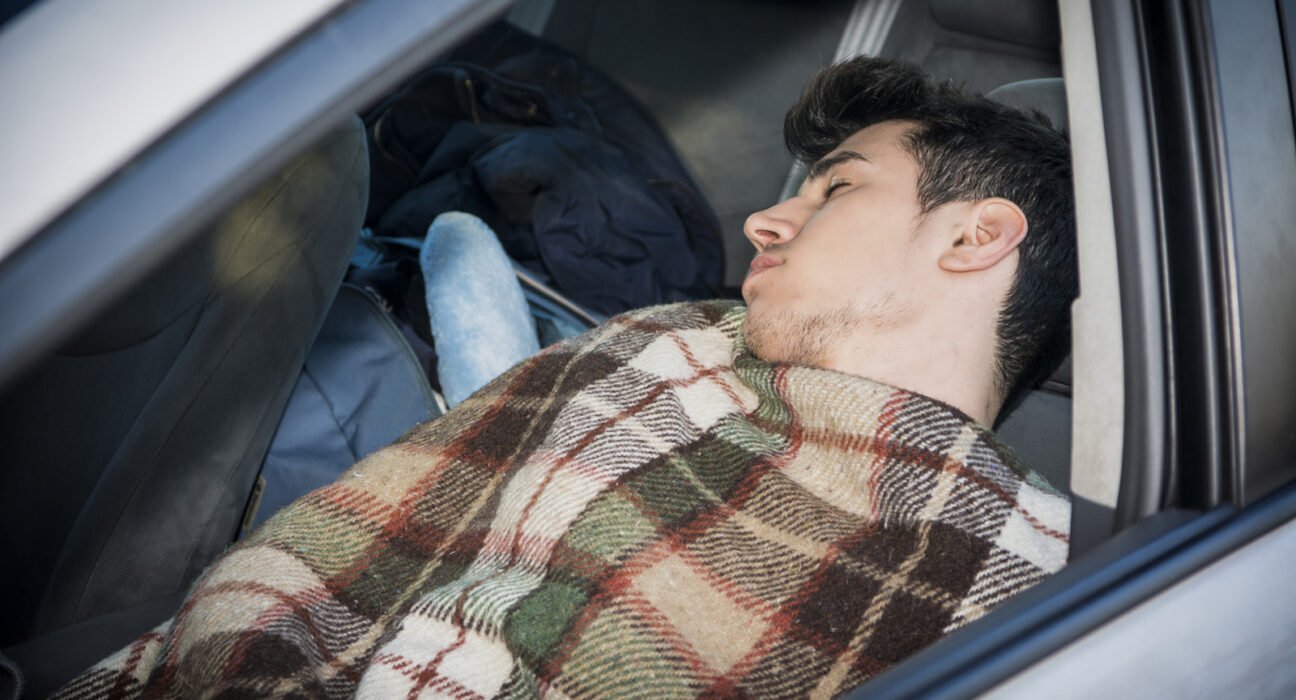
For many reasons a person may need to take a nap in their car. I know I’ve taken a few roadside naps to avoid dozing off on long road trips. Or maybe you don’t have extra cash for a hotel room. Many people these days are choosing the no-fixed-address lifestyle of “van life” and living out of mobile palaces. Or maybe you’re one of the estimated 770,000 homeless Americans who can’t afford anywhere else to live.
Whatever your reason for sleeping in your car, most municipalities and even some state governments are making it illegal. Many of these laws, including one recently passed in Colorado Springs, Colorado, are purportedly aimed at “curbing homelessness” but only serve to increase homelessness and push it into a jailable crime. In a 7-2 City Council vote, Colorado Springs expanded its “camping ban” to include car camping, and ruled that offenders would face fines, up to 10 days in jail, and confiscation of their vehicle.
Let’s say you’ve been evicted from your apartment and are forced to live in your car until you get back on your feet. Do you think spending 10 days in jail, paying a fine you can’t afford, and having your last vestige of safe haven taken away will help in any way? If you still had a job, now you’ve lost it, and you really have no way of getting a new one.
Forgive my pessimism, but it seems unlikely that this legal ordinance would be levied against a luxurious six-figure adventure rig, but rather a 20-year-old economy hatchback converted mobile bedroom of someone on the fringes of society. Car camping is only a crime when it resembles social degradation.
Where is car camping illegal?

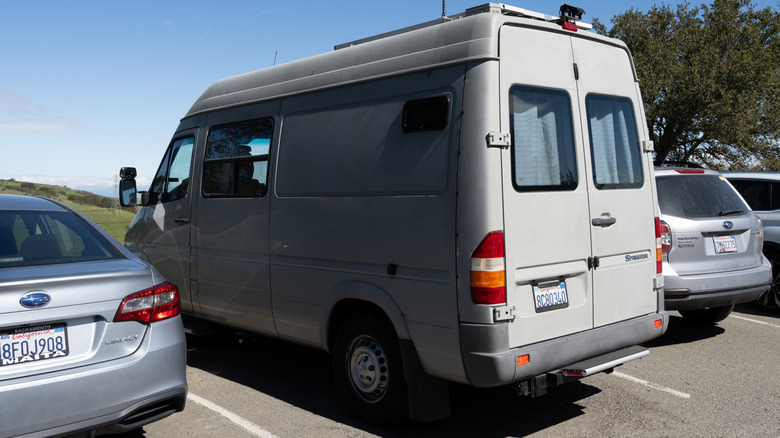
A global economic crisis, an international pandemic, stagnant wages, rising costs of living, rampant inflation, and declining workforce participation rates mean that the average American today is living in worse economic conditions than during the Great Depression by some metrics. It should come as no surprise that many working-class Americans have been forced out of their homes, or have chosen van life as a way to keep their heads above water. Many American cities have recently seen an increase in the number of residents parking older RVs and vans on the street as a semipermanent housing solution amid the real estate cost crisis.

Here’s a list of the states with the strictest restrictions on car camping, so you know which ones to avoid on your next frugal road trip.
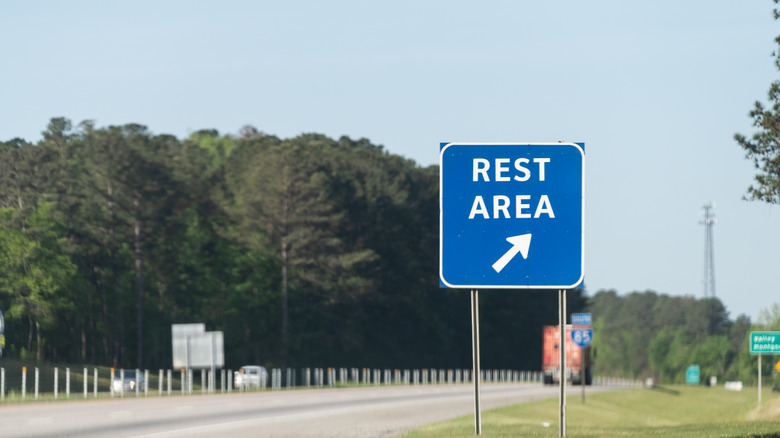
Alabama: There is no statewide ban on car camping, but highway rest areas ban overnight parking entirely, and areas like Gulf Coast and Fairhope ban sleeping in your car between 10 pm and 6 am.
California: While the state government is sympathetic to homeless Americans and people camping in cars, the U.S. Supreme Court’s Grant Pass v. Johnson decision allowed cities to enact a complete ban on camping. The crackdown has recently intensified in San Jose, San Francisco, Carlsbad and San Mateo.
Colorado: Dispersed car camping on designated public lands is legal, but like Colorado Springs, most cities in the Rocky Mountain State, including Denver, Boulder and Aurora, ban “public camping” with the threat of arrest and large fines.
Florida: Florida’s 2024 public sleeping ban is more comprehensive than most states. The law explicitly prohibits anyone from sleeping in a car anywhere in the state unless it is registered, insured, and parked in a designated camping spot or on private property with the express consent of the property owner.
more state restrictions
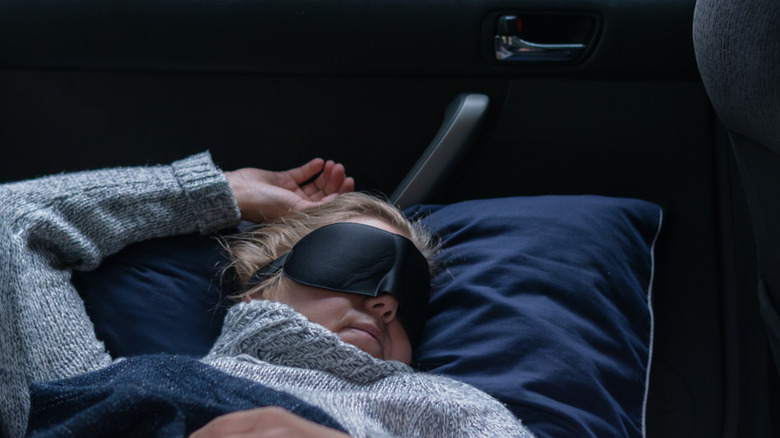
Georgia: The law allows sleeping in your car at rest areas, although it is limited to “usual, customary and temporary use.” Some cities, such as akworth“A ban on sleeping in one place for any long period of time.”
idaho: A statewide ban on unauthorized “dwelling or living in a temporary or outdoor dwelling” is in place, which only includes “sitting in your car for extended periods of time.”
Oklahoma: A 2024 law made unauthorized camping on state property a misdemeanor, punishable by a fine of up to $50 and up to 15 days in jail. Urban communities have largely refused to enforce the law, although it allows citizens to sue cities for non-enforcement.
Oregon: Many cities in Oregon ban camping on public property and in “residential areas”. You are allowed to sleep in your vehicle at the rest stop for 12 hours out of 24.
Pennsylvania: State law prohibits motorized camping without a permit, and sleeping in your car at highway rest areas is strictly limited to two hours.
Tennessee: This is the only state that makes camping on public and state property a felony, punishable by a fine of up to $3,000 and six years in prison. It also outlawed sleeping in a vehicle for more than three hours.
Texas: In 2021, Governor Greg Abbott signed a law mandating that anyone camping outside designated areas be fined up to $500. This is the minimum limit for any Texas city, although the law allows cities to adopt stricter measures.
Virginia: Car camping is not explicitly banned in Virginia, although rest areas only allow short-term parking. Many cities and counties in the state have more explicit restrictions, such as Roanoke’s strict camping ban that declares the practice a Class 4 misdemeanor with a $250 fine.
What else do you need to know?
In July 2025, President Donald Trump Issued an executive order requiring states and municipalities to “enforce bans on urban camping and loitering” as a way to curb the visibility of our growing homelessness crisis. It’s possible that this is at least partially responsible for further limiting our freedom of movement and sleep.
Amidst these state-sponsored losses of freedom, there is still some good news to be found. Just this week, North Carolina Governor Josh Stein vetoed a bill that would have banned unauthorized public camping and sleeping across the state and pushed unhoused citizens into designated areas. Another recent bill in Washington state would overturn local restrictions on public camping and ban them.
Most states have no explicit restrictions on sleeping in a car, but several states have recently reduced the number of hours a car camper can stay in one place. For example, Illinois limits rest area parking to only three hours, Michigan recently reduced the length of stay in public spaces (welcome centers, carpool sites, rest areas and public parks) to 48 hours, and Nevada only allows rest stops in a single location for a total of 18 hours every two weeks. Arizona and Montana only allow single overnight stays.
It is becoming clear in many states that it is better for those in power to force unhoused people to leave their city or state than to find a way to get them back on their feet.