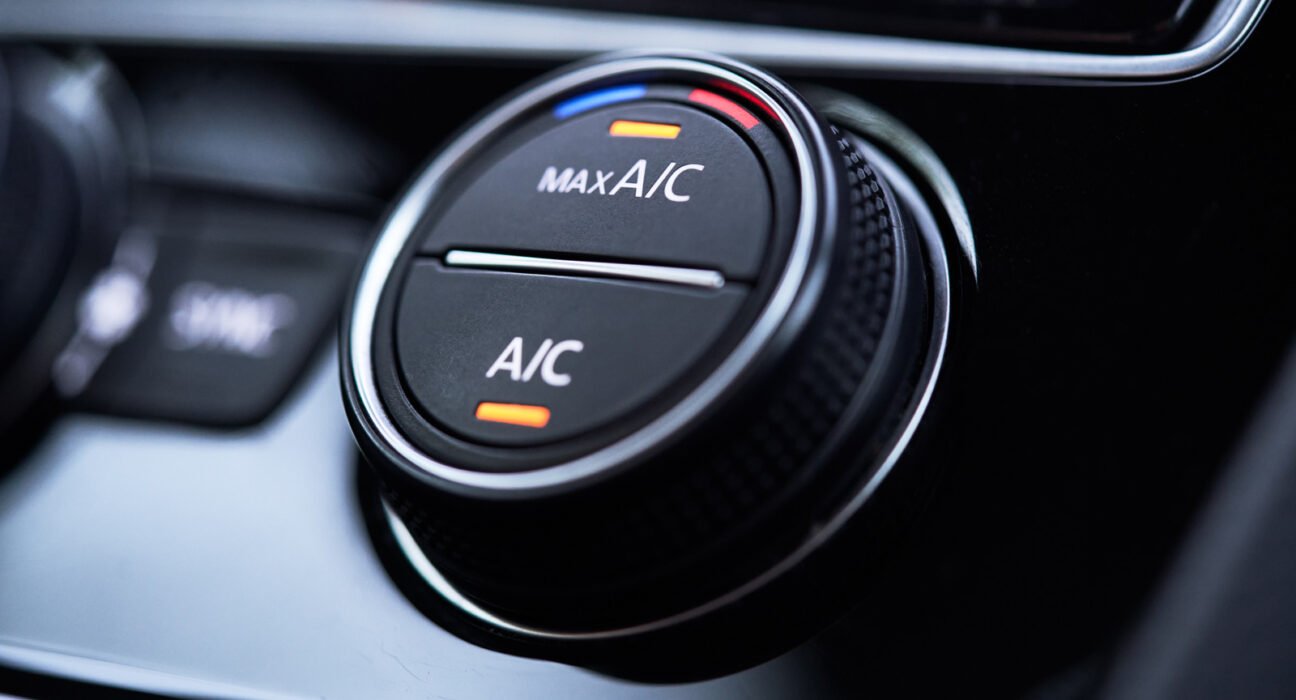
Air conditioning, once considered a luxury, is today standard equipment in almost every car sold in America, but the refrigerants used in these systems have changed several times over the years. Scientists discovered that what was originally promised to be a completely harmless compound was actually not so harmless. And that cycle appears to be repeating again, as a recent study shows that the relatively new R-1234yf is already contributing a significant amount of chemicals to the environment forever, reports. Phys.org.
Air conditioning is great, and it’s good for more than just cooling the air. Unfortunately, the refrigerants used in automotive applications of these systems have a long history of being environmentally unfriendly. The original compound, R12, worked quite well, but it contained chlorofluorocarbons (CFCs), which contribute to ozone layer depletion. EPA. As a result, R-12 was banned in the 1990s and replaced with R-134a, a hydrofluorocarbon (HFC) that we were told would solve all the problems.
While R134a (also known as HFC-134a) does not deplete the ozone layer, it has become a major greenhouse gas. Automotive use of R-134a accounts for 24% of all HFC use and is the most common HFC currently in the atmosphere. Oops. As is often the case these days, Europe, rather than the United States, took the lead in solving the substitution problem. It phased out R-134a in 2017 and R-1234yf replaced it.
The chemicals are also contributing to keeping us cool.

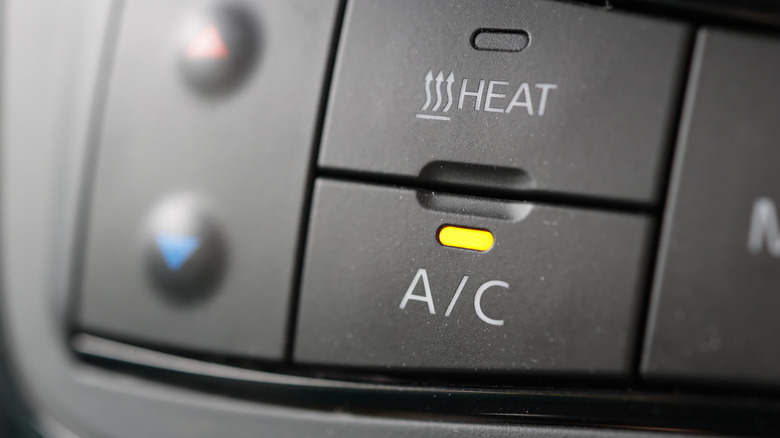
R-1234yf is a hydrofluorotoluene (HFO) rather than an HFC, which was supposed to overcome the shortcomings of both automotive refrigerants that came before it. It does not affect the ozone layer, and it is not a greenhouse gas. Problem solved, right?
not so fast. A study by University of Bristol It turns out that while R-1234yf (also known as HFO-1234yf) provides these benefits, it is also becoming a major source of trifluoroacetic acid (TFA) in the environment. according to ChemtrustTFA is a “forever chemical” that can harm liver function and reproductive functions, including unborn babies. R-134a has also been found to pollute TFA, but not at as high a rate as its replacement.
Globally, while R-134a emissions are approximately 22 times higher due to the longer period of use since the 1990s, R-1234yf is already generating three-quarters of the TFA despite only being in use since 2017. Current TFA emissions hotspots overlap parts of Europe with high vehicle emissions, where R-1234yf has seen greater use over a longer period of time than elsewhere. World. This could be a sign of things to come.
Phys.org says that while R-1234yf itself is not a greenhouse gas, it can break down into powerful greenhouse gases such as carbon tetrafluoridewhose global warming potential is many times greater than that of R-134a, and HFC-23Which has a stronger global warming potential than the older R-12 refrigerant. On top of that, it costs three times as much as R-134a, contributing to record-high prices for new cars. So it is more expensive, pollutes with larger amounts of TFA, and causes global warming worse than R-134A rather than better, as was believed. Is it time to go back to what my mom used to call “4/40 air conditioning,” which was four windows down and blowing at 40 mph? This would be a good excuse to bring back the vent window.