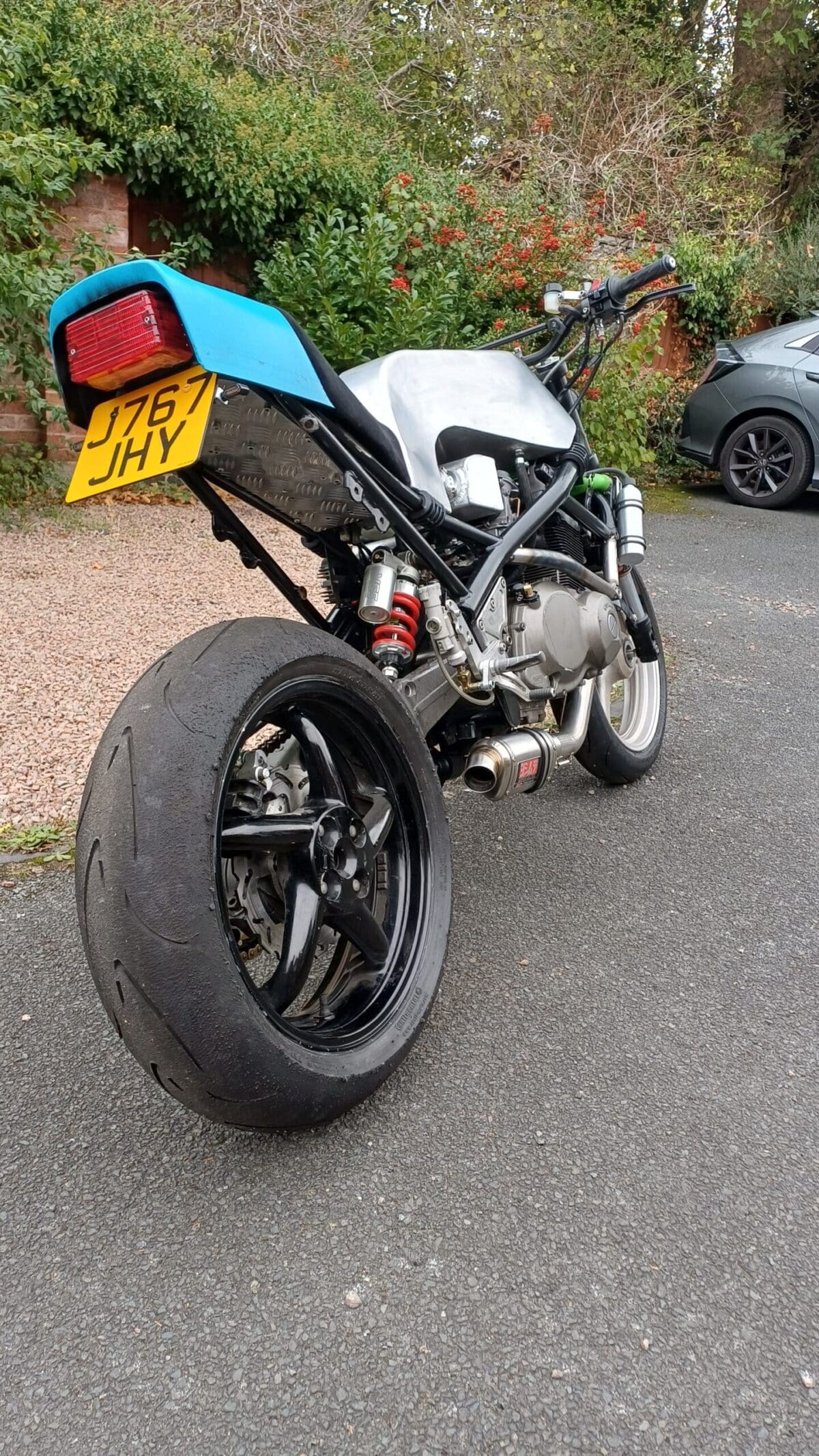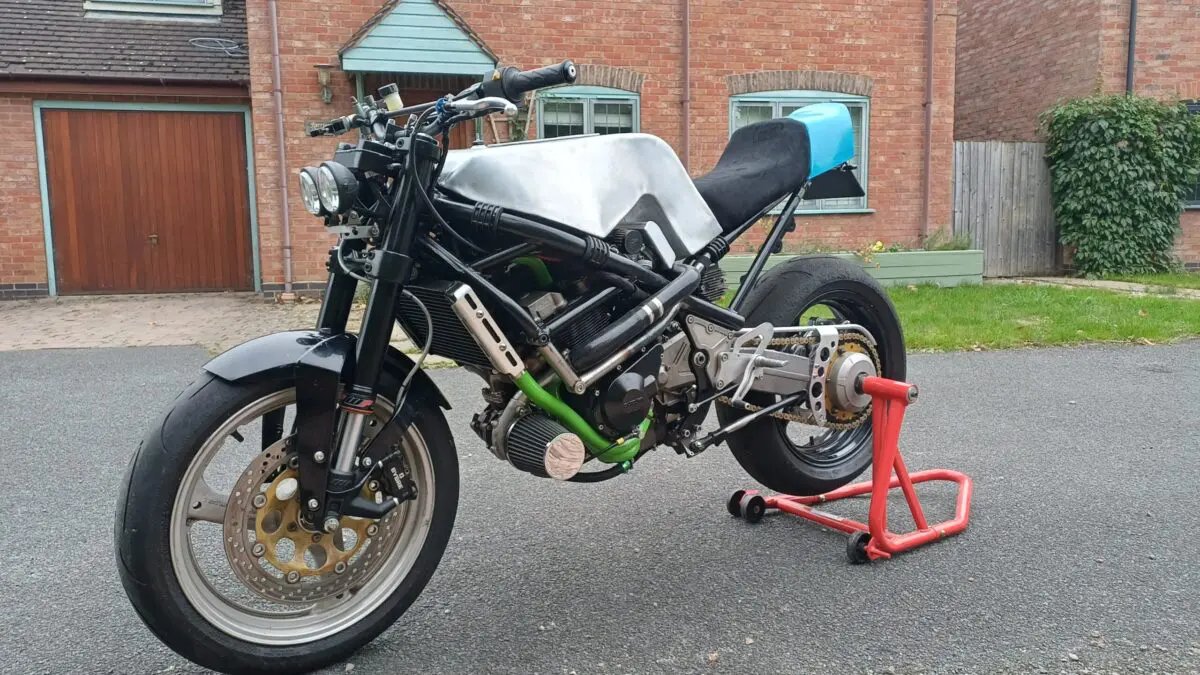
Who doesn’t love a project bike? We talk to Chris Jennings, the owner of this turbocharged Suzuki Bandit 400, and quiz him on the process, the problems, and whether it’s a keeper…
Why this bike?
I’ve always been a fan of small capacity bikes, I’ve owned several 400 bikes over the years; An NC23, which I’ve still got, and a Moriwaki themed Z400J, along with various Suzuki 400s. I’m always trying to build weird things that are a little off the wall and I’ve built a GSX-R400 turbo before, which has currently taken about 9 years and still doesn’t run properly, so I thought what could be better than a non-running turboed Suzuki 400 than two?!
Enjoy all the MoreBikes by reading the MoreBikes monthly newsletter. Click here To subscribe, or read online for free.

Several years ago I built another Bandit 400, adding some additions to the frame rails to make it look like a mini Harris Magnum 4. The original plan was to put a turbo on it, but I didn’t succeed in doing that, and eventually sold it, so there was somewhat unfinished business with this idea.
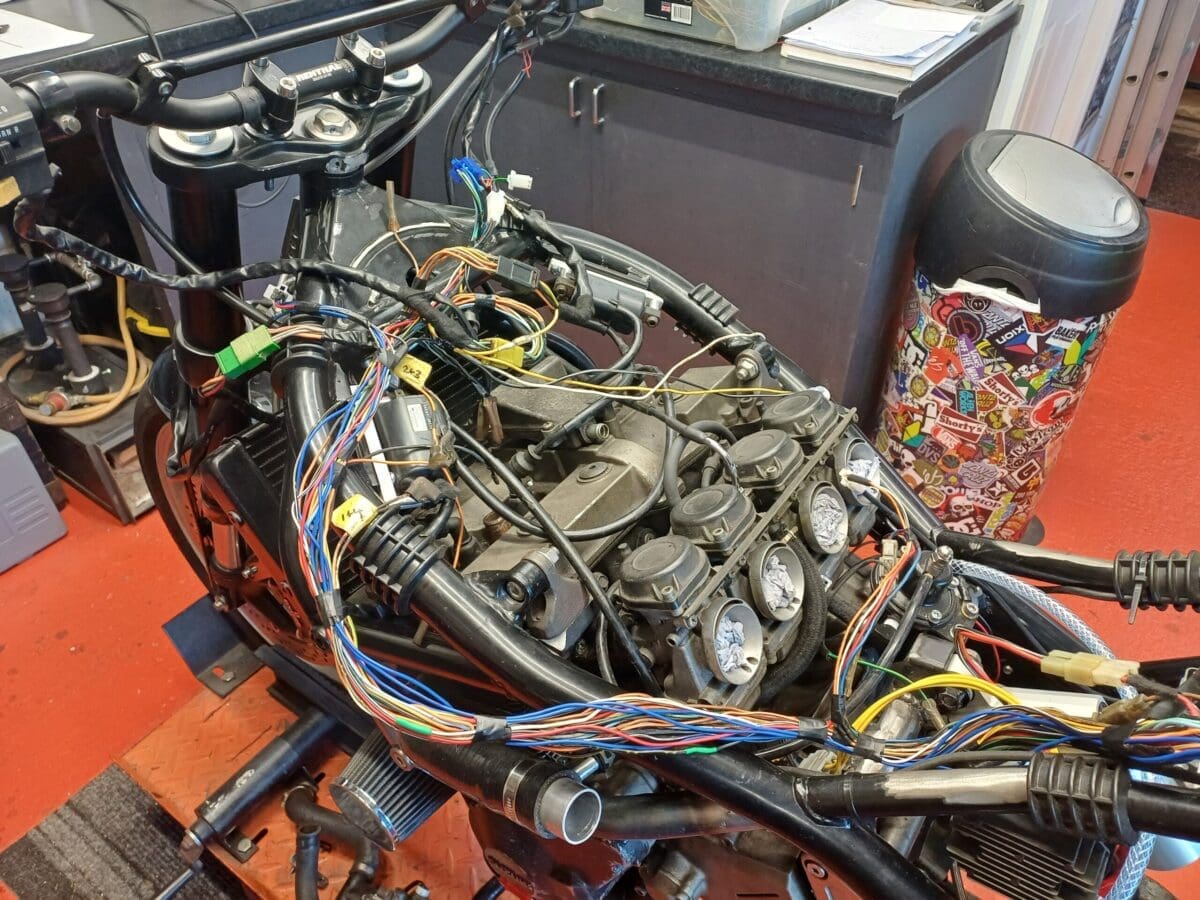
I bought a Bandit 400 engine and some parts as a spare from a guy on the PB Evo forum a few years ago, probably in case the first turbo grenade went bad, but for years it had been gathering dust under the work bench. Finally, during a big clean out, I decided it either needed to be gutted or something needed to be added to it. Initially, it was destined for a ’70s Bultaco test frame, but fortunately it wouldn’t fit without a massive amount of work. It was at this point that I decided to revisit the Bandit 400 Turbo idea, armed with a lot more knowledge than I had when I started the GSX-R endeavor and a suspicion that the Bandit might be a little more user-friendly when it came to getting it to work.
I’ve also been in touch with Ian and Jim Cross of Cross Customs over the years. They specialize in Suzuki 400s and currently race the most epic GSX-R400 based drag bikes that are beautifully engineered and reasonably fast. He had a white Bandit 400 featured in Streetfighters back in the day, which was always a big inspiration as well.
What is the ultimate goal and why?
The ultimate goal with the original GSX-R Turbo project was to see if we could get 100bhp out of 400, even if it was just for a few minutes before meltdown. Like why? Everyone puts turbos on 1100 and 1200 Suzukis, but there aren’t many with low capacity, so this seemed like a good start for a silly idea (now I know why…). A casual conversation with Jim Cross about his drag bike and some leftover parts, including some machined pistons and a modified engine cover, was enough to start the first turbo project, which has now snowballed into the Mk2.
The other main reason was to use a lot of random bits from previous projects that I had found to make up a little space in the workshop. From that perspective it has been relatively successful.
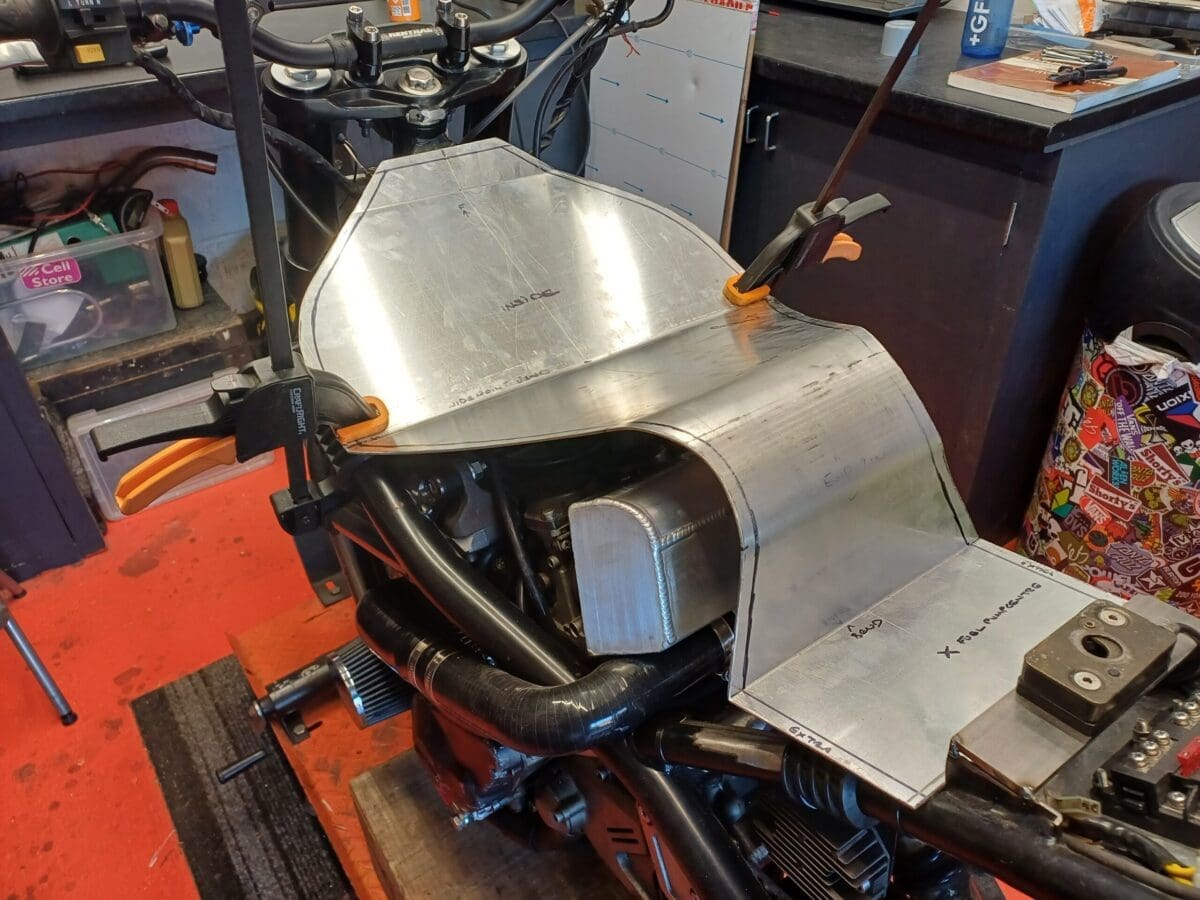
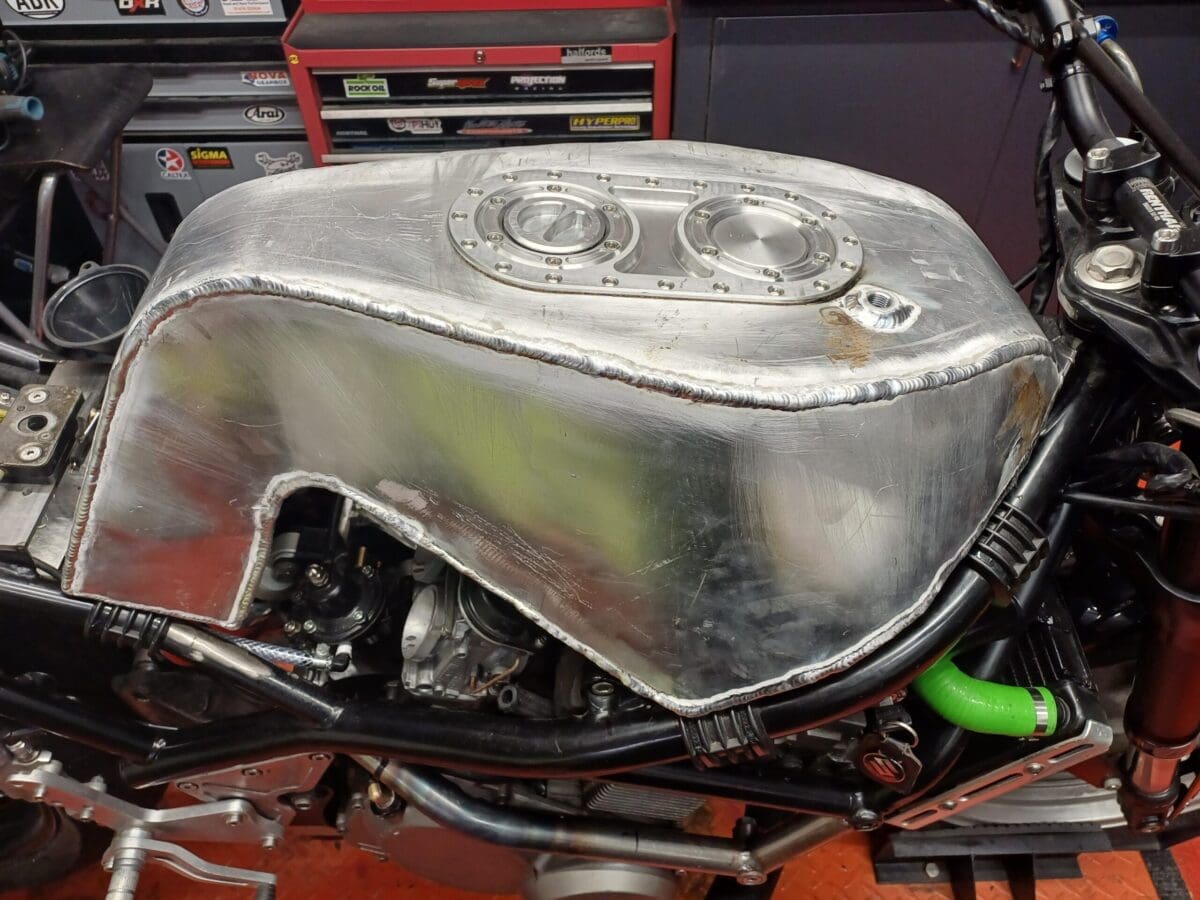
I always try to do something I haven’t done before, so I also took on the challenge of making my own aluminum fuel tank for it, mainly because it’s made from bits and I couldn’t find a good Bandit 400 tank anywhere.
How long has it been since you started and how is it going?
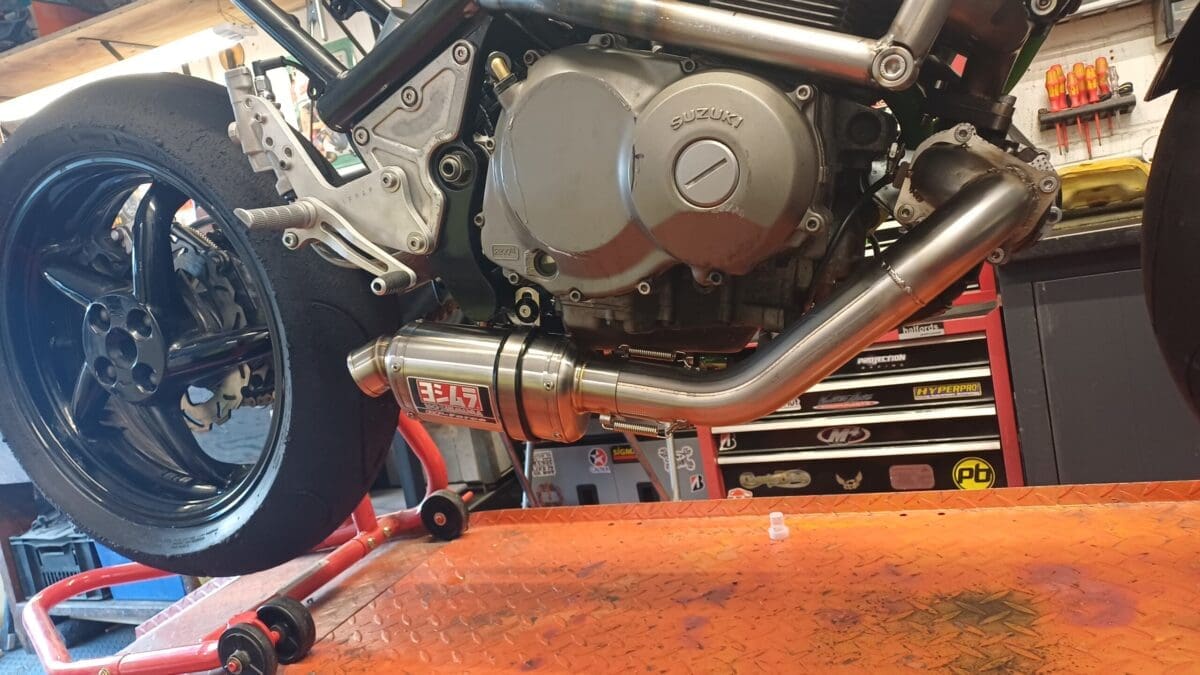
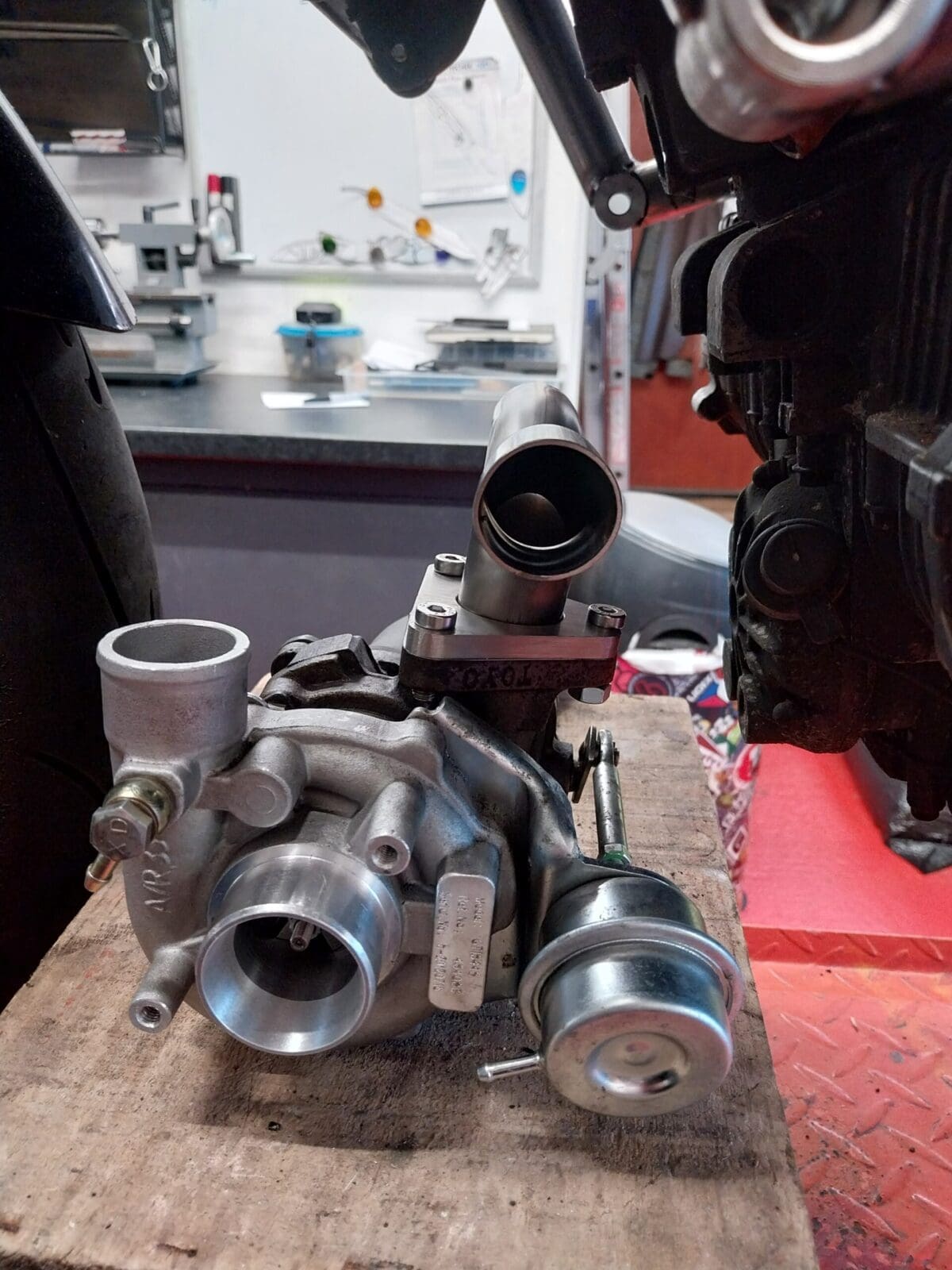
I started this project in mid-June 2024, so it took about 15 months to get it completely dry built and ready for testing, which is great for me. Going into this with knowledge gained from the first turbo project has really helped streamline the process, mainly what not to do. I’ve been able to refine most areas of the turbo kit, the headers on this version are stainless instead of mild steel and (I hope) have a much better flow design than the first header I built. The Bandit 400 carbs are also much like a “normal” GSX-R11 or Bandit 12, where the GSX-R 400 carbs are significantly different, which I expect will make running and tuning easier.

What’s the biggest problem you’ve faced so far, and how did you overcome it?
So far, the biggest headache has been starting the bike; I’ve spent about 8 weeks running around checking wires and dismantling spark plugs. Then, going into it already armed with all the issues from the first time I thought I had already cleared them by replacing all the electrical components, pick-up coils, CDI unit, plugs, coils, etc. before starting. As it turned out, it was the simple two pin plug from the pick-up coil with the wires already reversed that was confusing the CDI. This was fixed within two minutes and resulted in the bike starting perfectly. Operator error rather than component problem.
Suzuki 400s are notoriously bad to start, so in addition to replacing all the electrical bits, I also removed and ultrasonically cleaned the carbs before rebuilding with fresh seals to give it the best possible chance.
What did you learn about this bike?
So far, I have learned once again, don’t assume just because you think you have done everything correctly. Check, check and triple check your wiring because even one reversed wire that you don’t know has been reversed can cause all kinds of problems and sleepless nights for you.

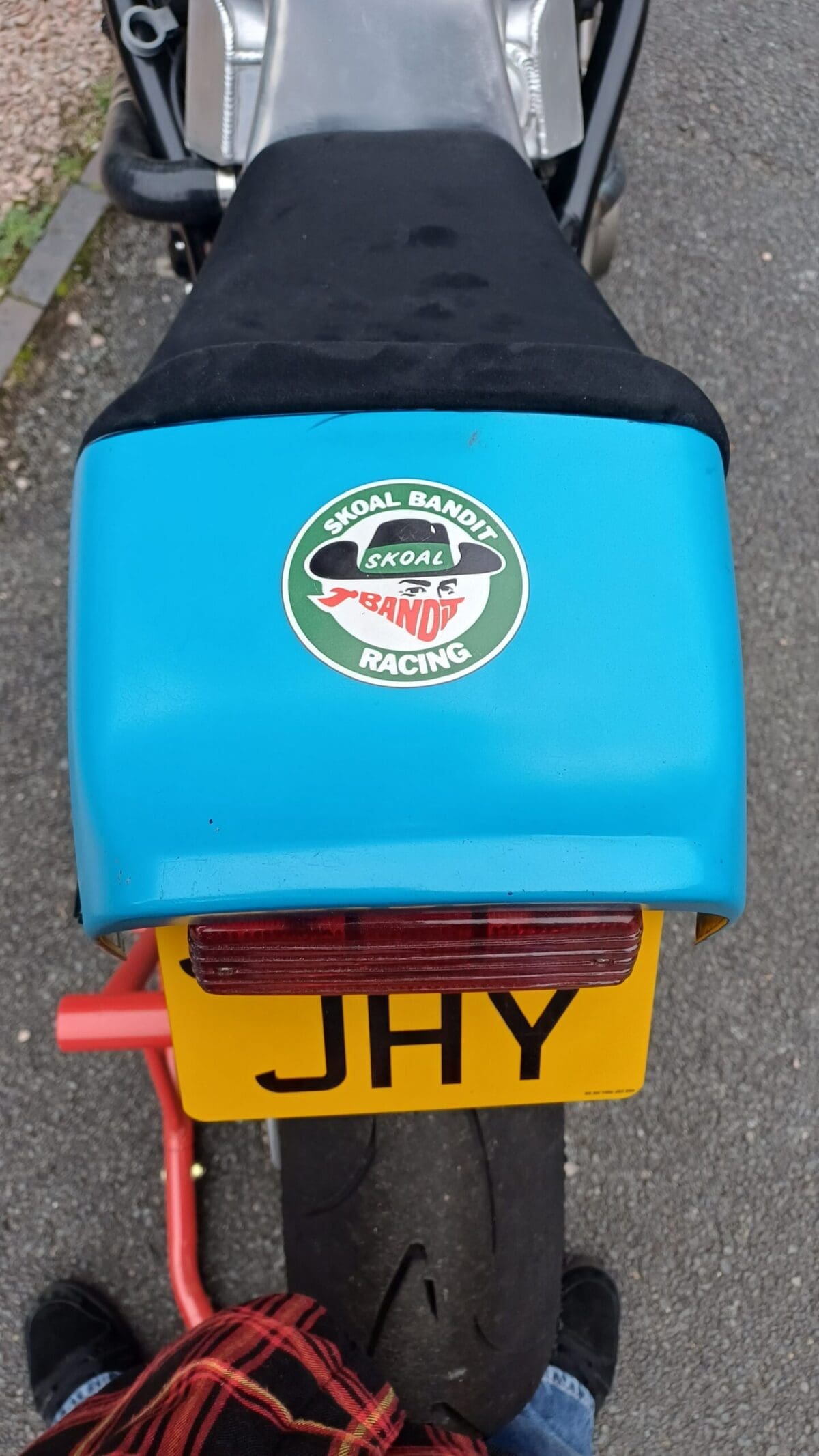
Also, be logical in finding your fault; Don’t change more than one thing at a time and make notes about the results. This makes the process of identifying issues more streamlined. That said, 8 weeks to resolve this issue is far better than the 9 years taken by other bikes so far.
Best tool in the box?
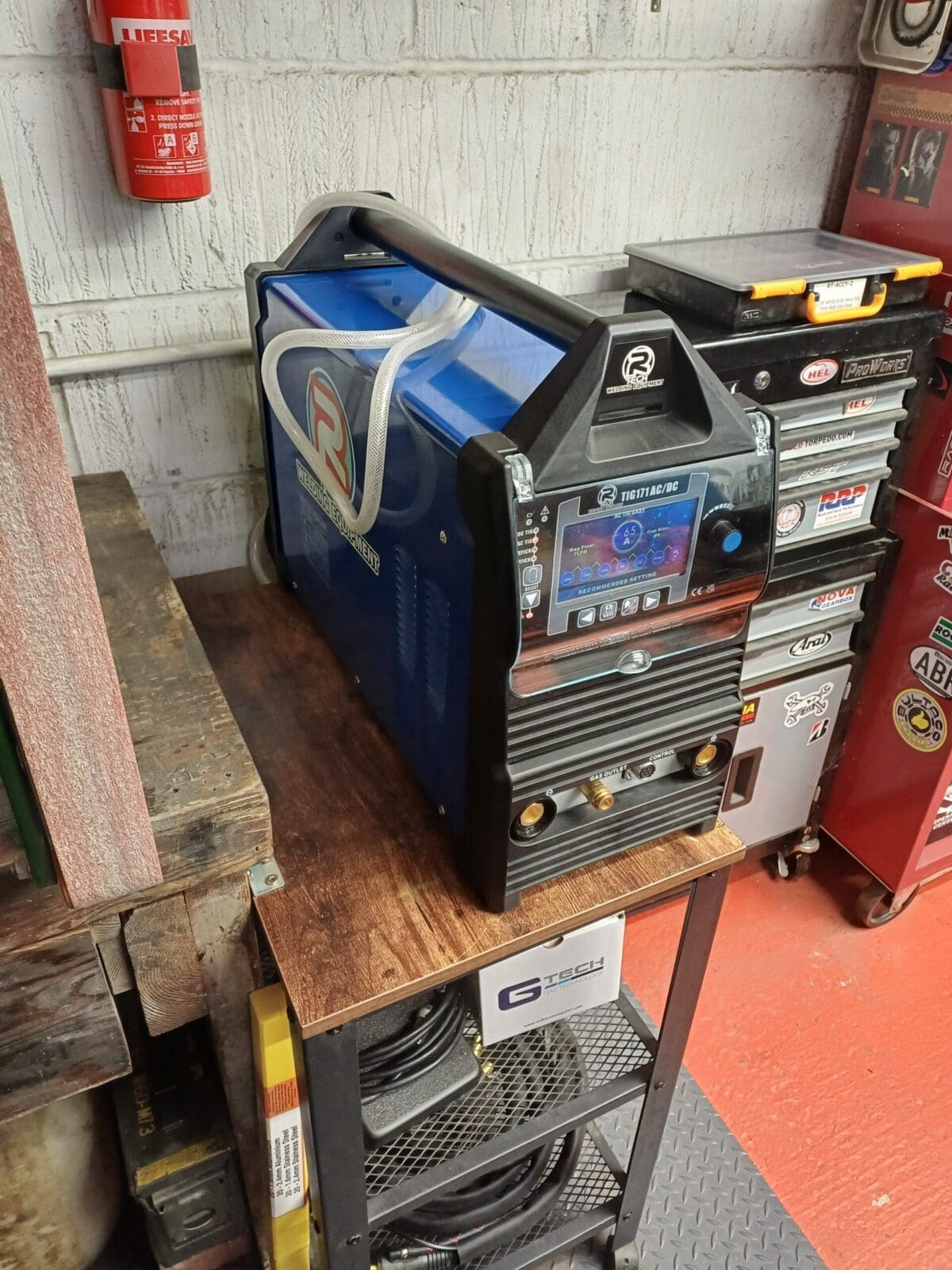
For this project I resorted to an AC/DC tig set to learn how to weld aluminum, as not being able to do so had always delayed projects in the past. Even being able to tackle the bits together really sped up the process, although I still take it to the adults to complete any safety critical bits.

Best product/service?
Gotta be Paul on the black and white bike in Spilsby; He was really helpful in scouring the YSS technical data books to match the Brose swingarm to the Bandit frame with a custom spring rated correctly for the odd combination of parts and to find a shock short enough to maintain the appropriate amount of damping. Ultimately one ended up being the top line YSS MSX125 GROM shock, which is reasonably priced and really good quality.
Plus, Jim and Ian at Cross Customs always take the time to answer my tough questions and the fancy lock-up clutch that’s still waiting to be fitted. They started making some really tasty billet bits for more modern bikes too.
Budget V’s real?
I swore to myself I would never make another project from pieces, it always ended up being more expensive than you planned but here we are again. Like all these things, it started small and grew rapidly. Originally it started as a project to use a lot of spare parts from the loft with minimal outlay, but with a fancy shock, a closed associate tank and a lockup clutch, it has gotten out of hand – as it usually does.
What’s after this project?
I think this will continue for some time. Once it’s been dyno’d to get a baseline I’ve got some FZR600 pistons that take the capacity up to 442cc, that should help a bit and also fit a lockup clutch as the stock one is liable to drop off at anything over 80hp. It will also need to be taken apart to fully weld the frame rails and get everything powder coated and painted, but I suspect that will be the way to go, probably in the winter.
Next on the list, once it’s up and running fully, it refreshes on my NC23 over the winter. Eventually I should also revisit the first 400 Turbo and see if I can get it running properly. I’m now officially out of the garage, so there’s something I need to do before starting a new full bike project
Keep or sell?
I suspect this will be another keeper. I don’t think anyone will be brave enough to buy it, just like all the other bikes I’ve built. I ended up with a garage full of keepers.