If you buy through our links, we may earn an affiliate commission. This supports our mission to get more people active and outside.Learn about Outside Online’s affiliate link policy
Updated November 24, 2026 06:52AM
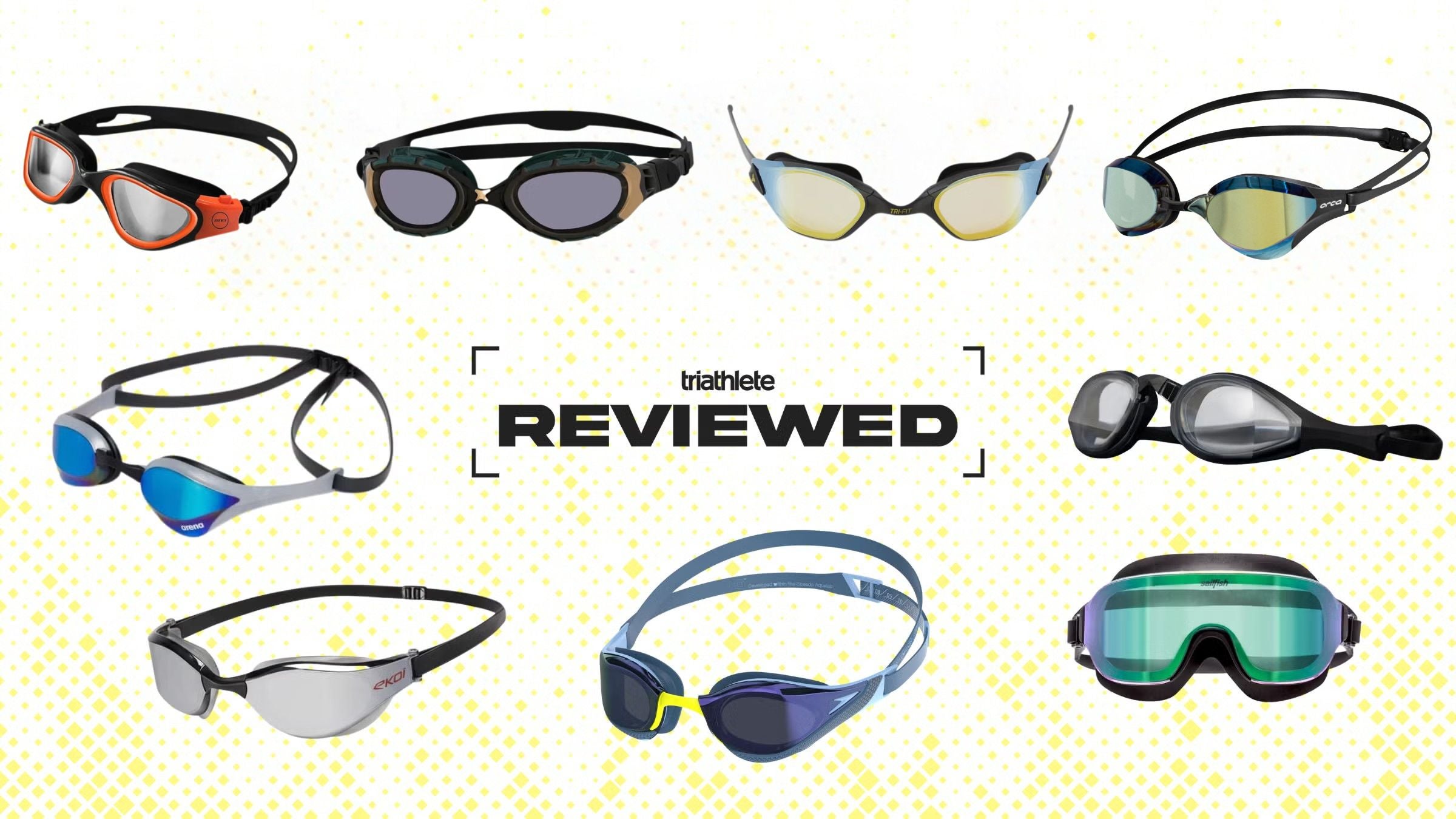
Summary of the Best Triathlon Goggles of 2026
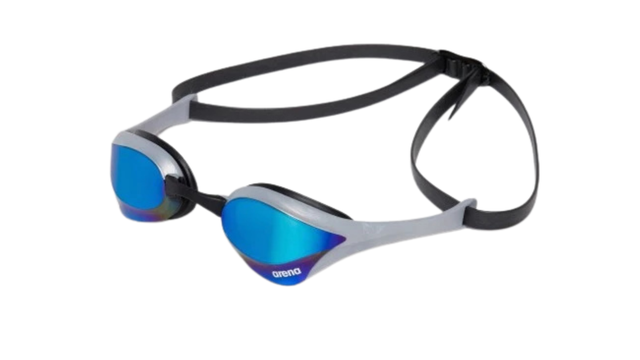

Arena Cobra Ultra Swipe Mirror
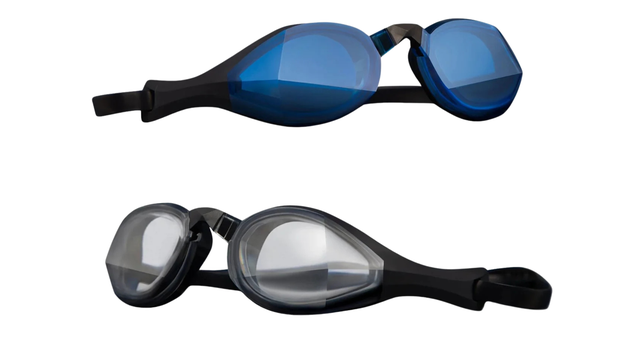
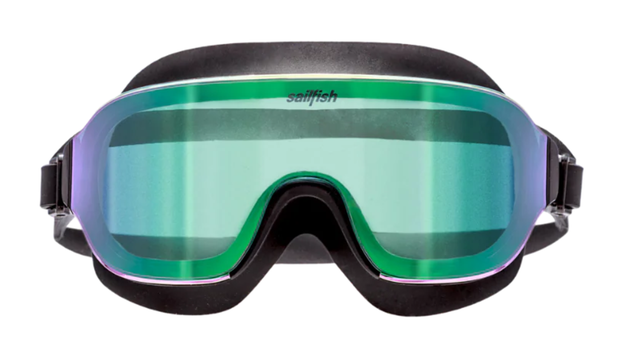
Sailfish Outer Space Swim Mask
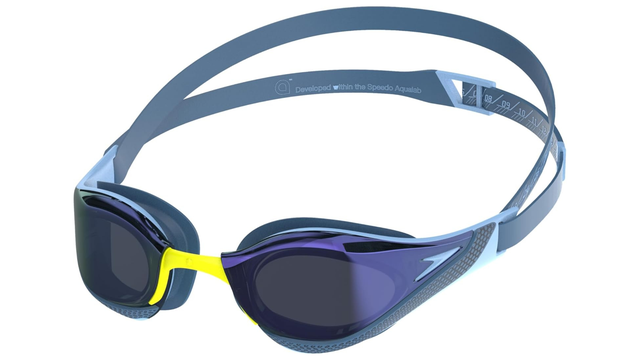
Speedo Fastskin Pure Focus Mirrored
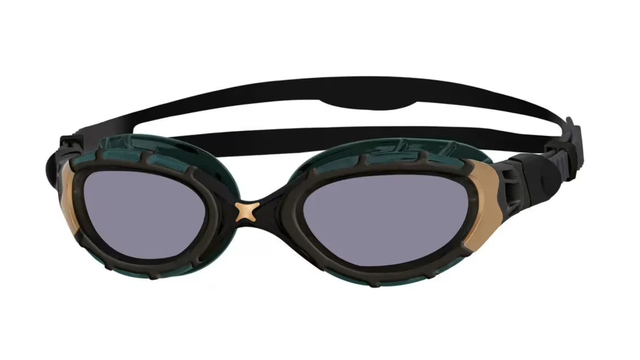
Zoggs Predator Flex Titanium Reactor
Few pieces of triathlon gear inspire as much consternation as goggles. If you don’t believe me – and have nothing better to do some evening – just spend 30 minutes surfing internet forums.
You’ll discover two things. One, there are an awful lot of people (guys, mostly) who really need to chill out. And two, nothing wrecks a race faster than foggy, leaky, eye-socket-squeezing lenses that make you squint to spot the next buoy.
Like everyone on those message boards, Triathlete’sgear nerds are perpetually hunting for the ultimate fog-free, leakproof, form-fitting, crystal-clear, comfy-as-a-pillow pair of goggles. That’s what we set out to do with this review, and there’s good news: We found a few options that come pretty close, along with a clear #1 pick.
2026 best triathlon goggles at a glance
Stop paying full price and start saving. Our Triathlete Deals Finder simplifies your shopping by gathering top discounts on triathlon nutrition and gear from reliable retailers into a single location.Click here to start saving on running shoes, helmets, and more.
How do I choosemyperfect goggles?
This is a trickier question for triathletes than regular pool swimmers, who ply their trade in the most static of all athletic environments. When you stroke back-and-forth above a black line in constantly clear, calm, 80 degrees F water with climate-controlled air and artificial lighting, goggle choice is pretty easy. Just get the smallest pair that feels comfortable.
But selection is not nearly as simple for those of us who train and race in multiple bodies of water (chlorinated, fresh, and salt) at different times of day with wildly varying environmental conditions (bright sunlight, clouds, flying elbows, unpredictable water and air temperatures, wavy or turbid seas, bright or busy background conditions, and so on).
These variables bias our personal preferences as competitors and inform the four shopping recommendations we share with fellow triathletes.
1. Build a quiver
No single pair of triathlon goggles will be optimal for your early morning pool sessions, your overcast urban races, andyour blinding Mediterranean ocean swims. When we’re racing regularly, we’ll typically have three goggles in rotation: one for indoor swims, one for low-light open water, and another for bright open water.
Here’s a helpful guide to lens options. And we’re not alone. In our 2025 community survey, 46% of triathletes shared that they own two pairs, while the overwhelming majority (83% had two or more).
2. Train like you race
This age-old adage applies to goggles just as much as it does to nutrition or bike components. There’s nothing inherently wrong with wearing tiny goggles in the pool and switching to big ones (or even face shields) for open water; the extra visibility can be a real plus in murky water and crowded fields. But we prefer to minimize game-day gear switches, so our ideal scenario is finding one go-to style that comes in a range of tint and mirror options from which we can build an all-conditions quiver.
3. Buy for your race
The corollary to #2: Certain performance characteristics deserve more weight when picking goggles because they can make or break a race. Chief among these are clarity and field of vision.
In the pool, you don’t need to pick out a distant buoy or spot an aggro age-grouper coming up on your right, but a clear, unobstructed view is vital on the big day.
Very small or faceted lenses – which some triathletes pick thinking they’ll gain a big hydrodynamic advantage – can cause distortion and reduce visibility.
Factor this into your selection, and practice sighting well in advance of your race to make sure you can see well. If you anticipate very sunny conditions, mirrored and polarized lenses are a smart choice to cut glare and help you spot buoys and landmarks.
4. Fit is (still) king
Thanks to advances in lens design, better gasket materials, and interchangeable nose pieces, goggles have come a long way in terms of fit and comfort. But scientists have identified more than 300 genes that shape our 16 primary facial features, and there are other variables that affect fit, from scars to bushy eyebrows to plastic surgery.
In short, it’s actually a miracle that every goggle doesn’tleak. Be prepared to try multiple styles to find the pair that doesn’t leak on yourface. You should feel even pressure all around your eye and slight suction – but not so much that they hurt your eye sockets (raccoon eyes mean you might be goggling wrong).
Triathlete’s reviews of the best triathlon swim goggles in 2026
After more than 80,000 meters of swim-testing in pools and oceans, our team selected eight favorites and rated them for fit, comfort, clarity, adjustability, value, and more. We were very impressed with quality across the board and can heartily recommend all of our top picks. But not every goggle is right for every swimmer: The size and shape of your face matters a lot,as do your training and racing conditions.
Some styles fit narrow faces best, some lenses work better indoors than outdoors, and several of our picks run more than $110 after taxes and shipping. (If you’re looking for a budget buy, check out our list of the best budget triathlon gear).
We’ve tried to highlight the important features and nuances in each goggle so you can choose the pair (or pairs) that meet your needs. Read below for our criteria, then check out our reviews. (You can find a few additional options in our 2025 goggle roundup.)
| Overall | How highly we recommend these goggles across the board |
| Coverage | The higher the rating, the more coverage |
| Comfort | How much do you notice the goggles, how much pressure they create on face |
| Ease of adjustability | How easy it is to adjust goggles to find the best fit; not necessarily how well they fit right out of the box |
| Consistency of fit | How easily do the goggles correctly sit on your face each time you put them on; how often mid-swim adjustments are required |
| Lens clarity | How clear are the lenses underwater and when sighting |
| Construction quality | Sturdiness, attention to detail |
| Variety of lens colors | Number of different options available |
What makes our reviews different? Our testers actually use the thing. A lot. Learn more about Triathlete’s gear review process.
Orca Killa Performance
| Overall: | ★★★★★ |
| Coverage: | ★★★ |
| Comfort: | ★★★★★ |
| Ease of adjustability: | ★★★★ |
| Consistency of fit: | ★★★★ |
| Lens clarity: | ★★★ |
| Construction quality: | ★★★ |
| Variety of lens colors: | 3 |
| Colors available: | Smoke/Black, Clear/Black, Gold Mirror |
| Return policy: | 14 days |
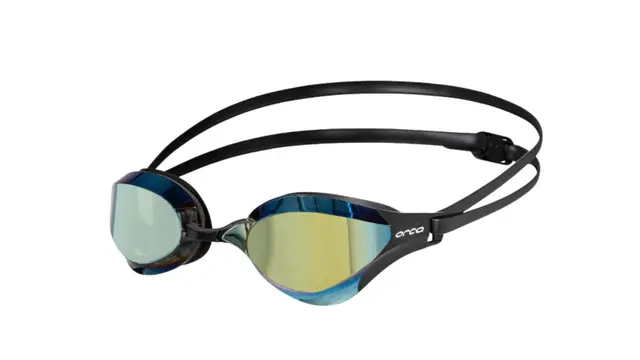
A week into testing the Killa Performance, one of our swimmers sent me a message: “There must be a typo on the evaluation form, because $40 can’t be the retail price, right?” His question perfectly captured our group’s collective incredulity at the not-too-good-to-be-true value and quality of these goggles. With fit and performance characteristics that rivaled our original top picks – at half (or less) the price – the Killas deserve strong consideration as your everyday training and race goggle.
How does Orca do it? As one tester observed: “There aren’t any fancy bells-and-whistles to boost the price. Each of the key features – straps, sliders, gaskets, and lenses – are straight out of the KISS playbook.” But simple doesn’t mean cheap. There were no durability issues or fussiness in adjusting them, and as another tester said, “they just work.”
With three nose bridges, the low-profile lenses fit different faces well, especially narrower and smaller ones. We didn’t experience any leaks during weeks of testing; like the most ergonomically shaped competitors, the Killas’ cups snugged into our eye sockets with a reliable seal. Only on open-water swims longer than 45 minutes did we start to feel pressure and develop raccoon eyes.
The Killas lagged slightly in two areas. Field-of-vision is limited – typical of a race-oriented design. And we experienced fogging earlier than with the very best models in the roundup. But testers ultimately thought these were small flaws given the overall value equation. As one noted, “You can buy two Killas for the price of one competitor without making any serious sacrifices.”
| Overall: | ★★★★★ |
| Coverage: | ★★★ |
| Comfort: | ★★★★★ |
| Ease of adjustability: | ★★★ |
| Consistency of fit: | ★★★★ |
| Lens clarity: | ★★★★★ |
| Construction quality: | ★★★★★ |
| Variety of lens colors: | 8 |
| Colors available: | Silver/Black, Yellow Copper/Black, Yellow Copper/White, Gold/Red, Blue/Silver, Emerald/Cyber Lime, Emerald/Peacock, Aqua Sage/Peacock |
| Return policy: | 60 days |
For our money, the Cobra Ultra Swipe is the sweet spot in Arena’s strong goggle lineup – and our favorite model in the test. It shares key features we praised in last year’s review of Arena’s Cobra Edge Swipe, most notably the company’s proprietary anti-fog film. This technology is borderline magical: If the goggles start to fog – which they rarely did in our testing – running your finger back and forth across the lenses a few times (the “swipe”) will clear them up. And the protection lasts: We have other Arena Swipes that are still fog-free, going on two years of heavy use.
Like the Edge Swipe, the straps on the Ultra Swipe attach to side arms that extend across your temples, creating a more flush fit than traditional designs where the straps connect at the outer edge of the lenses. This feature contributed to our perfect comfort score, which was enhanced by small, ergonomic lenses (which snugged sleekly into most eye sockets), buttery soft gaskets, and five nosepiece options.
“They make me feel super-streamlined,” said one tester. “After five minutes, I forgot they were on my face.”
For triathletes, the one question will be coverage. Thanks to the anti-fog film and high-quality lens, the Ultra Swipe offered extremely crisp clarity, both under and above water.
But there’s a tradeoff for their sleek fit: a bit of tunnel vision. They sight well if you’re looking straight ahead, but with the smallest effective lens area in the test, they require more head tilt to gain as much downward and peripheral vision as other models.
Ekoi Aqua Racer
| Overall: | ★★★★ |
| Coverage: | ★★★ |
| Comfort: | ★★★★★ |
| Ease of adjustability: | ★★ |
| Consistency of fit: | ★★★★★ |
| Lens clarity: | ★★★★ |
| Construction quality: | ★★ |
| Variety of lens colors: | 2 |
| Colors available: | Silver Mirror, Gold Mirror |
| Return policy: | 60 days |
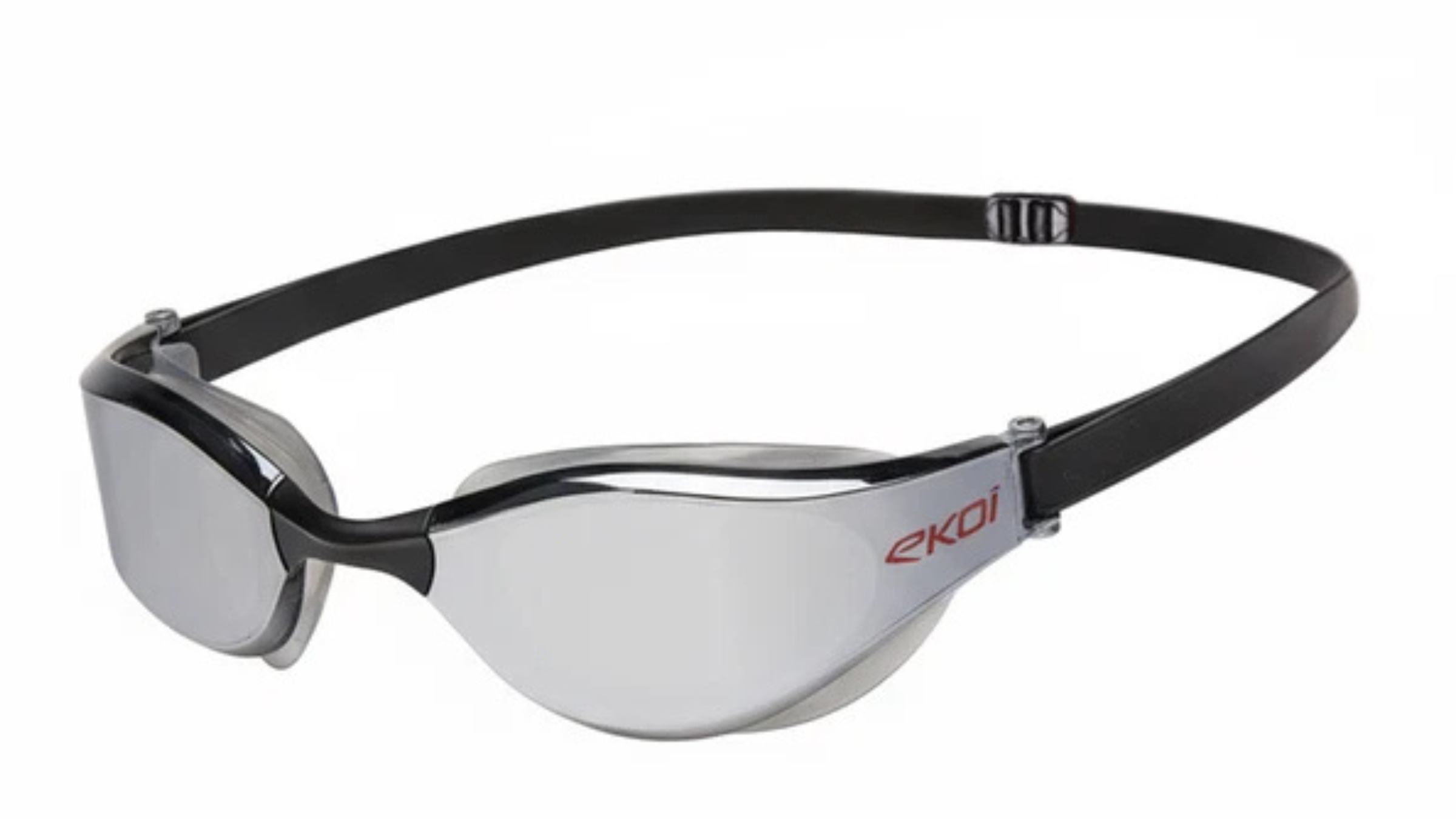
One tester neatly summed up our take on the Aqua Racer: “The price is steep, lens options are limited, and I worry about durability, but you simply can’t put a price on comfort. After trying all of the models, the Aqua Racer is the one that I’ll be throwing in my bag for regular workouts. It’s the swim equivalent of comfort food.”
Testers credited two often-overlooked features for the Aqua Racer’s top-notch comfort and fit ratings: the gaskets and the strap guides.
To be sure, gaskets are always soft, but Ekoi’s are unusually supple. More notably, they are the widest in the test (apart from the Sailfish), which spreads out the pressure (eliminating raccoon eyes) and allows the fewest leaks in the field.
The strap guides at the temple provide a more subtle yet meaningful benefit. Equipped with rollers rather than traditional friction-sliders, the guides allow the straps to move freely, which makes them easier to adjust and get on, but also makes them less likely to get pulled off if you – or a competitor – accidentally hits them.
Ekoi is clearly putting thought into the details – there’s also an innovative fastener that makes the (three) adjustable nose bridges more secure – but testers were split on two attributes: Like the Arena Ultra Swipe, the Aqua Racer has a small lens area that limits field of vision more than some wanted for race day; and while our test sample didn’t break, it is showing more wear (scratches on the lenses) and feels less sturdy than the competition – though given that triathlon goggles typically need to be replaced every six months or so, this may not be a critical issue.
| Overall: | ★★ |
| Coverage: | ★★★ |
| Comfort: | ★★★ |
| Ease of adjustability: | ★★ |
| Consistency of fit: | ★ |
| Lens clarity: | ★★★ |
| Construction quality: | ★★★ |
| Variety of lens colors: | 1 |
| Colors available: | Green Mirrored |
| Return policy: | 30 days (restocking fee applies) |
If you like masks more than goggles, have a small face, and will be happy with a single lens color, the Outer Space may be the perfect pick for you. If not, skip to the next review, because this mask is a very specialized option with several performance limitations.
First, the good stuff. Like all masks, this one provides a comfortable, unobstructed view. It’s great for sighting and seeing everything in your forward path; however, peripheral vision is surprisingly average due to the depth of the side shields. The Outer Space is also spacious and fairly fog-resistant. With its extra-wide gasket, it softly suctions to your face without any pressure points.
The wide gaskets extend the lens farther from your face than standard goggles, which has pros and cons. It produces more internal volume (plenty of room for long eyelashes), but it also creates noticeable drag. Testers could feel it in the way the water flowed around their mouths when they turned to breathe.
And despite the wide gaskets, the Outer Space was prone to leaking except on the very narrowest faces; water tended to sneak in at the temples and around bushy eyebrows.
| Overall: | ★★ |
| Coverage: | ★★★ |
| Comfort: | ★★ |
| Ease of adjustability: | ★★★★ |
| Consistency of fit: | ★★★ |
| Lens clarity: | ★★★★ |
| Construction quality: | ★★★★ |
| Variety of lens colors: | 4 |
| Colors available: | Blue Mirrored, Blue/Grey, Yellow/Smoke Mirrored, Black/Grey |
| Return policy: | 60 days |
In last year’s Triathletecommunity survey, 37% of respondents said they owned Speedo goggles, by far the largest number. And with good reason: The brand has made a broad selection of well-built, reliable performers for eons. The Fastskin Pure Focus sits at the top end of Speedo’s range and – like the Arena, Ekoi, Tri-Fit, and TheMagic5 models – is engineered for speed and a streamlined fit.
This made our experience with this style somewhat disappointing. On the plus side, testers praised the Fastskin’s lenses for their outstanding clarity in a variety of water and light conditions. They also gave it top scores for adjustability – swapping out nose bridges is a breeze – and construction quality.
Reactions were mixed on other attributes, however. The Fastskin has the second-smallest field of vision in the test after the Arena, and it tends to develop fog more than the other high-end models.
A bigger issue was comfort. Testers said the frame shape and gaskets felt a bit less ergonomic and forgiving, respectively, than the Fastskin’s top competitors. And our biggest tester also reported that “my large head maxed out the strap, which led to more eye socket pressure.”
TheMagic5 Vector
| Overall: | ★★★★ |
| Coverage: | ★★★ |
| Comfort: | ★★★★★ |
| Ease of adjustability: | ★★ |
| Consistency of fit: | ★★★★★ |
| Lens clarity: | ★★★ |
| Construction quality: | ★★★ |
| Variety of lens colors: | 7 |
| Colors available: | Pink Mirror, Clear, Blue, Smoke, Black Mirror, Purple Mirror, Blue Mirror |
| Return policy: | 15 days |
We wanted to award these goggles six stars for comfort; that’s how natural the Vector felt on the face. The ordering process was simple: After installing TheMagic5 mobile app, we recorded and uploaded a facial scan. A week or so later, the Vector arrived – and even before the first swim, we could tell the fit was truly unique.
The gaskets are where the customization is really happening, and you can see the variable shaping with the naked eye. The right gasket is trimmed a little narrower across the top than the left gasket, and both are less uniform in their contours than the cookie-cutter gaskets of standard goggles.
This precision shaping yields a superb fit, and it enables TheMagic5 to use narrower gaskets (read: less rubber) that bring the lens closer to your eyeballs. The result is a twofold win: The lower profile improves peripheral vision and means that we didn’t (initially) need to tug the straps very tight.
Over time, though, a couple concerns cropped up. After a few weeks of steady testing, we started to experience more fogging than with the other race-oriented models. Then, inexplicably, minor leaks appeared that required more strap tightening – not to the point of discomfort, but enough to make us question the material’s durability. Here, the Vector was just a bit below some of the others in user-friendliness when we want to tighten/loosen the straps or swap out a bridge, hence some knocks on the “ease of adjustability” score.
And finally, we did not love the aggressive faceting of the lenses. The 3D “diamond-cut” is supposed to remove blind spots and improve sighting, but we found the lenses blurry around the sides and bottom – not enough to impair our ability to see swimmers coming up beside us, but enough to be distracting. Dear Magic5: Please make an open-water-specific model with a wider depth of usable field.
Tri-Fit Propel
| Overall: | ★★★★ |
| Coverage: | ★★★ |
| Comfort: | ★★★ |
| Ease of adjustability: | ★★★ |
| Consistency of fit: | ★★★★ |
| Lens clarity: | ★★★★ |
| Construction quality: | ★★★ |
| Variety of lens colors: | 2 |
| Colors available: | Silver Mirrored, Green/Purple |
| Return policy: | 30 days |
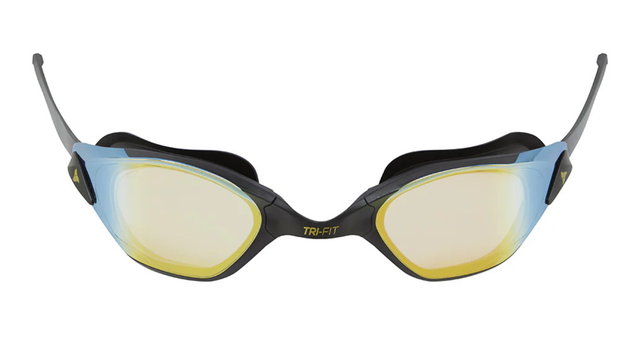
The Propel was the dark-horse darling of the test. As one reviewer reported, “The Tri-Fit entry snuck up on me. It doesn’t boast any fancy innovations or truly unique features, but it also doesn’t show any real flaws. And when I realized you can (nearly) buy two Propels for the price of one Speedo or Ekoi, it cemented Tri-Fit’s position as my best-value runner-up to the Arena.”
Like the Arena, the Propel has long side arms that help create a snug, secure fit. You also get three nose bridges and gaskets whose slightly longer dimensions result in more suction around the eyes (a good thing) and less leaking.
Apart from the limited lens options, our one caveat about the Propel is their sizing. They fit our small and medium faces well, but testers with wider faces felt a bit squeezed. As one wrote, “The depth of the gaskets is great for suction and seal, but it makes them sit closer to the edges of my eyes. It wasn’t painful, but it did limit peripheral vision and make blinking harder.”
| Overall: | ★★★★ |
| Coverage: | ★★★★ |
| Comfort: | ★★★★ |
| Ease of adjustability: | ★★★ |
| Consistency of fit: | ★★★★ |
| Lens clarity: | ★★★ |
| Construction quality: | ★★★★ |
| Variety of lens colors: | 1 |
| Colors available: | Photochromatic |
| Return policy: | 30 days |
Triathletelast reviewed this popular Aussie/U.K. brand’s goggles 10 years ago – an earlier version of the Predator, in fact – so we were curious to see how it has evolved.
Bottom line: The Predator could be your go-to goggle for multiple conditions, saving you a bundle on buying a quiver. It features photochromatic lenses that create significant flexibility across different environments, and even within the course of a single open-water swim.
As one tester put it, “The lenses adapt in a minute or two when the sun comes up or emerges from behind clouds, going from completely clear to medium-dark. They never get as dark as lenses that are purpose-built for bright sun, but they cut enough glare to keep you from getting blinded when trying to sight a buoy.”
Testers gave the Zoggs kudos for making the Predator in two sizes – regular and small – as an alternative to using interchangeable nose bridges to adjust fit. It also complimented the field of vision that the regular size provides; the frames have roughly 20% more effective lens area than the test’s more race-oriented models. (Naturally, the small size has a smaller field of vision.)
Comfort-wise, the Predator’s high-profile gaskets distributed pressure nicely and gave our eyes plenty of room. These aren’t super-hydrodynamic triathlon goggles, though, due to the larger frames but also the bulky strap ratchets. Said one tester: “They’re a bit overbuilt, which may cost me some seconds in a race. But overbuilt is another way of saying ‘sturdy as heck.’”
Zone3 Vapour
| Overall: | ★★★ |
| Coverage: | ★★★ |
| Comfort: | ★★★ |
| Ease of adjustability: | ★★ |
| Consistency of fit: | ★★ |
| Lens clarity: | ★★★ |
| Construction quality: | ★★★ |
| Variety of lens colors: | 5 (available in polarized or photochromatic) |
| Colors available: | Black/Grey/Orange, Black/Neon/Orange, Teal/Cream/Copper, Black/Metallic Gold, Blue/White/Clear |
| Return policy: | 60 days |
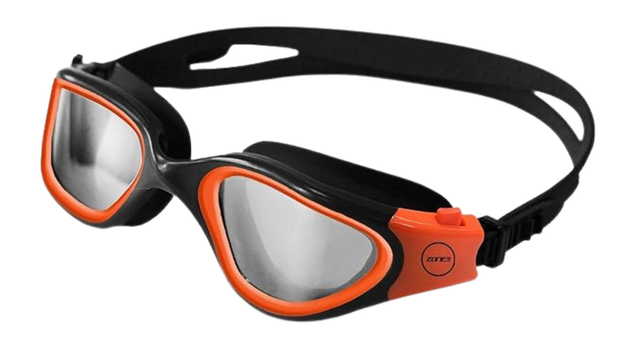
Out of the gate, testers were psyched about the Vapour. It’s a flexible goggle that felt good going on, with no obvious pressure points around the eye sockets, even after 90 minutes. Like the Zoggs Predator, it has a medium-size frame with excellent coverage, and you can select a photochromatic option with lenses that darken to a similar level just as fast. And on top of that, Zone3 offers a polarized option in a variety of lens colors. “All of this for only $59,” enthused one tester. “What’s not to like?”
Through the first month of testing, that was our enthusiastic consensus, and the Vapour was looking like the real bargain star of the test. But some of the shine began to wear off the longer we swam in this goggle.
The gaskets seemed to lose some of their resilience, with testers reporting more frequent leaks than they experienced with other brands. “It’s not unusual for me to empty the lenses several times an hour during a pool session,” said one. The Vapour also proved more fog-prone than the competition, more or less on par with the Speedos.
While the Vapour would make a fine everyday practice goggle, we’d ultimately go with the Tri-Fit as our pick in this $50-$60 price range, and we prefer the Zoggs of the two photochromatic options in the test.
2025 Triathlete Community Survey2026 Gear ReviewsAsk a Gear GuruCommercegogglesReviewedRoundup
SearchBest triathlon watches to track everythingHalf Ironman training planBeginner triathlon tips
Add Triathlete as a preferredd