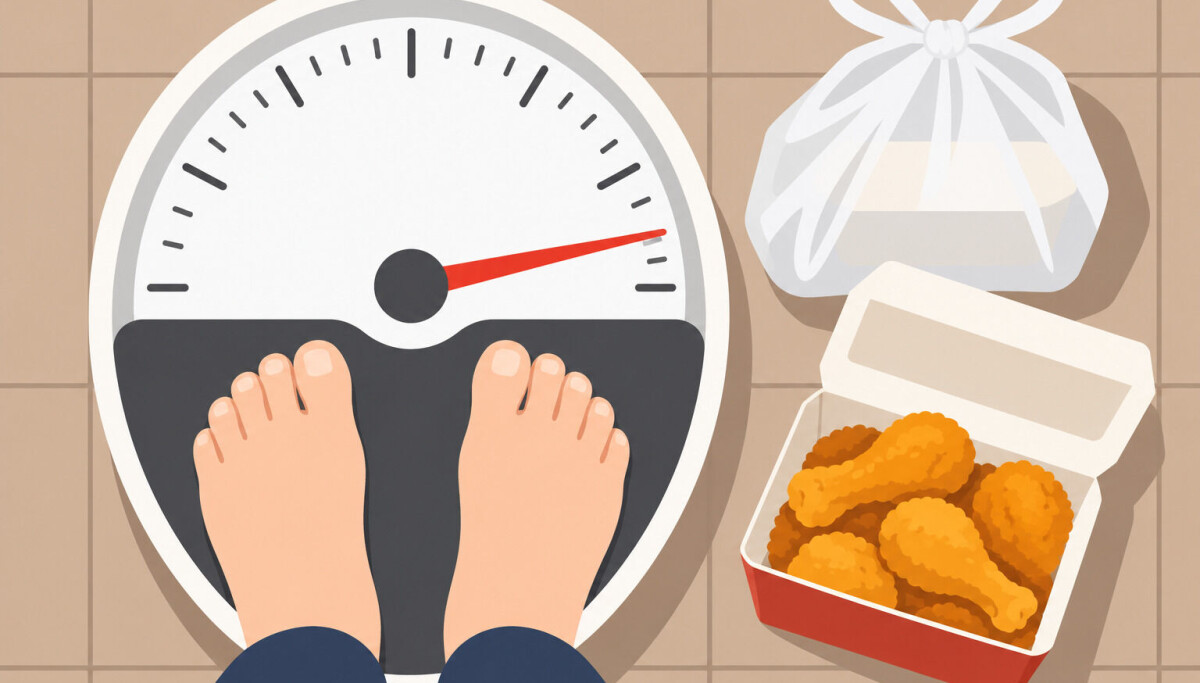
More than half of Korean men in their 30s and 40s are obese, government data showed, as the country’s adult obesity rate keeps climbing.
The problem is also spreading fast among younger adults, with the steepest increase over the past decade among people in their 20s, a generation at home with food delivery.
The Korea Disease Control and Prevention Agency (KDCA) released the figures Monday from last year’s Korea Community Health Survey, which covered about 230,000 adults aged 19 and older. Respondents report their height and weight, and anyone with a body mass index (BMI) of 25 or higher is counted as obese. BMI is weight in kilograms divided by height in meters squared. The Korean cutoff is lower than the World Health Organization’s, which sets obesity at a BMI of 30.
-
Nearly 20% of young children in Seoul are overweight or obese, survey finds
-
More than half of Korean men in their 30s to 50s are obese, survey finds
-
One in five normal-weight women consider themselves obese, survey says
Last year, 35.4 percent of adults, or roughly one in three, were obese, up 7.5 percentage points from 27.9 percent in 2016. The underweight rate, a BMI below 18.5, fell to 4.2 percent.
Men had an obesity rate of 42.5 percent, about 1.9 times the 22.9 percent for women. Men in their 30s and 40s had the highest rates, at 52.1 percent and 53.1 percent, respectively. Among women, the rate was lowest for those in their 20s, at 16.4 percent, and generally rose with age.
“Eating habits such as drinking and late-night snacking are among the reasons obesity is common in men in their 30s and 40s, along with lifestyle habits such as a lack of exercise,” said Kim Yu-mi, head of the KDCA’s chronic disease control division. “We think another factor is that men are less likely than women to see themselves as obese, so they feel less pressure to diet.”
Among people in their 20s, the obesity rate for men rose from 29.7 percent in 2016 to 42.6 percent last year, a relative increase of 43.4 percent. For women in their 20s, the rate went from 10.2 percent to 16.4 percent, a relative increase of 60.8 percent.
“Delivery culture expanded rapidly during the Covid-19 pandemic,” Kim said. “We presume that heavy consumption of ultraprocessed foods, mainly among young people used to delivery food, has had a big impact on the rise in obesity.”
People who were obese and people who saw themselves as obese were more likely to try to control their weight. However, where actual weight and self-perception did not match, inappropriate patterns emerged, with some people not dieting at all and others dieting when they did not need to.
Skipping strength training raised the risk of obesity 1.3 times, the agency found. Sleeping six hours or less raised it 1.2 times, while skipping breakfast, not walking for exercise and drinking each raised it 1.1 times.
Every province and major city except Sejong saw its obesity rate rise over the decade. Cheorwon County, Gangwon, had the highest average rate over the past three years, at 44.2 percent. Danyang County and Boeun County in North Chungcheong followed at 42.9 percent and 42.7 percent.
Gwacheon, Gyeonggi, had the lowest rate at 23.6 percent. Bundang District in Seongnam, Gyeonggi, followed at 24.1 percent, and Suseong District in Daegu and Seo District in Daejeon tied at 24.3 percent.
The agency also compared the 10 areas with the highest obesity rates with the 10 lowest. High-obesity areas had higher rates of diagnosed chronic diseases such as high blood pressure and diabetes, and more high-risk drinking. Their monthly household incomes and rates of walking and strength training were lower.
“Obesity is a major health problem that raises the risk of chronic diseases,” KDCA Commissioner Lim Seung-kwan said. “So it is important to correctly recognize one’s own weight status and practice a healthy lifestyle with a healthy diet and regular physical activity. Local governments and related agencies also need to pursue tailored obesity prevention and management policies that reflect the health behavior, socioeconomic characteristics and local environment of their residents.”