The Polari Prize, one of the world’s leading queer literature prizes, is back for 2026. If you’re looking for a good book the longlist of nominees might reveal some intriguing titles to explore.
The Polari First Book Prize was founded in 2011 and is awarded annually to a debut book that explores the LGBTQ+ experience, and has previously been won by writers including Kirsty Logan, Amrou Al-Kadhi, Diriye Osman, Mohsin Zaidi, Adam Zmith and Nicola Dinan. The Polari First Book Prize 2026 is sponsored by Hastings Crime Writing Festival. The winner receives £1000.


While the Polari Book Prize was founded in 2019 and has previously been awarded to Andrew McMillan, Kate Davies, Diana Souhami, Joelle Taylor, Julia Armfield and Jon Ransom. The Polari Book Prize 2026 is sponsored by DHH Literary Agency. The winner receives £2000.
While the prizes are modest in monetary value, the prestige of the award can bring swathes of new readers to each author. The awards, like many literary prizes, has three phases, a long list of nominees, which is then later narrowed to a short list, and then the announcement of the winners a few weeks later.
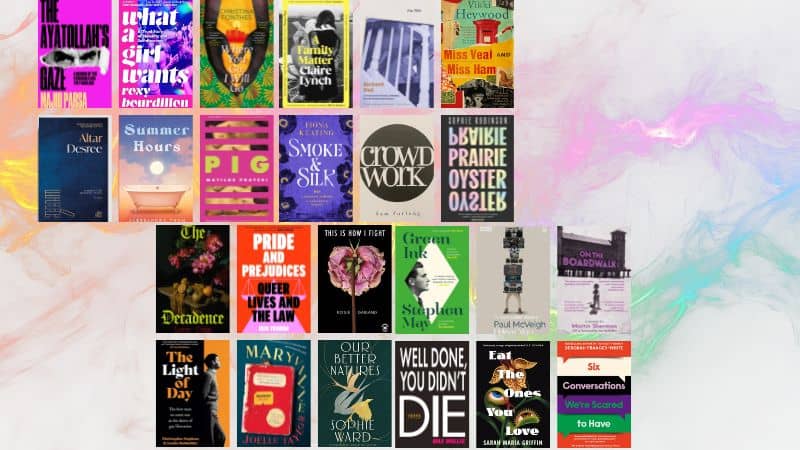
The Polari First Book Prize 2026 Longlist
The Ayatollah’s Gaze by Majid Parsa – Neem Tree Press
What A Girl Wants by Roxy Bourdillon – Bluebird
Where You Go, I Will Go by Christina Fonthes – Tinder Press
Altar by Desree – Bad Betty Press
Summer Hours by Alessandra Thom – Polygon
Pig by Matilde Pratesi – Corsair
Prairie Oyster by Sophie Robinson – Fleet
Crowd Work by Sam Furlong – Macha Press
Smoke and Silk by Fiona Keating – Headline
A Family Matter by Claire Lynch – Vintage
I’m Fine by Richard Hall – Eye Books
Miss Veal and Miss Ham by Vikki Heywood – Muswell Press
Poet Casey Garfield, who was part of the judging panel, said the books submitted to this year’s award showcased a diverse range of perspectives about what it means to be queer.
“It’s been an absolute pleasure being part of the judging panel. There are books on this list it was immediately clear would be universally championed. There are books on this list I’ve seen through new lenses in order to better understand my fellow judge’s perspectives. And while there were books I’ve fallen in love with that didn’t make the list, a world made purely for Casey Garfield would be a worse one for everyone involved, and I’m incredibly proud to have my name attached to the end result.
“There’s no single queer experience and no single queer story, so I’m thrilled to have been a part of celebrating this collection of books diverse in their genres, themes and stories, while united by a common spirit.” Garfield said.
Fellow judge, writer Rachel Holmes, was enthused about the range of genres the submissions covered.
“This year’s long list is an intriguingly eclectic and nuanced crop. I particularly love the broad sweep across all genres. It’s bracing, exciting and confident.” Holmes said, while poet Alice Denny said choosing a winner was a daunting task.
“Reading the submissions for this year’s Polari First Book Prize has been an intensely enjoyable, testing and truly humbling experience – such are the astounding talents of such varied writers, treating the reader to delightful storytelling, dizzying plots, passages of sublime poetic imagery. They exude humanity with courageous honesty, bringing elation, joy, heartbreak and terror. To compare, contrast and rank them was a daunting task.”
The Polari Prize 2026 Longlist
The Decadence by Leon Craig – Sceptre
Pride and Prejudices: Queer Lives and the Law by Keio Yoshida – Scribe
This Is How I Fight by Rosie Garland – Nine Arches Press
Green Ink by Stephen May – Swift Press
I Hear You by Paul McVeigh – Salt
On the Boardwalk by Martin Sherman – Inkandescent
The Light of Day by Christopher Stephens & Louise Radnofsky – Headline
Maryville by Joelle Taylor – Bloomsbury Poetry
Our Better Natures by Sophie Ward – Corsair
Well Done, You Didn’t Die by Max Wallis – Verve Poetry Press
Eat the Ones You Love by Sarah Maria Griffin – Titan Books
Six Conversations We’re Scared to Have by Deborah Frances-White – Virago
Judges for the Polari Book Prize 2026 are literary critic Suzi Feay, Dr Gurmit Singh of Lancaster Literature Festival, Katy Jon Went of The Human Library, and Garry Wilson, CEO of easyJet Holidays.
Katy Jon Went said, “I was impressed by the quality of evocative and emotive writing, traversing a diverse range of literature from historic and political fiction to gothic, horror, and romance, alongside moving and varied poetry and short stories. I was pleasantly surprised and inspired to see some significant non-fiction contributions from memoir to human rights activism across the LGBTQ+ spectrum.”
Dr. Gurmit Singh said, “Judging this year’s submissions was a delightfully filthy business. The sheer, unrepentant talent on display proves that while the world outside keeps collapsing, queer literature is only getting hotter, sharper, and utterly unapologetic.”
This year’s shortlists will be announced on 3rd November 2026. The winners will be announced on 30th November 2026 at the Polari Prize ceremony at Heaven nightclub, London.
The 2025 awards were cancelled after controversy over author John Boyne being included in their selections. Boyne had attracted criticism from some LGBTQ+ writers and activists over statements regarding transgender issues and his public support for controversial author J.K Rowling.
Not long after last year’s list of 12 novels in contention for each award was announced a slew of author’s asked for their books to be removed from consideration, alarmed that the judges had included Boyne’s latest novella Earth. Two of the awards judges also announced their resignation.
As the days passed, more authors asked for their works to be removed from consideration from the awards. Soon the First Book prize only had three of its original twelve works still in the race. While the main prize had dropped to nine out of the twelve nominated works.
Boyne responded to the controversy with a statement arguing that he was a victim of a campaign of bullying and intimidation, and criticised the authors who had withdrawn their work. He highlighted that he was a victim of sexual abuse as a teenager and his works reflected on that trauma.
The organisers pulled the plug on the 2025 awards, with a statement announcing they’d return in 2026.