Susan Wiggs recommends Lisa Wingate, Ellen Marie Wiseman, Megan Church and others
The “wayward girl” in fiction – and unfortunately, in reality – is defined less by her own actions and more by a society committed to getting her “right.” “Promiscuousness” is usually a symptom of being too poor, too outspoken, or simply getting in the way of someone else’s reputation.
The Magdalene Laundries of Ireland are just one example of this. I was surprised to learn of their existence, not only in Ireland, but throughout the world, in the 20th century. One of the worst incidents was in Buffalo, New York, not far from the small town in Western New York where I was born.
As writers, we strive to understand things beyond comprehension. Our stories often focus on the horrific reality of state and religious interference in the lives of vulnerable people. The “Baby Scoop era” in mid-century America gave rise to institutions that aimed to hide those who did not fit the mold of the “good” girl, while providing childless couples with the children they yearned for. Set in reform schools, psychiatric wards, or overcrowded orphanages, the narratives explore the systemic erasure of identity.
What makes this genre so popular today is that it is an underdog story. Readers love to see a character reclaim their agency, find justice, closure, or peace through their struggles. In these novels, “lost” boys and girls find strength in kinship and the secrets they keep for each other in the shadows of cold dormitories. By giving voice to girls who should have been forgotten, these stories reveal the truth about the systems that tried to break them.
Here are some books that offer a haunting, bold look at hidden histories and the enduring spirit of survivors.
while writing wayward girls, I was inspired every day by the survivors of Good Shepherd and other reform schools in Buffalo who generously shared their stories. I wanted the status of my novel to be a one-off, but alas, it is a story that has played out in many ways and in many places.
*
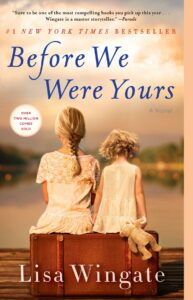

before we were yours By Lisa Wingate
Based on the real-life scandal of the Tennessee Children’s Home Society, this massive bestseller describes a family of children who are abducted from their family’s Mississippi River cottage in 1939. Taken to an orphanage run by the notorious Georgia Tan, the siblings are separated for adoption – for profit – into wealthy families. Wingate weaves this historical horror with modern-day mystery, depicting the enduring trauma and unbreakable bond of blood of children stolen for profit.
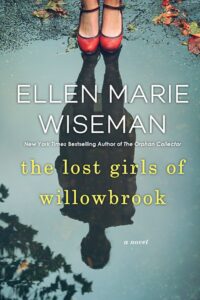

The Lost Girls of Willowbrook by Ellen Marie Wiseman
Set in the 1970s, this thriller takes place at the infamous Willowbrook State School, a real-life institution on Staten Island. When Sage Winters discovers that her “dead” twin sister is actually a patient at the school and has gone missing, she goes to find her – but she is mistaken for her sister and is raped. It is a keen look at the dehumanization of the mentally ill and the horrifying ease with which a girl can be “erased” by the state or victimized by a murderer.
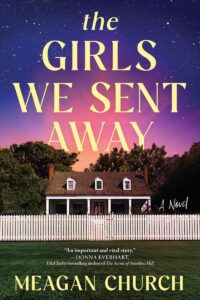
the girls we sent away By Megan Church
Set during the “Baby Scoop Era” of the 1960s, the novel tells the story of an idealized “good girl” whose life is ruined when she becomes pregnant. To protect the social standing of the family, she is sent to a home for unmarried mothers. The church reflects the stifling atmosphere of a society that demands perfection and punishes “promiscuity” with forced adoption and lifelong shaming, highlighting the silent sacrifices of a generation of young women.
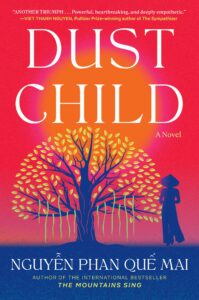

dust child By Nguyen Phan Quy Mai
Moving between the Vietnam War and the present day, the novel explores the lives of the Americans – the “dust children” born to Vietnamese mothers and American soldiers. These children and their mothers were caught between two worlds. Through the stories of sisters forced to work in “tea houses” to support their families, and a veteran who returns to find his lost child, the book examines the collateral damage of war on the most vulnerable.
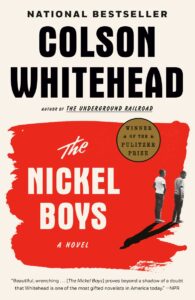

nickel boys by Colson Whitehead
Library Journal review of wayward girls Comparing it to this Pulitzer Prize winning novel made my stomach swell with pride! It’s about boys, not girls. Based on the history of the Dozier School for Boys in Florida, we follow Elwood Curtis, a young black man in the Jim Crow era. Elwood tries to maintain his integrity through the teachings of Martin Luther King Jr., while his friend Turner is cynical about the school’s systemic violence. This heartbreaking novel chronicles the devastating destruction of “reform” schools that were actually centers of torture and racial oppression.
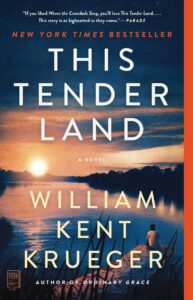
This tender land by William Kent Kruger
Set during the Great Depression, this epic describes four orphans who run away from the Lincoln School, a punitive boarding school for Native American children. As they canoe down the Mississippi River, the “wayward” group searches for a place to call home. A wild, addictively entertaining adventure based on the grim reality of cultural genocide occurring in residential schools and the search for spiritual connection.
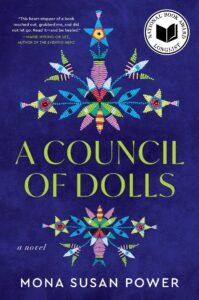
a council of dolls by Mona Susan Power
Spanning three generations of Dakhota women and filled with doll imagery, this is another in-depth story of the Indian residential school system. From the 19th century to the present, Power explores how the state “kill the Indian, save the man” by stripping children of their culture and family ties. The sense of intergenerational trauma is palpable, as is the power of storytelling to shed light on the human spirit.
____________________________
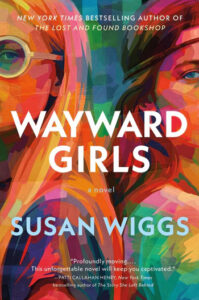
wayward girls by Susan Wiggs is available in paperback from William Morrow, an imprint of HarperCollins Publishers.