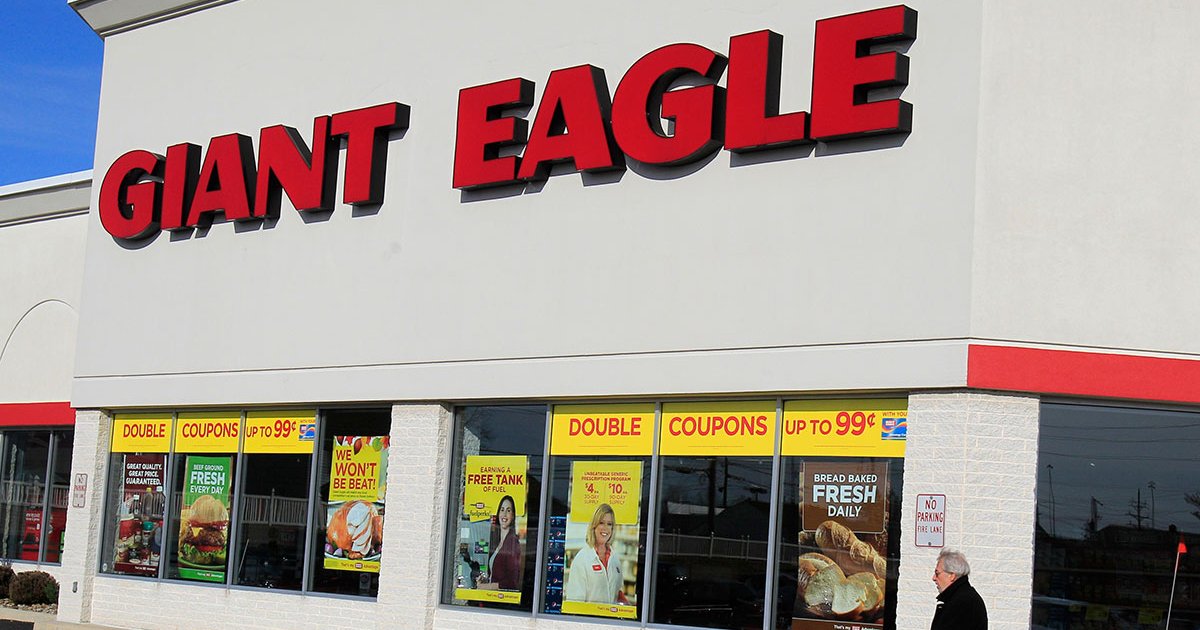
A Giant Eagle store in Mayfield Heights, Ohio. (Tony Dejac/Associated Press, File)
key takeaways:
- Kroger said on July 1 that it planned to acquire Giant Eagle for $1.65 billion, expanding its footprint while keeping Giant Eagle’s brand and operations unchanged.
- The deal adds 197 supermarkets and 11 pharmacies in five Midwestern and Mid-Atlantic states, strengthening Kroger’s position as grocers face pressure from Walmart, Costco and Amazon.
- The transaction, including $1.25 billion in cash and assumed liabilities, is subject to regulatory approval and may require limited store divestitures before expected closing next year.
Kroger said July 1 it plans to buy regional grocery and pharmacy retailer Giant Eagle in a deal worth $1.65 billion.
Giant Eagle, which is privately held, has 197 supermarkets and 11 stand-alone pharmacies in northern Ohio, western Pennsylvania, West Virginia, Maryland and Indiana. They will continue to operate under the Giant Eagle name under the terms of the deal.
Kroger, the largest American supermarket chain, has 2,685 stores in 35 states and the District of Columbia. Its stores operate under a variety of brand names, including Ralphs, King Soopers, Smith’s, and Fred Meyer.
Kroger ranked 31st on Transportation Topic’s Top 100 list of the largest private carriers in North America.
The companies said the transaction includes $1.25 billion in cash and approximately $400 million of outstanding liabilities.
“Giant Eagle is a well-run, high-quality regional grocer with a strong reputation for fresh products, pharmacy, private label and customer loyalty,” Kroger CEO Greg Foran said in a statement. “We evaluated the opportunity carefully, and the strategic fit is clear.”
Foran, a former Walmart executive, was named CEO of Kroger in February.
Sales at Kroger and other traditional grocers have declined in recent years as consumers shift their food purchases from larger retailers like Walmart, Costco and Amazon, and discount chains like Aldi.
Walmart, Costco and Amazon rank 1, 53 and 15, respectively, on the private TT100.
In 2022, Kroger announced plans to merge with rival Albertsons, arguing that a larger chain would be better able to compete against rivals. But the Federal Trade Commission and two states — Washington and Colorado — sued to block the merger in 2024, saying it would raise prices by eliminating competition and lower workers’ wages. The proposed merger was canceled in late 2024 when judges overseeing two separate cases blocked the deal.
Burt Flickinger, a longtime grocery industry analyst and managing director of Strategic Resource Group, a market research company, called the acquisition of Giant Eagle by Kroger “a master stroke” that gives Kroger a gateway to the Mid-Atlantic, the Northeast and New England.
“There should be no antitrust concerns because Kroger consistently lowers prices when making acquisitions,” Flickinger said.
The deal, which is subject to regulatory approval, is expected to close next year. Kroger and Giant Eagle said they expected to sell a limited number of Giant Eagle stores to obtain the necessary regulatory approvals.
Kroger shares were flat in afternoon trading July 1.