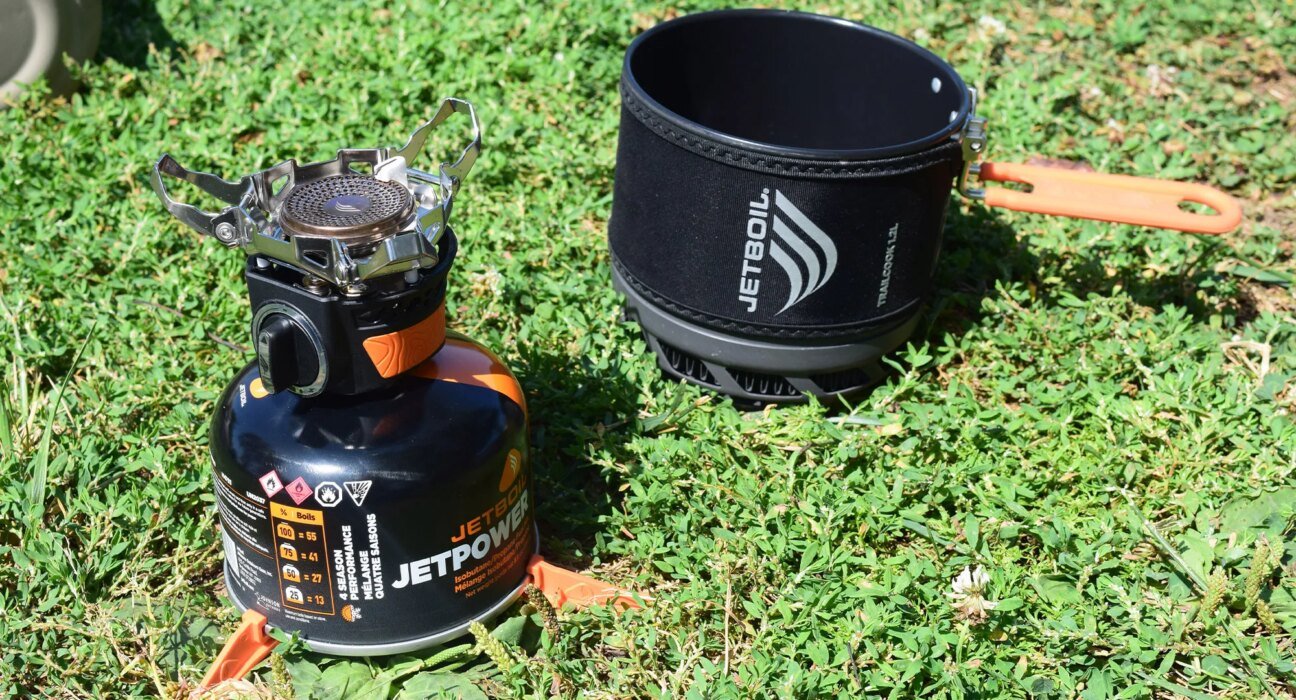
When you’re in the backcountry, almost any food tastes delicious, But Jetboil’s new stove system, the TrailCook, turns that notion into reality. trailcook stove system Takes all the tried and true features of Jetboil and upgrades them.
This stove system offers more control than ever in backcountry cooking, with its turn-and-click igniter and regulator, mirroring the functionality of a home gas stove. Its larger size provides greater stability even in high altitude winds, but it still collapses to fit inside the vessel. With the option of roasting and boiling, this stove system is for adventurers with larger groups who enjoy precision and don’t mind carrying more weight for more reward.
In short: If you’re willing to add some weight to your pack, this stove system can turn your wasteful backcountry meals into a durable spread that lets you customize your food and cooking preferences. I enjoyed handling large quantities of food, easily feeding my four-person crew of backcountry campers, cutting down on cooking time, allowing us to eat family style on the trail. I experienced knob-ignition trouble at an altitude of 7,840 feet and in high winds, but when I re-tested the igniter in a controlled environment, it fired again.
weight
19.4 ounces. (550g) (without fuel stabilizer)
Power
6,000 BTU/hour (1.75 kW)
volume
33 flu. ounce. (1.2 L)
boiling time
2 minutes, 15 seconds. Per 16 oz. (0.5 litres)/ (average over the lifetime of a JetPower can)
water boiled
10 liters per 100g jetpower can
DIMENSIONS
5″ x 3.8″ (127 mm x 97 mm)
Pros
- Precise simmering and roasting control
- quick boil time
- easy to reheat
- Packable All-in-One System
- Nonstick ceramic coating makes cleaning easy
- Folding handle and smart lid improve usability
- Good for larger group sizes
Shortcoming
- Heavier than traditional jetboil systems
- Self-ignition is not sustainable
- Less attractive to ultralight backpackers
Jetboil Trailcook Stove System Review
I’ve used the Jetboil Flash on various trips in the backcountry, and often, my trail menu includes ramen with more flavor, Mountain House pre-packaged meals, and black coffee with oatmeal when I need an extra pep in my step in the morning.
Since freeze-dried food made me sick, I often opted for quick snacks over meals, whetting my appetite for food that could sustain me for miles in the backcountry.
In search of more sustenance on the trail, I decided to fall back on a good old burner and metal pot, which added a few extra pounds to my pack weight. Obviously, I would prefer to carry a lighter pack, but I would sacrifice weight savings for Southern comfort and the ability to make N’Oulines’ famous red beans and rice along the way.
The run was worth the reward, but my shoulders were still sore. However, Jetboil’s new TrailCook proved to be the solution to my upset stomach. I took the TrailCook on a backpacking trip through Enchantments in Washington to test its durability, weight, and, most importantly, ability to elevate ordinary trail food.


features
Jetboil has focused the TrailCook system on heat control and precise cooking that is more in line with the home cooking process. This reach comes at a very slight weight increase: 19.4 ounces (550 g) compared to the Flash 1.0L’s 13.1 ounces (371 g). If you’re obsessed with counting grams and reducing packet weight, you may want to go with a lighter option.
You’ll notice improvements to all the features that make the JetBoil a standout product, including consistent quick boiling (it does it in 2 minutes, 15 seconds per 16 ounces), but there are new upgrades that set it apart from its sister stoves.
Re-engineered ignition and flame control

The re-engineered ignition makes this stove perfect for those who forget their lighters. (Guilty!) It has a valve control designed for faster ignition and more control over your flame for better cooking.
For the first three adventures I used the stove on, the self-ignition worked perfectly. However, as soon as I stuffed it in my pack, the self-ignition failed, and I had to use a lighter to start the stove. More information on this is given below.
‘Smart’ lid and packable design

The design also helps in making your cooking process easier. The new smart lid works as both a spout and strainer and comes with a foldable handle for easy packing. It locked into place and became a storage container for cooking ingredients in my pack.
Textured grip and self-centering pot

The textured grip zone on the burner base makes it easy to add canisters, adjust the flame, or connect more cookware — so if you need to return your pot to the flame to reheat your food (like I did), you’ll be able to do it faster.
With that said, the self-centering pot easily clicked into place while I was hurriedly trying to cook a quick dinner in a ~10 mph wind, without the need to add a stabilization attachment.
Trailcook’s test

I took TrailCook on a lunch date for the first time to test out backcountry chef Colin Yen’s famous Dan Dan Noodles To see how much nutritious food I could make with one appliance. The boiling system proved to be so fast that I hadn’t even prepared my meal before the noodles were ready.
Once my food cooled, I threw it back on the stove to warm it up and get my garlic to crackle more. The ability to reheat food after it has cooled is standard in traditional kitchens, but in rural areas it is a privilege. Trailcook offers you that luxury.
TrailCook also came backpacking with me through Enchantments in Washington and accommodated my large group of friends, making sure we could all eat our meals at the same time. Because the TrailCook is larger in circumference, we can cook two meals at a time, doubling the traditional serving size and halving the time to feed everyone. It offered the added luxury of combining hot coffee with a hot breakfast in the morning.
In less-than-ideal weather conditions, the stove’s pot support stands up against harsh winds without the need for fuel stabilization. Once we reached the camp a little late the arrangements were made quickly. Once at camp, we managed to cook dinner for the entire group in less than 30 minutes.
In the morning, we tested the fuel can stabilizer. We placed the stove on top of a rock to test its balance and stability. Even when we were all approaching the vessel again and again with different needs, it was still tied securely with the stabilizer.
where it falls short

The biggest drawback of the Trailcook is its weight. At 19.4 ounces, it’s significantly heavier than more minimalist Jetboil systems such as Flash 1.0L. If you’re strictly focused on ultralight backpacking and counting every gram in your pack, this probably won’t be your first choice.
21 miles into my journey, I opted for the extra weight and re-evaluated my decision about 15 minutes up Asgard Pass. The extra cooking functionality comes with extra volume, so whether the compromise is worthwhile depends on how much you value actual cooking in the backcountry.
When it comes to stove functionality, I experienced one instance where flame did not come from the ignition knob, and after several failed attempts and stomach rumblings, we opted for the traditional lighter-to-gas method to turn up the heat for our dinner.
I believe this accident was caused by user error and high winds, because when I retested it in a more controlled environment with a lower altitude (4,000 feet vs. 7,840 feet) the ignition worked immediately. Although it is always important to pack a lighter in case of an emergency, sometimes it happens that the igniter gets dislocated, causing it to not spark properly. At present, no other incidents of ignition knob non-functioning have been reported.
Final Thoughts: Who Should Consider It

With the influx of new people venturing into the outdoors and a desire for luxury in the mountains, this product caters to the casual adventurer. From people trying to serve a large crew on a trek to skiers looking to make spectacular fondue at the top of a summit, TrailCook aims to elevate dining outdoors. If you’re planning on cooking for a party, consider the size. Trailcook 2.0LWhich serves two to four people and features a large, Dutch-oven-style cook pot.

While it asks users to sacrifice some pack weight, the payoff is a stove system that brings precision cooking, larger serving sizes, reheat ability, and greater versatility to the outdoors.
For adventurers who prefer better food and a more comfortable camping experience trailcook Successfully bridges the gap between lightweight backpacking gear and a functional trail kitchen.