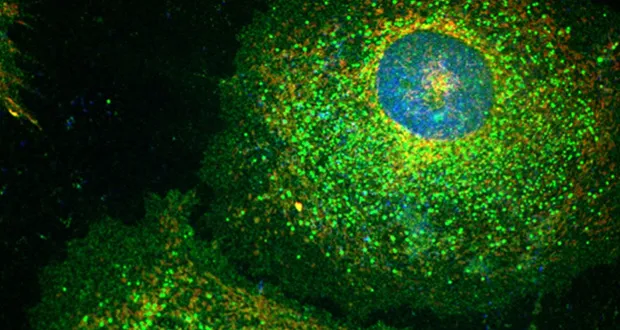
Senescent cancer cells stained for a ‘Death Receptor’ protein that is highly upregulated in response to chemotherapeutic drug treatment. Pic: Prof Seamus Martin, Trinity College Dublin
Discovery highlights potential new target for tumour-fighting therapies
New Irish research has uncovered how some tumours evade the cell-killing effects of chemotherapy, opening up the possibility of developing more targeted treatments that can solve this problem.
Scientists based in Trinity College Dublin have found that molecules called Inhibitor of Apoptosis Proteins (IAPs) can play a crucial role in enabling tumours to survive anti-cancer therapies.
The cells enter a ‘zombie-like state’, called premature
As a result, the cells enter a ‘zombie-like state’, called premature senescence, that can attract the wound-healing properties of the immune system.
“Discovering how tumours can evade the cell-killing effects of chemotherapy and enter senescence is an important and challenging problem,” said Smurfit Professor of Medical Genetics Seamus Martin, who led the research alongside post-doctoral research fellow Dr Gokhan Gunay.
“These new findings suggest ways in which we may be able to lower the defences of tumours by neutralising IAPs after the delivery of chemotherapeutic drugs, which should block their entry to senescence and kill more cells of the tumour.”
Wound healing is the process of coordinating repair
Wound healing is the process of coordinating repair and replacement of damaged tissue. However, cancers can exploit these wound-healing capabilities for their own ends by masquerading as damaged tissue and tricking the immune system into helping malignant cells to divide and acquire extra oxygen and nutrients rather than killing them.
The researchers found that IAPs functioned in this setting by neutralising the cell-killing effects of molecules called ‘Death Receptors’ that were switched on in response to DNA damage provoked by chemotherapy.
Rather than simply allowing tumours to escape the cell-killing effects of chemotherapeutic drugs, IAPs enabled surviving tumour cells to entera state of ‘premature senescence’ that converts cells into coordinators of wound healing that can orchestrate a beneficial immune response and help tumours bounce back from chemotherapy.
Senescent cells are non-dividing zombie-like cells that undergo
Senescent cells are non-dividing zombie-like cells that undergo dramatic changes within a few days of exposure to chemotherapy, including becoming almost ten times bigger than a normal cell and ramping up genes associated with wound healing.
These changes endow them with a greatly increased ability to secrete inflammatory mediators, which attracts cells of the immune system. The accumulation of senescent cells in tissues as we age is also thought to contribute to the inflammatory processes associated with aging, as well as a decline in the normal function of many tissues.
The Trinity scientists also found that senescent cells formed in response to chemotherapy are highly dependent on IAPs for their continued survival. Accordingly, compounds which neutralised IAPs (IAP antagonists) selectively eliminated senescent cells by reactivating the ‘Death Receptor’ self-destruct programme within these cells.
The study was carried out in the Smurfit Institute of Genetics at Trinity College Dublin and has been published in the journal Science Advances. The work is supported by the European Research Council and Research Ireland.
CancercellschemotherapygeneticsInhibitor of ApoptosisoncologySmurfit Institute of Geneticstumours2026-10-24Michael McHale