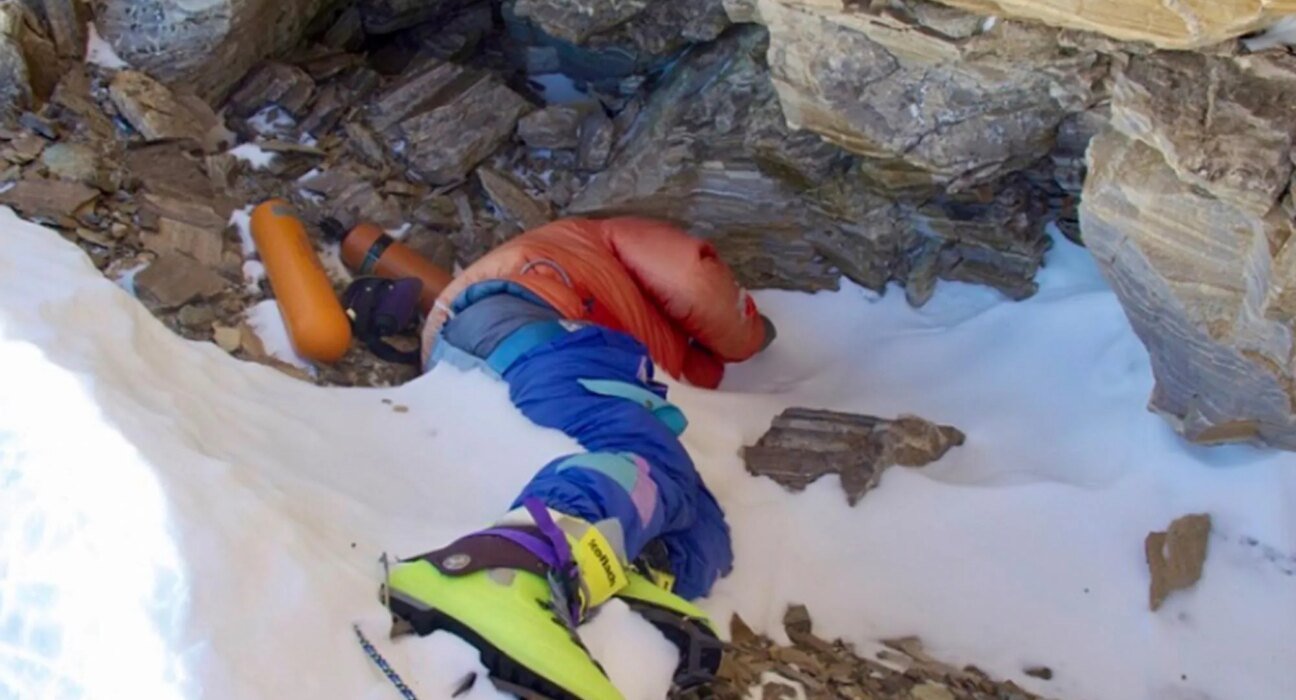
After nearly 30 years as a terrifying landmark on the north face of Everest, The body, known as “Green Boots”, is the target of a recovery effort by Indian authorities. The Indo-Tibetan Border Police has called in experienced high altitude teams to bring down the remains. The body is located very high on the mountain, in the highly dangerous “death zone”, at an altitude of approximately 27,800 feet.
It is also on the Northeast Ridge Passage on the Tibetan side of the mountain, but the team still hopes to return the remains to India by October.
This will not be a normal operation. Officials are looking for specialist agencies with a proven track record in similar recoveries – ideally, recent experience on Everest. Teams must include at least six Sherpas who have summited multiple times, and must fully document their work. Considering the extreme challenges of working in the death zone during summer and early autumn, the entire mission could last up to 40 days.
The original version of this story was published ExplorersWeb.
The body was finally identified
The body is hidden in a small rocky cave, below the first step, at an altitude of about 8,500 metres. For decades, its bright lime-green Koflach boots made it an unmistakable reference point for climbers going up or down the ridge. Many used its location as a checkpoint, radioing the base camp upon reaching there. Over time, it became one of the most talked about and photographed sites on Everest (albeit a grim one).
The long-running debate over whether the body was that of Tsewang Paljor or Dorje Morup has now been officially resolved by the Government of India. Both Indian climbers died on the same day, but DNA testing conducted before the recovery mission concluded that the remains were those of Dorje Morup.
1996 North Side events
While the South Side’s commercial expeditions and their tragic losses during the infamous 1996 Everest season attracted global attention, a quieter but equally painful drama unfolded on the North Side, also involving an Indian police operation. Unlike the South Side tragedies, which were extensively documented in books and films, the North Side losses received little international coverage.
Under the leadership of Mohinder Singh, the team was making a historic attempt at the first Indian ascent from the Tibetan side. On May 10, seven climbers set out for the summit via the North Col and the northeast ridge. Four of them turned around at a height of about 27,800 feet after facing stormy weather and exhaustion. The remaining three – Tsewang Samnla, Dorje Morup, and Tsewang Paljor – continued upward.
Late that afternoon, they radioed that they had reached the top. However, with heavy clouds, snow and zero visibility, later reviews raised questions about whether they had actually stood at the summit or stopped about 500 feet below. (The Himalayan Database registers the summit as valid.)
As darkness falls and the storm intensifies, the three become trapped in the “death zone”. They endured a brutal night of hurricane-force winds and freezing temperatures.
The next day, 11 May, a Japanese team climbing the same route came across the Indians, who were still alive but badly frostbitten and in critical condition. The Japanese continued their advance without being offered adequate assistance. Ultimately, three Indian climbers died from exposure and severe frostbite.


Controversy
The lack of adequate help by the Japanese led to initial strong criticism from the Indian side, which alleged that the Japanese had failed in their moral duty to assist climbers in distress. Those formal complaints were later withdrawn. However, controversy remains over mountaineering ethics – in particular, whether summiting is more important than helping other climbers in distress.
Challenges for the recovery mission
Any recovery at this altitude is exceptionally demanding. Low oxygen impairs judgment and strength. Frozen debris can be exceptionally difficult to navigate on technical terrain due to gear and hard limbs.
Cultural considerations add another layer. Many Sherpas come from Buddhist backgrounds, so handling human remains requires deep respect and sensitivity.

New Zealand mountaineer and long-time expedition leader Guy Cotter has first-hand experience of such operations, having coordinated a body recovery on Everest in 1997. According to Cotter, quoted GuardianThe recovery of this particular body “would have been a nice thing to have done a long time ago.” He stressed that bringing human remains to their families “brings closure – as long as it is not putting other people at undue risk.”
Cotter also noted the fine balance involved: “With the recovery of bodies there have been situations where more people have died. It’s a very thin line.”
About 200 bodies are believed to still lie on Everest, many of which are in locations too dangerous or expensive to recover. Recent cleanup initiatives have seen progress when conditions and teams are similar, but each operation requires careful planning.
For the families associated with the 1996 Indian expedition, this mission offers the possibility of a dignified closure. If suitable teams step forward – and the weather cooperates within a narrow seasonal window – operations will begin later this year.