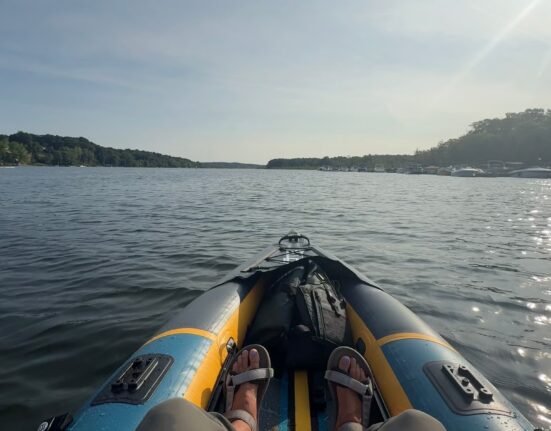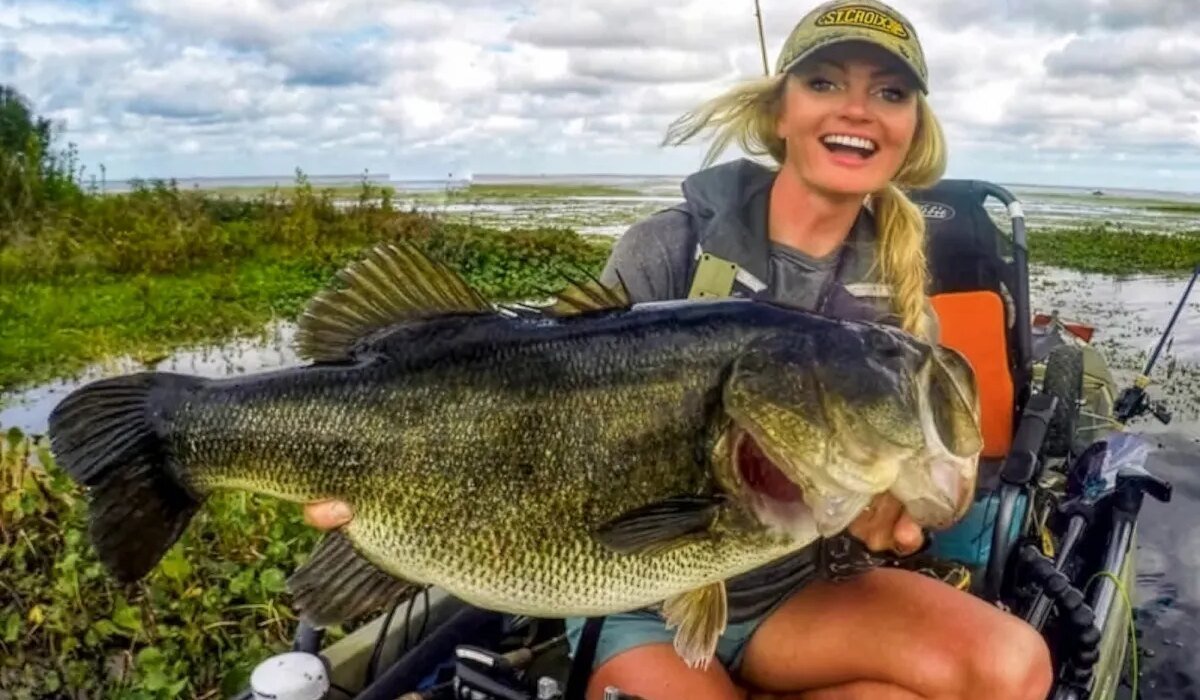
As a tournament fisherman, one of the questions I am often asked is how to fish large bodies of water in a kayak. Most people come to the conclusion that a kayak limits how much water I can cover. There is some truth in this, but it does not prevent me from successfully fishing in big water. There are a few different ways to prepare ahead of time before hitting the water that can lead to success. Here’s my own playbook for breaking big lakes and reservoirs. These tips will help you identify bass habitat so you can find fish faster.
1. Use Google Earth Pro
Start by installing Google Earth Pro On your laptop or desktop. This app is probably one of my favorite tools when it comes to breaking new waters because it has a unique feature that allows you to turn back time and view the lake during different months. This comes in handy when you’re fishing lakes where winter subsides, so you can scan the banks and look for old creek channels, laydowns, structure, rocks, etc. These are all places where fish congregate when those structures are underwater in the spring and summer months. This plays an important role when I look for diversity in an area.
Another thing you can do with Google Earth is search for a specific structure. Let’s say you read that Grand Lake, Oklahoma, is famous for its fishing piers, or that a Kentucky lake is known for fishing at a certain time of year. Google Earth lets you find areas that have the type of cover you’re looking for—even before you launch your kayak.
2. Navionics is a navigation necessity
I use Navionics To check the outline of areas with Google Earth I think seem to be messed up with the satellite map. If summer comes around and I want to key into a deep dock on Grand Lake, I’ll look for dock sections that install near breaks or channel swings. Shapes are useful during certain times of the year to help you identify where fish are staying or holding. I like to find areas with defined creek channels that are near large spawning flats during pre-spawn and spawn, and offshore ledges and saddles when the fish begin their transition to deeper water.
3. Watch old tournaments on YouTube
Although I rarely look at fishing reports online, I will occasionally go back and see if there has ever been a Bassmaster or FLW tournament at the lake I’m fishing. If there has been a tournament, it would help me to know what worked there in the past. These events usually have great coverage and provide good information about how the lake is set up and how the fish are responding, while also helping you learn a bit about the characteristics of the lake.
4. Don’t be afraid to move…a lot
Reviewing all of my information ahead of time, I try to select a few areas on different parts of the lake and break them down into sections like upper river, mid lake, lower lake, etc. so I can get a better idea of what’s going on and whether the bite at these different locations suits my strengths. I try to fish from two or three boat ramps a day and cover a lot of water each day so I can have my eyes on the water as much as possible. There’s risk in moving around so much, but I’ve been rewarded more times than not for attacking big water any other way.
5. Cut your bait—really
Compared to most fishermen, I do very little fishing on the water. I mostly look for the right water color and temperature, good cover, variety and bait. You will learn how to identify all those elements in time. When you find fish, be sure to note each one of them. If I find an area that looks good, I’ll make a few casts to see if I can get a bite so I can see how the fish are reacting. During practice, I don’t want to hook too many fish in the area where I plan to fish for the tournament, but I want to make sure I can catch some fish. Sometimes I’ll cut the hook off a buzz bait and use it as search bait to see how many hits I can get. This helps me find out how many fish are unhooked in an area.
Read further: A Tournament Angler’s Case for Safely Fizzing Bass Before Release

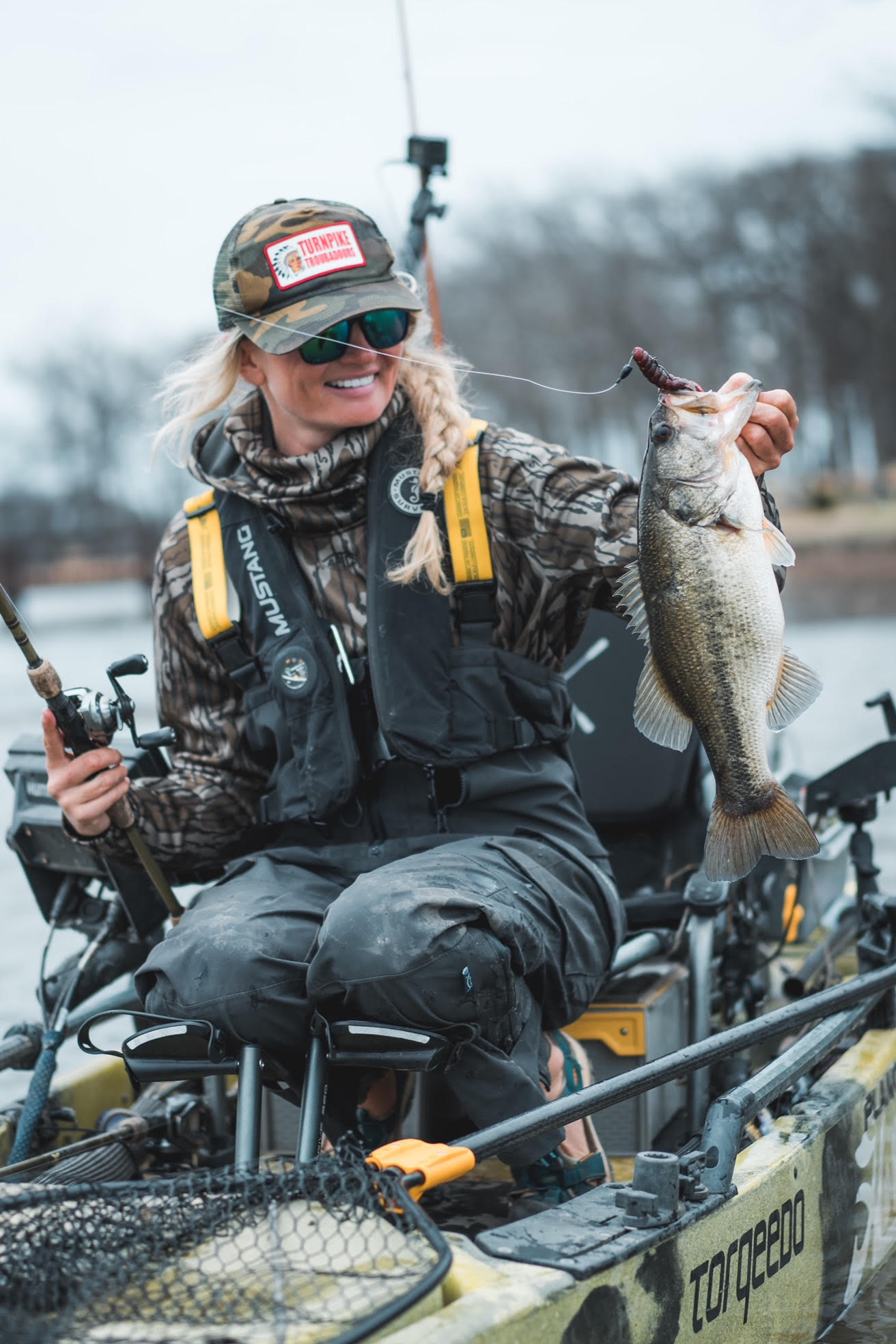
6. Don’t waste time fishing in rough water
Make sure you find water that suits your abilities as a fisherman. I like to fish fast and use reactive bait, so I look for shallow water that warms up fast and has a bit of color. If I’m in an area where there aren’t a lot of things to fish, I keep moving. It’s very easy to waste an entire day in an area that doesn’t interest you to begin with. To catch more tournament bass, give yourself options. I always like to have several backup plans in case circumstances change. Using your maps and charts can help you find areas where fish will be during a massive cold front (deeper water), or if they will move up as the water rises. If I find spots that have good shallow and deep water fish around, with a variety of cover, that’s where I spend my time.