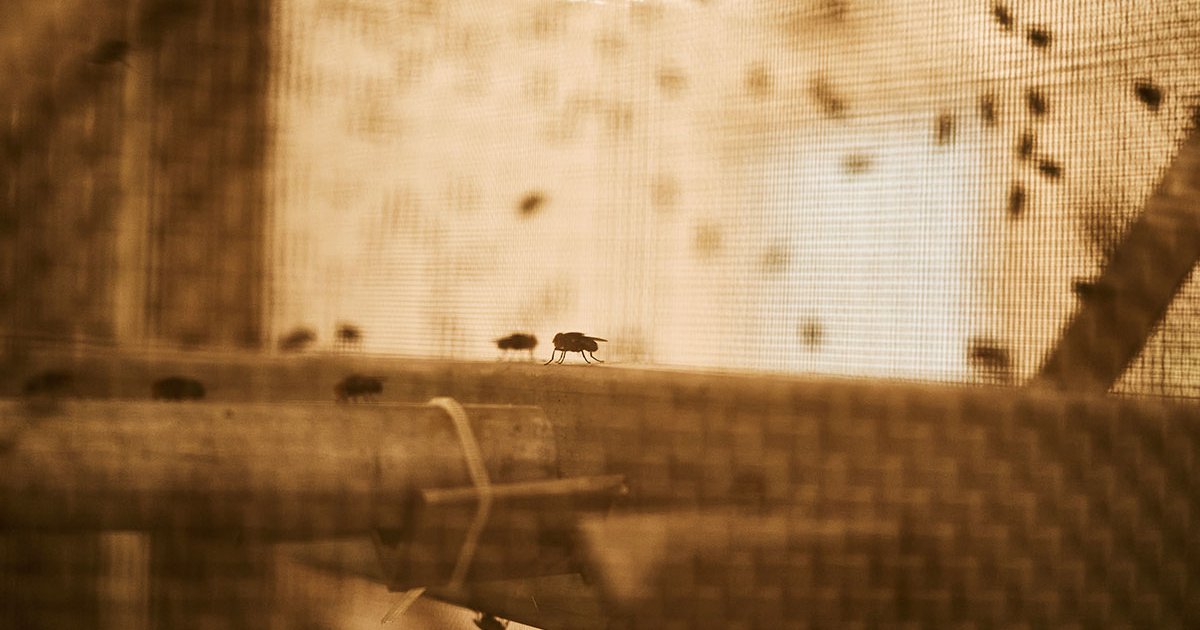
New World screwworm flies at a sterile screwworm fly production facility in Metapa, Mexico. (Mauricio Palos/Bloomberg)
key takeaways:
- New World screwworms have been detected in 32 animals in Texas since the beginning of last month, the first US livestock case in nearly five decades.
- Officials and experts say the parasite poses a threat to U.S. cattle herds, but its route and limited spread in Texas remains unclear.
- The USDA isolates affected areas, while states restrict livestock movement out of Texas, and agencies expand border and wildlife surveillance and sterile fly production.
As the deadly New World screwworm spreads across Texas, posing a major threat to American cattle herds, experts are still puzzled over the mystery of how it got there.
The larvae of the parasitic fly, which live within the wounds of warm-blooded animals, were first detected in a calf in Zavala County early last month, the first case in the country’s livestock in nearly five decades. The number of investigations has exceeded 30, and it is still unclear how the insect came to the US or how it is spreading.
Lack of information has made screwworm a topic of political discussion. Agriculture Secretary Brooke Rollins has blamed the Biden administration’s “failed immigration policies (and wide open border…)” for the pest’s expansion in Texas as well as throughout Central America. New Mexico US Representative Teresa Leger Fernandez said, “We must not spread misinformation,” including “that immigrants are bringing screwworms.”
At the same time, the Agriculture Department has come under criticism – mostly from Democrats – that the agency’s staff reductions and restructuring plans have weakened its ability to detect and respond to the threat from screwworm.
“The discussion about how the parasite is spread is probably a lot of speculation,” said Kevin Asch, executive vice president of animal health company Zoetis Inc.
It is important to understand how the flesh-eating insect came to America because eradication may take years. In the meantime, awareness and prevention of the various ways in which the fly spreads will be important to reduce the damage caused by the fly.
The screwworm can only travel short distances, meaning it has little chance of flying across borders. More likely, infected livestock – and the humans carrying those animals – spread it both in Texas and within the state. But how? Livestock shipments from Mexico, where screwworm presence had recently spiked, have been largely halted since the fly was confirmed in late 2024.
There are other ways a fly can arrive, including from a wild animal or an unsuspecting pet. According to the USDA, newly hatched larvae in infected animals can mature and reproduce to produce even more flies within the U.S. However, so far no cases have been reported in wildlife and no wild flies have been caught.
“There’s always a risk with the volume of shipping and moving livestock. Certainly you can’t discount that,” said Asch, whose company is one of the companies making conditionally approved screwworm drugs. But as cases in Mexico moved north, just dozens of miles from Texas, “I think you also can’t deny that it has moved naturally, and our control efforts have not been effective enough to stop it from moving.”
The initial cases in Texas were young animals that did not cross the border on their own, meaning they were likely infected by another animal, although it is unclear whether it would be through pets or wild animals, said Alec Gerry, a professor of entomology at the University of California, Riverside.
As of July 5, a total of 32 animals, including sheep and goats, have been detected, largely clustered in southern Texas. 14 of them are currently listed as inactive.
The only detection so far outside Texas of an infected dog in New Mexico adds further layers of mystery.
Initially, it was thought that the dog, which has since recovered, brought the parasite from Mexico. Yet the New Mexico Department of Agriculture later said the animal was not south of the border at any point. This points to a local transmission, a finding that may indicate that screwworm has a larger presence in the US than previously thought. Nevertheless, no further cases have been reported in New Mexico, and no wild screwworm flies have been caught there.
The concern is that screwworm may spread without detection throughout the southwest, even though government agencies are moving quickly to contain the infection. Quarantines are already in place in parts of more than a dozen Texas counties, and several states have also banned the movement of livestock out of the state. The USDA said it is working with the Department of Homeland Security to monitor the border, while also exploring methods of wildlife monitoring, including using drones and artificial intelligence.
Rollins has rejected criticism that oversight could be hampered by staff cuts and ongoing plans to move much of the agency away from its Washington-area headquarters. At a Senate hearing in mid-June, he said the agency had added more than 100 full-time employees to work on screwworm over the past 15 months to prepare for the parasite’s arrival in the country. Last month the US and Mexico also opened a new facility in Metapa, Mexico to produce sterile flies – only the second in the US – to curb the fly’s reproductive cycle.
Agriculture Secretary Brooke Rollins speaks with officials during a tour of Chapparosa Ranch in La Pryor, Texas, on June 11. (Eric Vrin/Bloomberg)
Although the answer to how screwworm reached the Americas is not yet clear, there is more consensus on how it might have re-emerged in Mexico, when the insect was not intended to spread so far north after being successfully eradicated from Central America decades earlier.
Since the 1970s the US, Mexico and several Central American countries have banded together to push screwworms up the Darien Gap, a 60-mile narrow strip of land around the border of Panama and Colombia that naturally separates North and South America. The remote, inhospitable terrain acts as a natural biological barrier, although hundreds of thousands of migrants cross the gap each year.
The weapon of choice for keeping screwworms away is a plant in Pacora, Panama, that is continuously producing sterile flies, which mate with wild female flies to prevent reproduction. It proved effective for decades.
But in 2023, cases in Panama increased to only two dozen. 6,500And since then the parasite has infected over 185,000 animals In Central American countries and Mexico. Prevailing theories are that poor surveillance during the epidemic and illegal animal trade throughout the region allowed screwworm to spread.
“Ongoing animal health surveillance efforts may have been impacted by restrictions on movement during the COVID-19 pandemic,” said Paolo Tizzani, senior veterinary epidemiologist at the World Organization for Animal Health. Warmer temperatures may also have created better conditions for the parasite to spread, he said.
From there, illegal movements of cattle, which are not inspected as part of formal border crossings, helped the fly spread northward, said Jeremy Radachowski, director of the Mesoamerica and Western Caribbean region at the Wildlife Conservation Society.
The NGO has called on countries to crack down on that trade, noting that screwworm hotspots were appearing on known animal-smuggling routes from Nicaragua through Honduras and Guatemala into Mexico.
“If there is continued re-infection and re-infection through illegal cattle movement, sterilizing our way out of this will not be good enough,” Radachowski said.