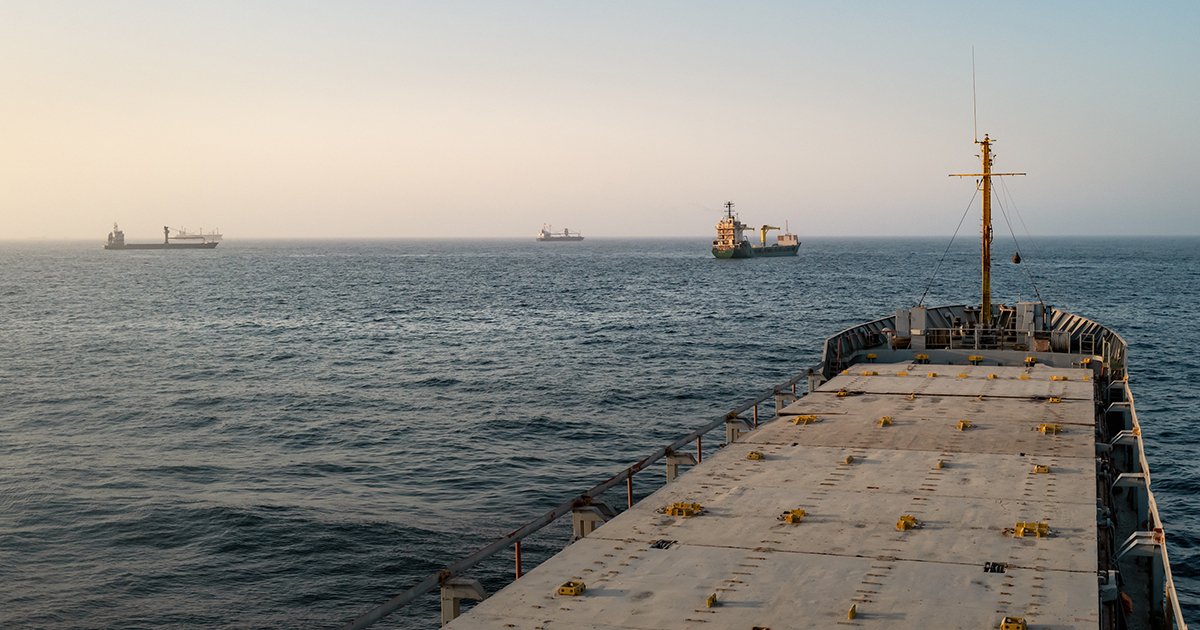
Oil tankers and cargo ships are anchored off the coast of Oman. (Elke Scolliers/Getty Images/Bloomberg)
key takeaways:
- Traffic through the Strait of Hormuz came to a near halt on July 9 as US strikes on Iran for the second day disrupted the fragile ceasefire and disrupted shipping movements.
- The slowdown matters because the choke point is a vital global energy route, with crossings down to about 20 ships on July 8, compared to a recent average of 34, according to Kpler data.
- Shipowners are increasingly using dark transit and diverted routes amid attacks and electronic interference, while continued conflict threatens further disruption to oil and gas flows.
Traffic through the Strait of Hormuz came to a near halt on July 9 after the US attacked Iran for the second consecutive day, as a fragile cease-fire between the two sides looked increasingly shaky.
Ship-tracking data showed that observable movements in the world’s most important energy conduit occurred mainly along the Iran-approved route near the waterway’s north, while the US-backed Omani corridor was quiet. Among larger ships, only a US-sanctioned supertanker bound out of the Persian Gulf was seen in the strait along with an Iranian-flagged containership.
Read more: Shipowners putting Hormuz at risk as US-Iran deal collapses
Some ships passed on 8 July with their transponders turned off. An India-flagged supertanker that had foiled an earlier attempt to transit the Strait of Hormuz reappeared in the Gulf of Oman on 9 July, indicating that it had made the crossing in the dark. A bulk carrier bound for the United Arab Emirates did the same when it surfaced again off Fujairah on July 9, according to vessel-tracking data compiled by Bloomberg.
As the war progresses, it is becoming clear that some oil tankers are passing through Hormuz with their transponders off to reduce the risk of attack by Iranian forces. With three attacks on large oil and gas tankers this week, it is very possible that the practice has resumed. It takes several days for information about those dark transits to emerge.
There has been a slowdown in traffic following Iranian attacks on ships following US attacks, even as President Donald Trump announced that the ceasefire with Iran had expired. The latest data from Kpler shows that about 20 commodity carriers transited the strait in any direction on July 8, making it one of the lowest traffic flows since the interim peace agreement in mid-June.
Lloyd’s List intelligence vessel tracking identified 33 transits of the Strait of Hormuz on Tuesday, but no detectable transits were recorded in the southern corridor on Wednesday in the wake of the latest attacks. pic.twitter.com/Ns1GUfwUtT
– Lloyd’s List (@LloydsList) 8 July 2026
This is a major change from recent daily activity in the strait. Kpler data shows that in the three weeks since the US and Iran agreed to an interim deal to reopen Hormuz, the average daily transit of commodity vessels stood at 34, with a peak of 59 on June 24. This compares with wartime daily numbers of less than 20 on most days.


Alex Fraser from Cox Fleet discusses how fleets should respond when a roadside breakdown occurs, testing their safety, compliance and customer service systems simultaneously. Tune in by going above or RoadSigns.ttnews.com.
While liquefied natural gas tanker traffic through the strait is halted, two empty ships have recently entered the Gulf of Oman and are headed toward the eastern entrance to the Strait of Hormuz.
There were also signs that sporadic electronic interference had returned, with ships in the Gulf of Oman southeast of Lima appearing to be traveling at unusually fast speeds of at least 30 knots early on July 9. This could point to countries activating defense systems aimed at preventing enemy forces’ drones from attacking their infrastructure, which could affect ships’ transponder signals. Electronic interference can also affect ship-tracking data.